
What VO2 max tells you, why a watch and a gas-analysis test are not equivalent, how to follow the trend and when assessment makes sense before adding intensity.
Your watch drops VO2 max by two points and an ordinary Tuesday suddenly feels like an audit of your fitness. Take a breath. The number may help, but it does not know that you ran in heat, slept poorly, changed weight or wore a loose sensor. After 40, reading it well matters more than chasing it.
VO2 max describes cardiorespiratory capacity. It may inform performance and risk, but it is not a global health grade or automatic clearance for intervals. Start by asking where the value came from, which reference it uses and what was happening around the measurement.
The essentials
- Measured is not estimated: gas analysis and a watch algorithm answer different questions.
- Context moves the number: age, sex, body weight, sport, protocol and reference population matter.
- The trend can help: compare the same device under similar conditions, not brands or isolated days.
- Improvement has no single recipe: comfortable work, intensity, strength and recovery are combined for the person.
- Symptoms carry more weight: chest symptoms, fainting, breathlessness or new palpitations need attention even if the watch looks reassuring.
What VO2 max measures
It is the greatest amount of oxygen the body can use during intense effort. It is usually expressed in millilitres per kilogram per minute. The number summarizes a chain: air enters, oxygen reaches the blood, the heart distributes it and muscle uses it. A low result does not identify which link is limiting.
The relative value is divided by body weight. It may therefore rise with weight loss or fall with muscle gain even when absolute oxygen use changes less. Relative VO2 matters when moving uphill, but power, pace, strength, symptoms and the absolute value can add context.
Our general guide to VO2 max and longevity explains the units and epidemiological relationship. Here the focus is using the number after 40 without turning a reference into diagnosis.
Is 40 good? Ask four questions first
The FRIEND registry published age- and sex-based references from maximal treadmill tests with gas analysis in adults without known cardiovascular disease. It is useful and has limits: it cannot represent every country, sport, protocol or health state. A watch estimate should not be placed on that chart as if it were the same measurement.
| Question | Why it changes the reading |
|---|---|
| Watch, field or laboratory? | One estimates, one infers performance and CPET measures gas exchange. |
| Which reference? | Age, sex, protocol and population change percentiles. |
| Same conditions? | Heat, altitude, terrain, fatigue and weight may alter the reading. |
| Symptoms or functional change? | A stable number cannot dismiss chest pain, fainting or poorer tolerance. |
A value of 40 may therefore be high for one person and ordinary for another. The responsible answer does not fit a simple good-or-bad headline. For comparison, use compatible references and preserve the method. For an important clinical or sporting decision, the number alone is insufficient.
Watch, field test and CPET are not interchangeable
A wearable combines heart rate, speed or power, declared weight and a proprietary algorithm. The INTERLIVE review found varying validity across devices and methods, with meaningful individual error. That does not make a watch useless: comparable readings over time can reveal a trend. It just should not be asked to act as a laboratory.
One Garmin Forerunner 245 validation in recreational runners found reasonable average error against laboratory testing, but it covered one device, algorithm and group. It cannot establish the accuracy of your watch, another sport or every individual.
| Method | May help with | Cannot ensure |
|---|---|---|
| Watch | Following a trend in similar conditions | Diagnosis, cause of a drop or clearance for HIIT |
| Field test | Comparing performance when the protocol repeats | Separating cardiac, pulmonary or muscular limitation |
| CPET | Measuring gases, exercise response and, by protocol, thresholds | Explaining nutrition, sleep, pain or all risk on its own |
The longevity association needs boundaries
Cardiorespiratory fitness is consistently associated with mortality and cardiovascular events. In the Mandsager study, greater treadmill capacity was associated with lower long-term mortality. This was a clinical cohort referred for testing, not a trial assigning people to fitness levels.
That supports protecting physical capacity, but it cannot promise that adding a set number of points adds a set number of years. Higher fitness may reflect training, prior health, genetics, access and other factors. The association matters; causality and individual benefit cannot be calculated with a simple conversion.
How to train it without downloading someone else's template
Many adults improve with training after 40. A meta-analysis of trials in older adults reported VO2peak improvements with high-intensity intervals compared with controls, but it combined different programmes and participants. It does not prove that any HIIT block is appropriate for you.
1. Accumulate comfortable work you can sustain
A pace that lets you speak in sentences is an accessible way to monitor effort. It is not exactly equivalent to a laboratory-defined metabolic zone. Brisk walking, cycling, swimming or easy running can build tolerance. Mode matters less than regular practice, progression and what your joints accept.
2. Add intensity for a reason
Intervals alternate demanding work and recovery. Duration, number and intensity depend on the sport and starting point. If every easy session becomes a race against the watch, the week may already contain enough intensity. Before adding more, ask which adaptation you want and how you will recognize recovery.
3. Keep strength and technique
A large engine does not solve strength, bone or tendon tolerance on its own. Strength complements aerobic work but does not need one routine for everyone. If rising, carrying or stabilizing limits you more than breathing, it may be the bottleneck. Our guide to functional strength and chair rise helps observe that without using a home test as diagnosis.
4. Read recovery as a pattern
Sleep, energy availability, stress, infection, heat and other sports change the response. HRV and resting heart rate add context but cannot decide alone. A review of autonomic regulation found potential monitoring value alongside methodological variation and the need to interpret trends.
If performance falls while effort, sleep and discomfort worsen, reducing load may be a training decision rather than defeat. Our guide to sports recovery after 40 uses function, symptoms and load without waiting for a wearable to grant permission.
What to do when the watch drops
| Situation | A cautious first reading | Next step |
|---|---|---|
| One low day after heat or poor sleep | Likely variation | Do not rebuild the plan; compare similar days |
| Estimate falls while comfortable pace improves | The algorithm may miss progress | Review performance and conditions |
| Persistent fall with fatigue or recent infection | Incomplete recovery or another possible cause | Reduce intensity and watch the course |
| Fall with chest symptoms, fainting, breathlessness or palpitations | The number is no longer the priority | Stop intense effort and seek assessment |
Overtraining syndrome has no single biomarker, according to a scoping review. Performance, mood, sleep, training load and exclusion of illness contribute to the reasoning. Do not diagnose overtraining because a screen dropped, but do not cover a persistent change with more discipline either.
When assessment makes sense before intense intervals
The updated ACSM preparticipation framework considers usual activity, known disease or symptoms and intended intensity. Age alone does not mandate a test. Being active does not make a warning sign harmless.
Chest pain or pressure, fainting, disproportionate breathlessness, new palpitations, neurological symptoms or a marked loss of exercise tolerance need assessment. Uncontrolled cardiovascular, metabolic or renal disease also changes the conversation. For severe or current symptoms, seek urgent care as appropriate rather than waiting for the next VO2 max update.
Frequently asked questions
What does VO2 max actually measure?
It estimates or measures the greatest amount of oxygen the body can use during intense exercise. It integrates heart, lung, blood and muscle responses, but it cannot summarize all health or performance on its own.
Is a VO2 max of 40 good after age 40?
It may be high, average or low depending on age, sex, protocol, sport, body weight and reference population. First check whether it came from a watch or gas analysis and compare it with compatible references, not an isolated chart.
Is a watch VO2 max reliable?
It may be useful for tracking a trend on the same device under similar conditions. Individual error can matter, so it is not a diagnosis, clearance for hard training or a direct comparison between brands.
Can VO2 max improve after 40?
Yes, many people still respond to training at these ages. Change depends on starting point, health, programme and recovery. Better pace or power can also matter even when the watch estimate barely moves.
Is zone 2 or HIIT better?
They serve different purposes. Comfortable work lets you accumulate practice; intervals add an intense stimulus once tolerance exists. The right distribution depends on sport, experience, health and recovery.
What does a sudden drop in watch VO2 max mean?
It may reflect heat, fatigue, a weight change, sensor behaviour, the algorithm or different conditions rather than true loss. If it persists or comes with symptoms or poorer performance, review the context and seek advice.
When should I seek advice before intense intervals?
Before increasing intensity, seek advice for chest pain or pressure, fainting, disproportionate breathlessness, new palpitations, uncontrolled disease or a marked change in exercise tolerance.
How often should I repeat a VO2 max test?
There is no universal interval. A watch can show frequent trends without reacting to every reading; a laboratory test is repeated when the result could change training, clinical assessment or a sporting decision.
Sources
- Kaminsky LA et al. Reference standards for cardiorespiratory fitness measured with cardiopulmonary exercise testing. Mayo Clin Proc. 2015. Europe PMC.
- Mandsager K et al. Association of cardiorespiratory fitness with long-term mortality among adults undergoing exercise treadmill testing. JAMA Netw Open. 2018. Europe PMC.
- Molina-Garcia P et al. Validity of estimating maximal oxygen consumption by consumer wearables: INTERLIVE systematic review. Sports Med. 2022. Europe PMC.
- Wu ZJ et al. High-intensity interval training in older adults: meta-analysis of randomized trials. Exp Gerontol. 2021. Europe PMC.
- Riebe D et al. Updating ACSM recommendations for exercise preparticipation health screening. Med Sci Sports Exerc. 2015. Europe PMC.
- Carrard J et al. Diagnosing overtraining syndrome: a scoping review. Sports Health. 2022. Europe PMC.
- Bellenger CR et al. Monitoring athletic training status through autonomic heart rate regulation. Sports Med. 2016. Europe PMC.
- World Health Organization. Physical activity. WHO.
Method note: editorial and source review completed on 30 August 2026. Measurement, estimation, epidemiological association and individual prescription are kept separate; no diagnostic chart or universal protocol is provided.
Related articles

Pain During Sport After 40: How to Adapt Without Stopping Blindly
Elbow pain after padel, knee pain while running or a recurring niggle: how to recognize patterns, adjust load and know when assessment makes sense.
Recovery Biomarkers for Athletes: What They Add and When to Stop Measuring
A watch or blood test can clarify a question, but neither should dictate every session. Read HRV, iron, CK and RED-S without turning normal variation into alarm.
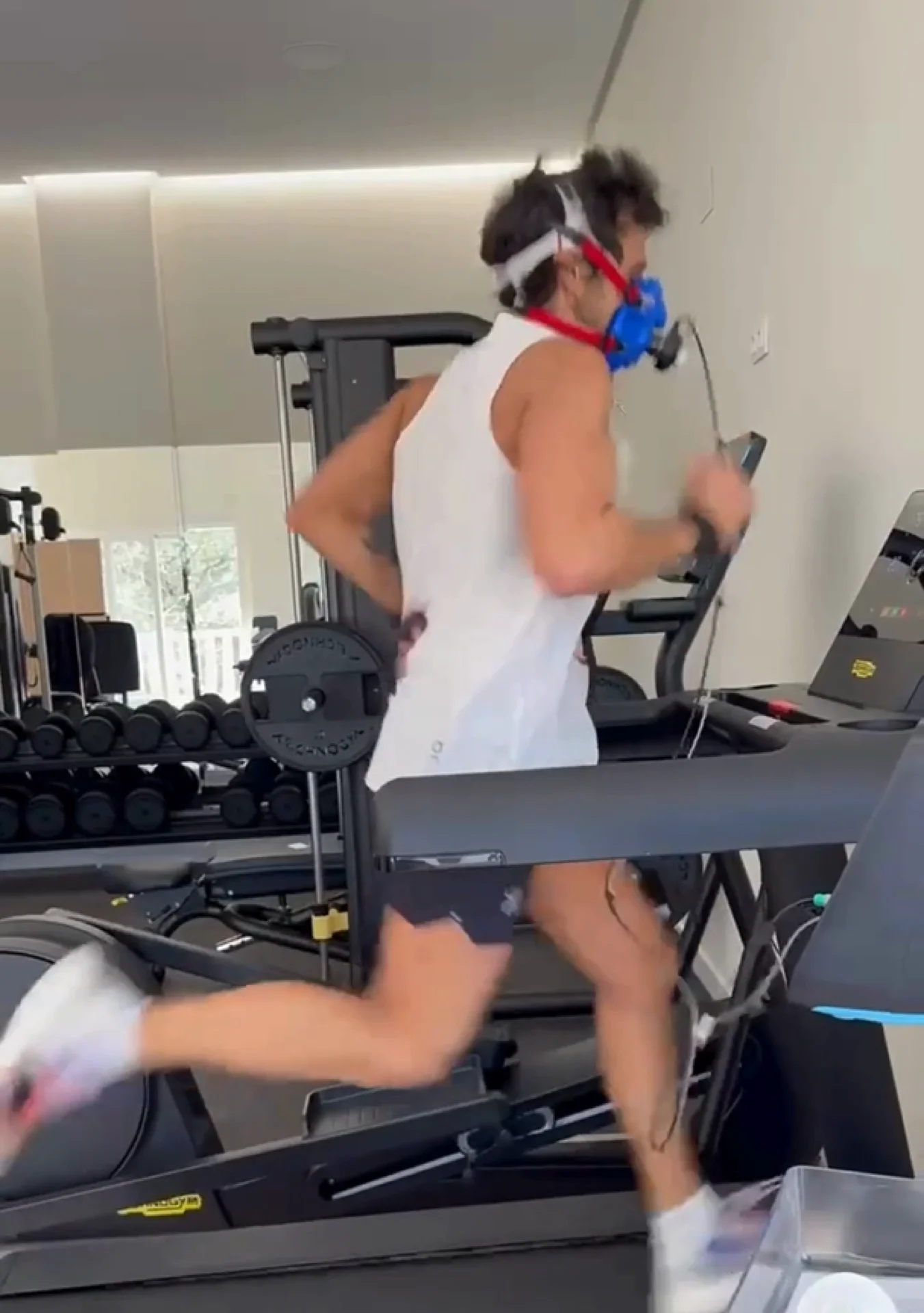
VO2 Max: How to Measure and Improve Aerobic Fitness
Your VO2 max describes cardiorespiratory fitness, not how long you will live. Learn what it measures, when a watch is enough and how to progress without chasing a chart.

Hyperbaric Oxygen: Evidence-Based Uses, Risks and Limits
Hyperbaric oxygen treats specific medical problems, but it has not been shown to extend life. We separate accepted indications, anti-aging studies and marketing.