
Sarcopenia is not identified by muscle size alone. Learn how to spot declining strength, understand the diagnosis and begin a safe, realistic plan.
Sarcopenia does not begin when an arm looks smaller. It often shows up first in ordinary moments: rising from the sofa takes momentum, groceries feel heavier or a familiar staircase now earns a pause. Those changes do not confirm a diagnosis, but they deserve attention.
The encouraging part is wonderfully unglamorous: muscle responds to use at almost any age. You do not need a perfect score or a bodybuilder's programme. You need to understand what is changing, start at a safe level and repeat a challenge that can gradually progress.
In brief
- Strength comes first: low muscle mass alone is not enough to diagnose sarcopenia.
- Context confirms it: body composition, gait, falls, appetite, illness and medication change the interpretation.
- The foundation: progressive resistance exercise plus adequate nutrition, adapted to the person.
What sarcopenia is, and what it is not
EWGSOP2, the European consensus still guiding much clinical practice, describes sarcopenia as a muscle disease. It prioritizes low strength, confirms the diagnosis when muscle quantity or quality is also low, and uses physical performance to grade severity. The 2024 GLIS global consensus likewise places mass and strength at the center while treating physical limitation as an outcome.
That clears up three common misunderstandings:
- A thin person does not automatically have sarcopenia.
- A person with obesity can have little strength and too little muscle for their body size.
- Weakness can also result from pain, neurological disease, anemia, medication or an acute illness.
Sarcopenia is more common in later life, but there is no birthday on which it suddenly begins. It can develop earlier after hospitalization, immobility, cancer, COPD, heart or kidney failure, intense weight loss or inadequate intake. It is also different from cachexia, which is tied to systemic disease and requires treatment of that cause.
The signs that matter in daily life
Look at tasks rather than biceps. A sustained change from your own baseline is usually more informative than a comparison with someone else.
| Sign | What it might reflect | A sensible next step |
|---|---|---|
| You need your hands to stand | Lower leg strength or power, pain or unstable balance | Assess chair stands and the cause of pain |
| You walk slower or avoid stairs | Lower physical reserve, fear of falling or cardiopulmonary symptoms | Measure gait and review symptoms |
| Jars or bags slip | Falling grip, hand pain or a neurological problem | Dynamometry and examination if new |
| You lose weight unintentionally | Lower intake, illness or loss of body tissue | Clinical review, not a home diet |
| Repeated falls or near-falls | A mix of strength, balance, vision, blood pressure or medication | Falls assessment and supervised training |
Seek urgent care when weakness is sudden, affects one side or comes with trouble speaking, chest pain or severe breathlessness. Prompt review also makes sense for unplanned weight loss, repeated falls, new bone pain, swallowing difficulty or rapid decline after illness.
A chair test can guide you, not label you
If it is safe for you, a firm chair can provide a first snapshot. Sit with both feet planted and, without using your arms, stand and sit five times at a controlled pace. Stop for dizziness, pain, breathlessness or instability. Do not test alone if you have already fallen.
EWGSOP2 uses more than 15 seconds as a cutoff in a standardized five-repetition test. Do not turn that number into a home diagnosis: chair height, technique, arthritis, balance and familiarity all affect it. Use it to begin a conversation and track your own course. Our guide to chair stands and functional strength shows how to practise the pattern without making it a contest.
How clinicians confirm sarcopenia
| EWGSOP2 stage | What is assessed | What it means |
|---|---|---|
| Case finding | SARC-F, falls, weight loss, difficulty walking or rising | Identifies who should be measured; a low SARC-F does not exclude every case |
| Probable sarcopenia | Low grip or slow five-chair-stand test | Low strength warrants action and further assessment |
| Confirmed sarcopenia | Low muscle quantity or quality using DXA, bioimpedance or another validated method | Low strength and low muscle coincide |
| Severe sarcopenia | Poor physical performance is also present, such as slow gait | Greater functional limitation and support needs |
As European reference points, EWGSOP2 proposes grip below 27 kg in men or 16 kg in women, more than 15 seconds for five chair stands, and gait speed at or below 0.8 m/s. These are clinical cutoffs, not report cards. Sex, population, device, height, pain and technique matter.
DXA estimates appendicular lean mass. Bioimpedance is more accessible but shifts with hydration, edema and the device algorithm. Neither measures muscle quality by itself. If you want to understand what each result adds, read our guide to DEXA, bone, muscle and visceral fat.
Sarcopenic obesity and weight loss: the scale misses the story
The ESPEN/EASO consensus defines sarcopenic obesity as excess adiposity alongside low muscle mass or function. A high waist and stable weight can coexist with declining strength. Screening therefore starts with risk and function, then confirms body composition.
Every substantial weight loss can include some fat-free mass. That category contains water, organs and other tissues, not only skeletal muscle. A fall on DXA or bioimpedance does not diagnose sarcopenia by itself, and a better body-composition ratio does not prove that strength was preserved.
GLP-1 muscle loss: what the numbers show
| Evidence and population | Result | Limit |
|---|---|---|
| 2026 meta-analysis: 7 trials, 821 adults with obesity; mean ages 31-51 | Lean mass −1.74 kg versus control (95% CI −3.04 to −0.45), while its share of body weight rose 1.81 points (95% CI 1.10-2.52) | 98% heterogeneity and almost no functional data; frail older adults are poorly represented |
| SURMOUNT-1 DXA: 160 adults, 72 weeks | With tirzepatide: weight −21.3%, fat −33.9% and lean mass −10.9%; about 75% of weight lost was fat and 25% lean mass | Small, manufacturer-funded substudy; lean mass is not contractile muscle |
| SEMALEAN: 106 completed 12 months on semaglutide 2.4 mg; 68.9% women, mean BMI 46.3 | Fat −18.9%; lean mass −3.0 kg by month 7 then stable; grip +4.1 kg | Uncontrolled cohort: drug, nutrition support, activity, test learning and selection cannot be separated |
The combined reading is more nuanced than “Ozempic causes sarcopenia” or “all the weight lost is fat”. Loss is predominantly fat on average, but absolute lean mass can fall. Evidence is far weaker in people aged 70-80, with frailty, kidney disease, low appetite or pre-existing sarcopenia. Nor should the cardiometabolic benefit of an appropriately prescribed GLP-1 be discarded because of one surrogate: the question is whether strength, intake, independence and a maintenance plan are preserved.
A practical protocol during GLP-1 therapy
| Timing | What to do | When to review sooner |
|---|---|---|
| Start | Record waist, weight, grip or chair stands; use DXA/BIA if it changes decisions; review kidney and bone health, falls, intake and eating-disorder risk | Frailty, prior sarcopenia, osteoporosis, low intake or unplanned loss |
| Active loss | Progressive resistance at least 2 days/week. The EASO/EFAD/ECPO consensus suggests 1.0-1.5 g/kg adjusted body weight/day as a pragmatic protein target, always individualized | Nausea or satiety prevents eating, strength falls or weight loss is overly rapid |
| 4-8 weeks and dose escalation | Review tolerance, intake, grip/chair stands and symptoms; repeat composition with the same method at 8-12 weeks when risk justifies it | Fall, new weakness, dizziness, loss of independence or persistently low intake |
| Maintenance | Agree how to sustain strength, protein and weight if medication is maintained, reduced or stopped | Do not alter or discontinue medication on your own |
Contact the prescriber if vomiting, nausea or satiety prevents eating or drinking. Inability to keep fluids down, fainting, confusion, low urine output or severe and persistent abdominal pain needs urgent assessment. For metabolic context, see our guide to diet, methionine and GLP-1.
What genuinely helps
1. Resistance exercise that can progress
A 2025 review of 28 studies and 2,582 participants found that exercise improved physical performance and grip in older adults with sarcopenia, with resistance-based interventions performing best. The key is not one magic exercise. It is practising patterns that challenge muscle and advancing them gradually.
For many people, two or three full-body sessions each week are a realistic start. A session might include rising from a chair, pushing a wall or machine, pulling a band, stepping up and carrying an object. The final repetition should require focus without breaking form. With frailty, osteoporosis, significant pain or unstable disease, physiotherapy or clinical supervision is more valuable than a generic programme.
Walking remains excellent for the heart, mood and independence. It simply does not usually provide enough tension to rebuild strength by itself. The kind combination is to walk as able, train resistance and add balance work when falls are a concern.
2. Enough food, with protein that fits
PROT-AGE proposed 1.0-1.2 g of protein per kg per day for adults over 65, at least 1.2 g/kg for many active people and 1.2-1.5 g/kg in several acute or chronic illnesses. It also highlighted an important exception: severe kidney disease without dialysis may require restriction. These are guides, not an automatic calculator.
Before raising grams, check the basics. Is appetite present? Can the person chew comfortably? Is there dysphagia? Does the calculation use a sensible reference weight? Does the whole diet provide enough energy? Spreading yogurt, eggs, fish, legumes, tofu or meat across the day is often easier than trying to repair everything at dinner. A 2024 review found that adding protein to resistance exercise improved mass and strength, although the limited number of trials calls for restraint.
3. Supplements in their proper place
Creatine monohydrate may add modestly to training. A 2025 meta-analysis of eight trials found small improvements in leg strength and lean tissue, with no significant upper-body strength gain in the main analysis. Doses of 3-5 g/day are common in studies, but tolerance, medication, known kidney function and goals deserve review. Our guide to creatine after 50 covers that decision.
Vitamin D is not a stand-alone sarcopenia treatment. The Endocrine Society's 2024 guideline says the optimal 25(OH)D threshold for disease prevention remains uncertain and does not turn routine testing in healthy adults into a requirement. When deficiency, osteoporosis, malabsorption or another indication exists, a clinician can treat it in context.
An eight-week start, without heroics
This framework is for adapting with a professional, not a universal prescription.
| Timing | Goal | Progress signal |
|---|---|---|
| Week 0 | Review safety and record five chair stands, usual gait and one push or pull exercise | You have a reproducible baseline |
| Weeks 1-2 | Practise two simple sessions while leaving effort in reserve | More confidence and steadier technique |
| Weeks 3-6 | Add a repetition, resistance or set when technique is solid | More work at a similar effort |
| Weeks 7-8 | Repeat checks under similar conditions and review food, pain and adherence | Better function, or an adjusted plan if it has not improved |
Progress might mean standing without your hands, carrying a bag confidently or walking with someone again. Those changes matter more than a small bioimpedance fluctuation. If function worsens, the plan does not need more discipline. It needs a fresh assessment.
What to bring to an appointment
- When the change began and which tasks became harder.
- Recent weight, appetite and any unplanned loss.
- Falls, pain, hospital stays and new medicines.
- An honest picture of activity and protein, not the perfect week.
- Your priority: walking without fear, standing, recovering from surgery or keeping strength while losing weight.
Commercial disclosure: Progevita offers medical, nutritional and physical-capacity assessment. That does not show that everyone needs DXA, bioimpedance, a supplement or a private programme. Assessment should begin with the clinical question and use only measurements that change a decision.
Frequently asked questions
What is sarcopenia?
Sarcopenia is a skeletal muscle disease involving low strength and low muscle quantity or quality. It can develop with age or alongside disease, inactivity, hospitalization or undernutrition, and it cannot be diagnosed from appearance.
How is sarcopenia diagnosed?
Under the European EWGSOP2 framework, low strength indicates probable sarcopenia, low muscle quantity or quality confirms it, and poor physical performance indicates greater severity. Diagnosis combines clinical history, functional tests and body-composition measurement.
Can a chair-stand test diagnose sarcopenia at home?
It cannot diagnose sarcopenia alone, but it can reveal a useful signal. If five safe repetitions feel harder, require your hands or exceed about 15 seconds in a standardized test, seek assessment, especially when falls or unplanned weight loss are present.
Can sarcopenia be reversed?
Many people can improve strength, function and some muscle mass through progressive resistance training, adequate nutrition and treatment of the cause. Response depends on the starting point and associated disease, so improvement is a more realistic goal than promising complete reversal.
How much protein does an older adult need?
As a guide, PROT-AGE proposed 1.0-1.2 g/kg/day for adults over 65 and higher amounts for some active or unwell people. It is not a universal prescription: appetite, reference weight, kidney disease, goals and the whole diet change the number.
Is walking enough to prevent or treat sarcopenia?
Walking supports cardiovascular health, mobility and confidence, but usually provides too little stimulus to rebuild strength. The foundation is adapted resistance exercise, such as standing from a chair, pushing, pulling, carrying or using bands and machines with progression.
Do creatine and vitamin D help?
Creatine may add a modest benefit when paired with resistance training, but it is optional and cannot replace exercise. Vitamin D should be used when there is a clinical indication; a universal 30 ng/mL threshold is not enough to make that decision.
Do GLP-1 medicines cause sarcopenia?
That conclusion is not justified. Fat-free mass may fall during weight loss, but it is not identical to skeletal muscle. Functional evidence in older or frail adults remains limited, so protect strength, maintain adequate intake and review the trajectory with the prescribing team.
Sources
- Cruz-Jentoft AJ et al. EWGSOP2 European consensus on definition and diagnosis. Age and Ageing. 2019.
- Kirk B et al. GLIS conceptual definition. Age and Ageing. 2024.
- Sánchez JLC et al. Exercise in older adults with sarcopenia: systematic review and meta-analysis. Geriatric Nursing. 2025.
- Bauer J et al. PROT-AGE protein recommendations for older adults. JAMDA. 2013.
- Whaikid P et al. Protein plus resistance exercise in sarcopenia. Epidemiology and Health. 2024.
- Liu S et al. Creatine plus resistance training in older adults. European Review of Aging and Physical Activity. 2025.
- Donini LM et al. ESPEN/EASO consensus on sarcopenic obesity. Clinical Nutrition. 2022.
- Tinsley GM, Heymsfield SB. Interpreting fat-free mass and muscle during GLP-1 treatment. Journal of the Endocrine Society. 2024.
- Langer HT et al. Body composition and function during GLP-1 treatment. Cell Reports Medicine. 2026.
- Laverde LP et al. Obesity-dose GLP-1 therapy and muscle health: meta-analysis of 7 trials and 821 participants. International Journal of Obesity. 2026.
- Look M et al. Body composition with tirzepatide in the SURMOUNT-1 DXA substudy. Diabetes, Obesity and Metabolism. 2025.
- Alissou M et al. Semaglutide, fat, lean mass and function: the SEMALEAN study. Diabetes, Obesity and Metabolism. 2026.
- Dobbie LJ et al. EASO/EFAD/ECPO consensus on nutrition and function during incretin-based therapy. Lancet Diabetes & Endocrinology. 2026.
- Mozaffarian D et al. Multisociety advisory on nutritional priorities during GLP-1 therapy. 2025.
- Endocrine Society. Vitamin D for the Prevention of Disease guideline. 2024.
- World Health Organization. Physical activity fact sheet. Updated 2024.
Method: narrative review of the linked consensuses, guidance, trials and studies. On 31 August 2026 we reviewed Spanish results for “GLP-1 pérdida muscular”, “Ozempic pérdida masa muscular” and “semaglutida sarcopenia”, and English results for “GLP-1 muscle loss”, “semaglutide lean mass” and “GLP-1 sarcopenia”. Cutoffs help classify risk, but they do not replace clinical history and are not presented as longevity targets. This article is educational and does not replace a consultation.
Related articles
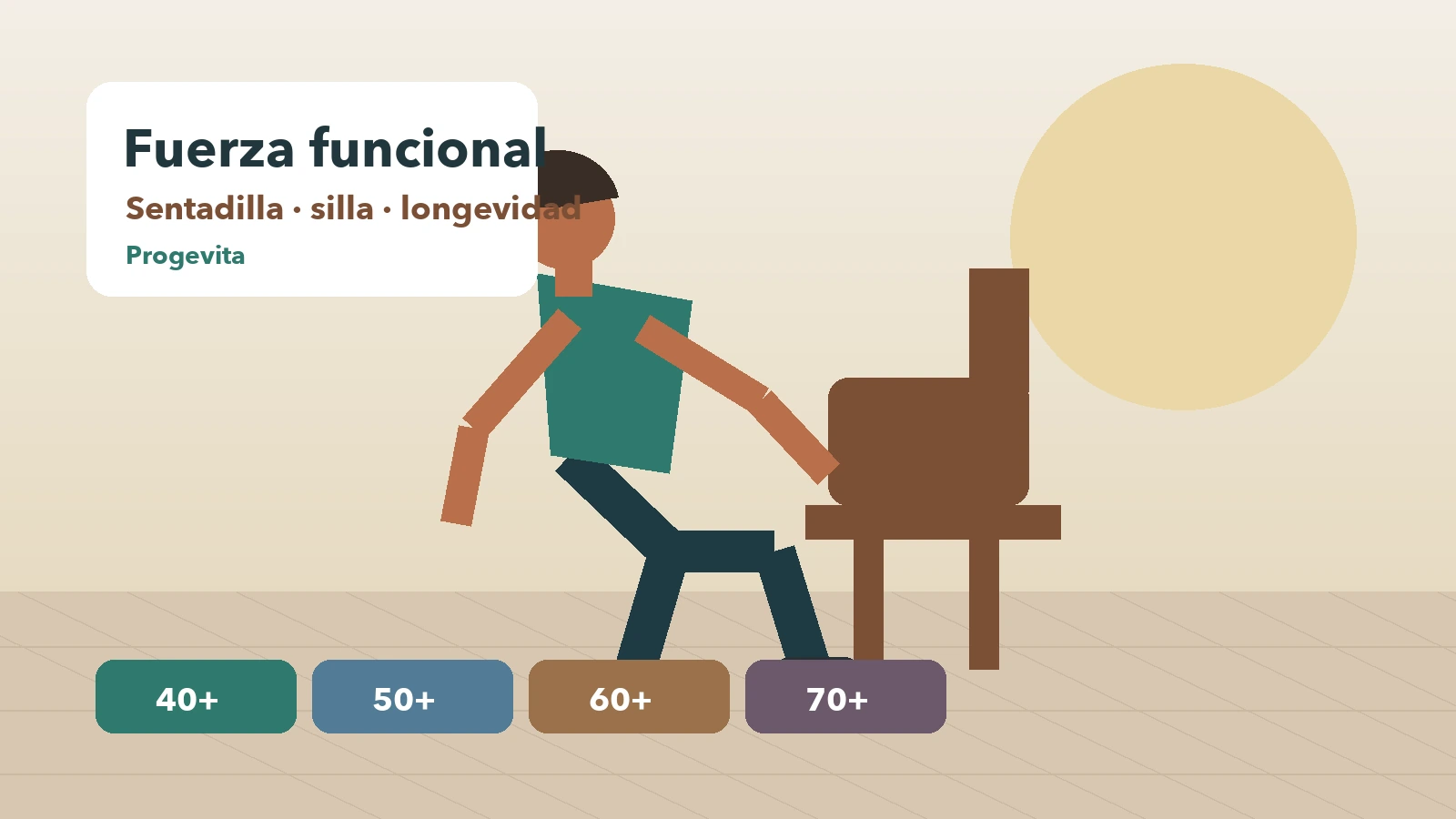
Strength as You Age: What Standing Up From a Chair Can Tell You
Standing up from a chair offers a clue about strength, not a score. How to observe the movement, progress sensibly and know when to seek help.

Insulin Resistance: What It Means, How It Is Measured and What Actually Helps
Insulin resistance is not diagnosed from fatigue or one HOMA-IR result. This guide explains which tests change decisions and how to build a measurable plan.
What Semen Can Tell You About a Man's Health
A semen analysis may open questions about testicular health, hormones, medicines and exposures. It is neither a fertility verdict nor a longevity test.
Can a Multivitamin Slow Biological Age? What COSMOS Measured—and What It Did Not
COSMOS found a small shift in two of five epigenetic clocks after two years. Here is the effect size, the limits and when supplementation answers a real nutritional need.