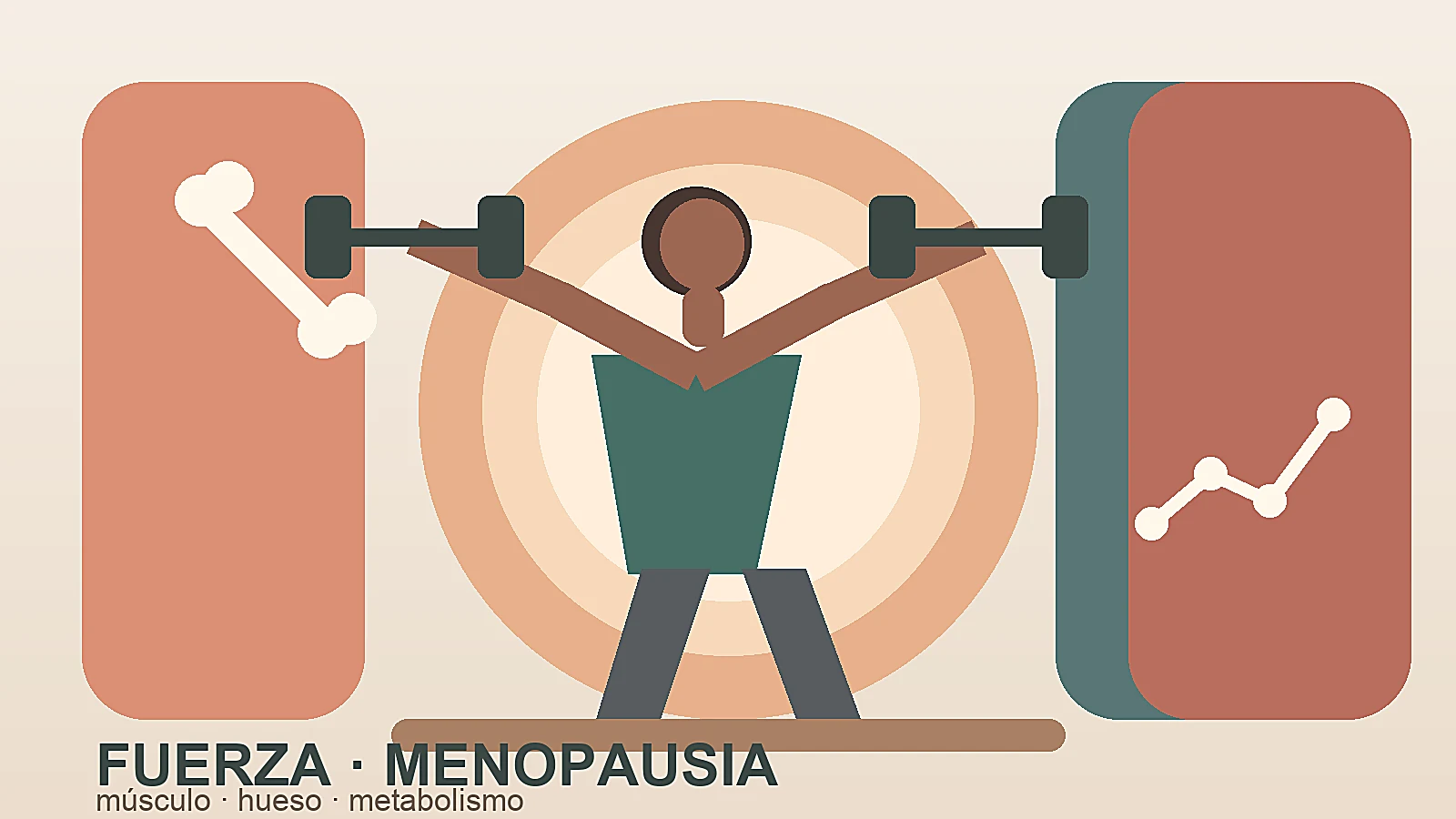
A friendly guide to starting or returning to strength training in menopause, adapting the load and caring for muscle and bone without chasing a perfect routine.
Strength training in menopause is not about proving anything or chasing your younger body. It is about keeping options: walking uphill, carrying shopping, getting up from the floor or continuing the sport you enjoy. You can begin with a dumbbell, a band or a chair. An Olympic barbell is not an entry requirement.
The menopause transition coincides with hormonal, sleep, body-composition and bone-health changes. That does not make every woman fragile or explain every physical change, but it does make muscle and functional capacity worth protecting. The useful load is one you can repeat, recover from and gradually increase.
The essentials
- Strength helps: it improves strength and function and may support bone and metabolic health.
- Two days is a reference: WHO presents it as a population minimum, not a personalized programme.
- Progress is not punishment: you can add some load, repetitions, range or control.
- Not everything needs measuring: blood tests and DXA scans need a clinical reason, not a new gym habit.
- Context matters: pain, osteoporosis, falls or cardiovascular symptoms change the starting point.
What menopause changes, and what it does not
Muscle mass and strength tend to decline with age when they receive little stimulus. The transition may also bring poorer sleep, hot flushes, fat redistribution or a period of faster bone loss. These are group trends, not a personal destiny or proof that each symptom is hormonal.
Resistance training improves strength and physical capacity in postmenopausal women. Meta-analyses also report favourable body-composition changes, although effect sizes, programmes and participants differ. Saying that it works does not mean there is one universal routine or that exercise alone resolves weight, sleep or fracture risk.
WHO guidance recommends that adults strengthen the major muscle groups on at least two days each week alongside aerobic activity. This is public-health guidance. Your week might start with one session, settle at two or include three, depending on experience, goals and recovery.
Define what you want training to do
A useful goal is concrete. “I want to get fit” offers less direction than “I want to get up from the floor without support”, “I want to carry my backpack again” or “I want to prepare my bones and muscles for the years ahead”. The answer guides exercise choices and lets you notice progress outside the gym.
| Goal | A practical sign of progress | What it cannot prove alone |
|---|---|---|
| Strength | The same task feels easier or you can move a little more load | That you gained a precise amount of muscle |
| Function | You rise, climb stairs or carry objects more confidently | A diagnosis or a biological age |
| Bone | You maintain a safe, progressive loading programme | A density change without an indicated, comparable DXA |
| Body composition | Measurements, clothes or performance change over time | That a home scale measures each tissue accurately |
A simple session, not a rigid prescription
A practical structure might include sitting and standing, a hip hinge, a push, a pull and a carrying or balance task. A chair, bands, dumbbells or machines can provide them. You do not need every variation or the same order forever.
- Knee and hip: rise from a chair, use an adapted squat or try a leg press.
- Hinge: move the hips back, use a bridge or learn a lightly loaded deadlift.
- Push and pull: try a wall push-up, press, row or pulldown.
- Carry and stabilize: walk with a load, train grip or hold a stable position.
Choose versions you can control while breathing normally. Finish each set with some capacity left, especially while learning. No repetition count separates a good workout from a bad one. For a beginner, practising regularly and wanting to return is usually more useful than exhausting yourself on day one.
Our guide to chair rises and functional strength shows how to use an everyday task as a clue without turning it into an exam or diagnosis.
How to progress without treating progress as punishment
When an exercise feels stable and recovery is good, change one variable: a little more resistance, another repetition, a larger range or better control. Then watch the response. Adaptation needs sufficient challenge, but it also needs continuity.
Muscle soreness can happen, especially at first, but it is not required for improvement. Sudden pain, unexpected loss of strength, tingling, dizziness, chest pain or disproportionate breathlessness are not badges of effort. Stop and seek help according to their severity and context.
If sleep is disrupted or hot flushes leave you depleted, temporarily reducing volume or intensity can protect the habit. You do not need to make up for a difficult week. Our guide to recovery after 40 helps separate expected fatigue from signs that call for a pause or assessment.
Bone: the eye-catching trial needs context
The LIFTMOR trial studied postmenopausal women with low bone mass in a supervised high-intensity resistance and impact programme. It found improvements in bone mineral density and physical function. That matters, but it does not show that everyone with osteoporosis should copy the protocol at home.
Previous fractures, balance, technique, pain, medication and individual risk change the plan. Loading can progress, but the starting point should be safe. If you have a bone diagnosis or fragility fracture, ask which movements, loads and level of supervision fit you. DXA is not a monthly gym score either; it is ordered and interpreted as part of a clinical decision.
Weight, protein and blood tests: fewer automatic rules
Strength training may help retain lean tissue during weight loss and improve outcomes a scale cannot see. It still does not promise fat loss or cancel out sleep, food, medication or illness. Our guide to weight and menopause puts those factors in context.
There is no protein dose that suits everyone. Usual diet, body size, training, age, kidney function and goals matter. If you worry that you eat too little, are losing weight unintentionally or have kidney disease, individual advice is sensible. A supplement does not replace that assessment.
You do not need a panel of glucose, insulin, ApoB, vitamin D, ferritin and hormones to earn permission to train. Tests belong where a clinical question could change the decision. The same applies to bioimpedance, wearables and grip tests: they may show trends, but they do not validate your effort or diagnose you on their own.
When to ask for help before pushing harder
Assessment before harder exercise is especially sensible with exertional chest pain, fainting, new or disproportionate breathlessness, uncontrolled hypertension, unstable cardiovascular disease, a recent fracture or neurological symptoms. With persistent pain, major limitations or fear after a fall, an exercise professional or physiotherapist can adapt the entry point.
Supervision is not reserved for illness. It can help you learn a hinge, find comfortable variations and build confidence. Over time, a good plan should make you more independent.
Frequently asked questions
Is strength training especially useful during menopause?
Yes. It helps preserve muscular capacity and function and may support bone and metabolic health. Menopause does not require one special routine for everyone, but it makes these goals worth more attention.
How many days a week should I train?
Population guidelines recommend strengthening the major muscle groups on at least two days each week. That is a starting point, not an individual prescription: experience, recovery, health and other activities change the plan.
Do I need to lift very heavy weights to benefit?
There is no mandatory weight. The load should feel challenging without disrupting technique and can come from dumbbells, machines, bands or body weight. Over time, the stimulus needs to progress in some way.
Can I do strength training with osteopenia or osteoporosis?
Often yes, and it may help, but a previous fracture, pain, high fall risk or advanced disease calls for assessment and individual progression. A supervised high-intensity trial should not be copied as a home routine.
What should I do if an exercise hurts?
Stop if pain is sudden, severe or neurological. Mild discomfort does not always mean harm, but it matters if technique changes, symptoms escalate or recovery does not follow. Adjust range, load or variation and seek advice if it persists.
Do I need blood tests before I begin?
There is no universal panel for starting strength training. History and symptoms decide whether a test is useful. Chest pain, fainting, disproportionate breathlessness or uncontrolled disease do call for assessment first.
Does strength training help with fat loss in menopause?
It may help preserve muscle and improve function during weight loss, but it does not guarantee a lower number on the scale. Food, total activity, sleep, medication and health also matter.
When should I train with professional supervision?
It is particularly useful with osteoporosis and fracture, falls, persistent pain, cardiovascular symptoms, cancer treatment, major limitations or low confidence. Supervision can also speed up learning when you are otherwise healthy.
Sources
- Bull FC et al. World Health Organization 2020 guidelines on physical activity and sedentary behaviour. Br J Sports Med. 2020. Europe PMC.
- Watson SL et al. High-intensity resistance and impact training in postmenopausal women with low bone mass: the LIFTMOR trial. J Bone Miner Res. 2018. Europe PMC.
- Sá KMM et al. Resistance training for postmenopausal women: systematic review and meta-analysis. Menopause. 2023. Europe PMC.
- Khalafi M et al. Effects of exercise training on body composition in postmenopausal women: systematic review and meta-analysis. Front Endocrinol. 2023. Europe PMC.
- Cruz-Jentoft AJ, Sayer AA. Sarcopenia. Lancet. 2019. Europe PMC.
- El Khoudary SR et al. Menopause transition and cardiovascular disease risk. Circulation. 2020. Europe PMC.
- World Health Organization. Physical activity. WHO.
- NHS. Strength exercises. NHS.
Method note: editorial and source review completed on 30 August 2026. Population guidance, trial results and individual decisions are kept separate; no exercise, test or protocol is presented as a universal prescription.
Related articles
Menopause Joint Pain: Tendons, a Stiff Shoulder and Red Flags
Pain can overlap with menopause without always being hormonal. How to separate patterns, adapt load and recognize a possible frozen shoulder.
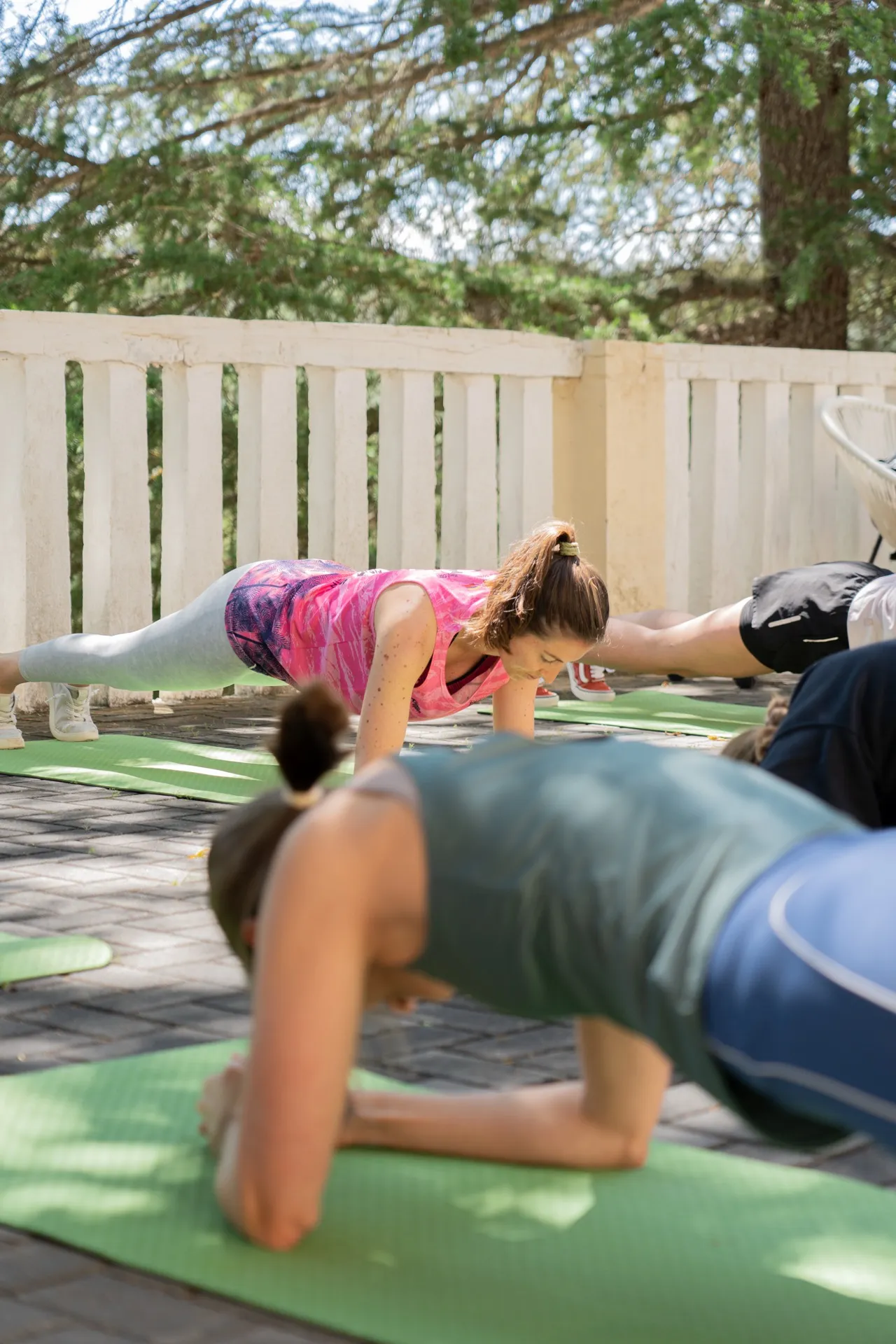
VO₂ Max After 40: Read the Number and Train with Perspective
What VO2 max tells you, why a watch and a gas-analysis test are not equivalent, how to follow the trend and when assessment makes sense before adding intensity.

Menopause hormone therapy in 2026: what changed, what did not, and how to decide safely
Menopause hormone therapy is being reappraised: less inherited fear from WHI, more clinical selection, and one core rule for women’s healthspan: timing, route and risk profile matter.
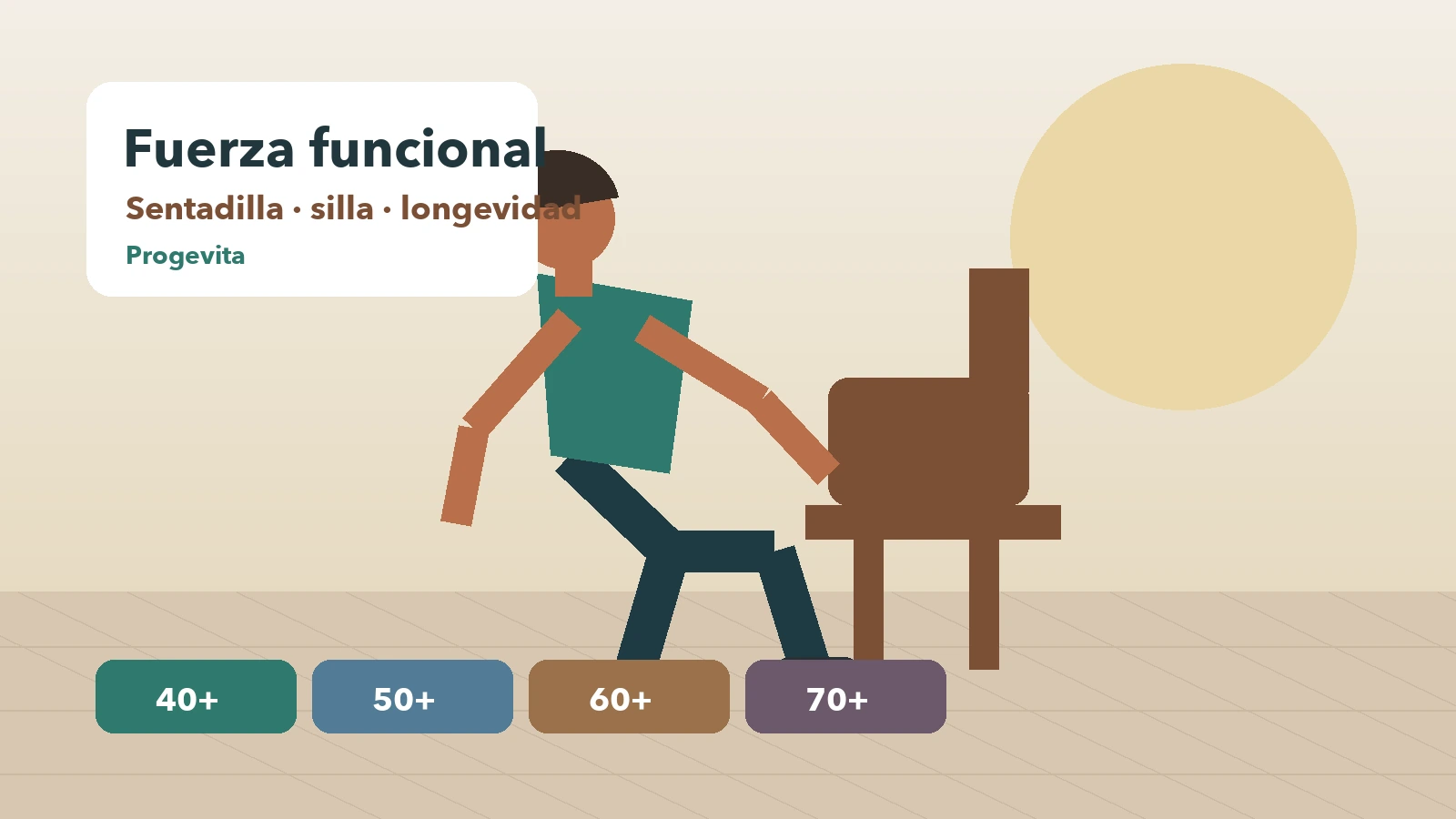
Strength as You Age: What Standing Up From a Chair Can Tell You
Standing up from a chair offers a clue about strength, not a score. How to observe the movement, progress sensibly and know when to seek help.