Back to blog

Perimenopause: symptoms, duration, red flags and what to do

Perimenopause symptoms can include changing cycles, fatigue, hot flashes, broken sleep, brain fog, joint pain and sexual changes. Learn red flags, tests and treatments.

By Clara Fernándezwomen's healthhormonesperimenopausemenopause
Perimenopause: symptoms, duration, red flags and what to do

Perimenopause symptoms can include changing cycles, fatigue, hot flashes, broken sleep, brain fog, joint pain and sexual changes. Learn red flags, tests and treatments.

Summarize with AI:ChatGPTClaudeGemini

Perimenopause is the transition toward menopause: the ovaries still function, but ovulation and hormone patterns become less predictable. That is why periods, sleep, temperature regulation, mood, memory, body composition, sexual health and training recovery can all change.

The common mistake is reducing it to “hot flashes” or ordering one FSH result as if it gave a definitive answer. Updated NICE guidance recommends identifying perimenopause without lab tests in otherwise healthy women aged 45+ with symptoms and menstrual change; deeper evaluation matters when symptoms occur earlier, hormonal contraception or hysterectomy obscure the cycle, bleeding is abnormal or the pattern does not fit.

This guide does not stop at listing symptoms: it separates what is expected from what changes clinical decisions, which labs rule out mimics, which treatments have evidence and when to seek help instead of just pushing through.

June 2026 update: recent evidence shifts the focus. An international Mayo Clinic and Flo study published in Menopause, with 17,494 participants from 158 countries, found a gap between the symptoms people associate with perimenopause and the symptoms they report. Hot flashes remain the most recognized symptom, but among women over 35, fatigue, physical and mental exhaustion, irritability, low mood, sleep problems, digestive symptoms and anxiety ranked highly. That is why this guide asks about energy, sleep, mood, digestion, pain and work, not only periods and heat.

Last clinical and editorial review: June 26, 2026. Method: the current Spanish and English SERP was checked against NICE NG23, the 2025 European Society of Endocrinology guideline, BMS 2026 Menopause Practice Standards, IMS 2026 recommendations, The Menopause Society, Mayo Clinic, 2025-2026 studies and Spanish public-health sources. Clinical guidelines, peer-reviewed evidence and red flags are prioritized over viral advice. This article does not replace individual medical care.

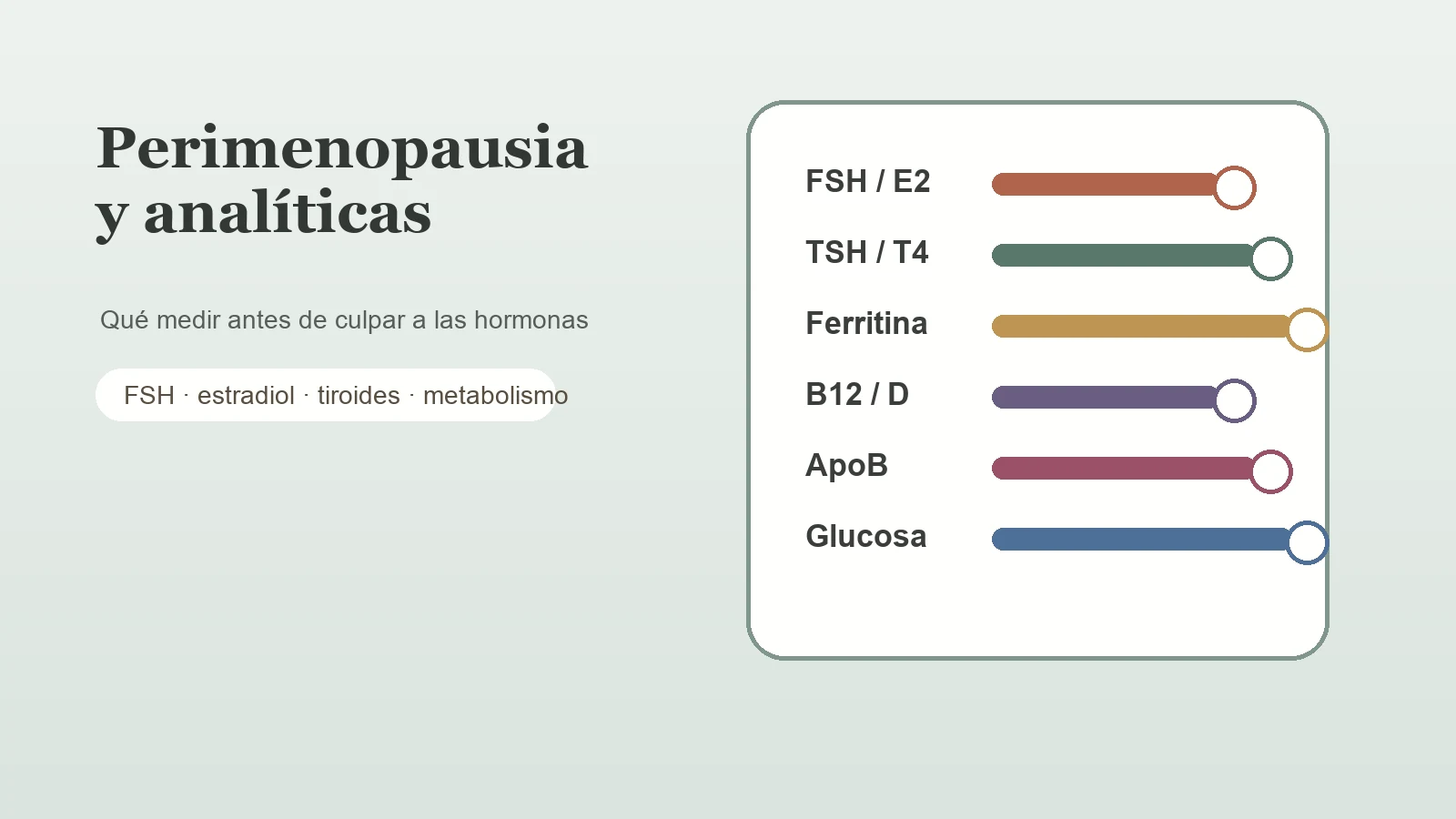
If your question is no longer only “what is happening to me?”, but which blood tests are worth checking —FSH, estradiol, thyroid, ferritin, B12, vitamin D, lipids, glucose and insulin— read our guide to perimenopause blood tests. If memory, word-finding or focus worries you most, continue with brain fog in perimenopause. If joint pain is part of the picture, review joint pain and frozen shoulder. If symptoms are already affecting meetings, sleep or professional confidence, read menopause at work. And if you want to protect bone, metabolism, vascular function and long-term healthspan, review menopause and longevity and our updated analysis of menopause hormone therapy.

Quick answer: perimenopause symptoms

  • The first sign is often menstrual: cycles shortening or lengthening, heavier bleeding or 60-day gaps.
  • Vasomotor symptoms matter: hot flashes and night sweats can disrupt sleep, recovery and mood.
  • Fatigue and exhaustion count too: many women do not present with “hot flashes” first, but with tiredness, irritability, brain fog, digestive change or unrefreshing sleep.
  • Not everything is hormonal: thyroid disease, low iron, low B12, glucose issues, sleep apnea, depression, stress and medications can mimic or amplify the picture.
  • Age changes the diagnostic pathway: 45+ is usually clinical; 40-45 may need FSH; under 40 requires evaluation for premature ovarian insufficiency.
  • Do not wait with red flags: postmenopausal bleeding, very heavy bleeding, chest pain, fainting, unexplained weight loss or disabling symptoms.

What is perimenopause?

Perimenopause is the hormonal transition phase leading up to menopause. It usually begins when ovulation becomes less predictable and estradiol and progesterone patterns vary more from one cycle to the next. It ends 12 months after your final menstrual period; that point officially marks menopause.

Perimenopause ≠ Menopause:

  • Perimenopause: transition phase with symptoms. You still have periods (though irregular).
  • Menopause: the day marking 12 months without a period. It's a point in time, not a phase.
  • Postmenopause: all the years after menopause.

Despite affecting millions of women worldwide, perimenopause remains a poorly understood and often misdiagnosed stage.

When does perimenopause start?

Typical age of onset, as a guide: 40-48 years, though it can start earlier or go unnoticed for a while.

Some women notice changes in their late 30s or early 40s; others do not recognize them until 47 or 48. Family history influences menopause timing, but it cannot precisely predict your individual timeline.

Key data:

  • In Spain and Western Europe, natural menopause often occurs around 50-51 years, with an approximate usual range of 45-55.
  • The transition can begin several years before menopause; for some it is short, for others it lasts longer.
  • If changes begin at 42, you may stay in transition until close to menopause, but real duration varies widely.

Some women develop early symptoms or ovarian insufficiency after ovarian surgery, chemotherapy or radiation therapy, genetic factors, autoimmune disease or smoking. Smoking is consistently associated with somewhat earlier menopause; it is not an exact rule for any one person.

Perimenopause symptoms: beyond hot flashes

Perimenopause symptoms aren't the same for everyone. Some women barely notice them; others describe the stage as "feeling like my body is no longer mine."

Symptoms span multiple systems because estrogen influences many tissues: brain, blood vessels, bone, muscle, skin, vagina, bladder and metabolism.

The 2026 map: do not only look for hot flashes

The gap in many guides is that they ask about classic symptoms, but do not organize the pattern many women actually report: exhaustion, sleep disruption, irritability, digestion, pain and a sense of no longer performing like themselves. That only helps if it leads to decisions, not to an endless symptom list.

What you noticeDo not assumeWhat to check
Exhaustion, low mood or brain fogThat it is only age, stress or lack of discipline.Sleep, night sweats, ferritin, B12, TSH/free T4, glucose, medication and mental load.
Changing bleedingThat all bleeding is normal in perimenopause.Duration, volume, bleeding between periods, CBC/ferritin and gynecologic review if red flags appear.
Palpitations, anxiety or digestive changeThat everything is “hormonal” or everything is anxiety.Caffeine, alcohol, thyroid, anemia, glucose, medication and cardiovascular red flags.
Broken sleep with bladder, pain or low moodThat more hours in bed will solve it.Genitourinary syndrome, sleep apnea, restless legs, inflammatory/mechanical pain, depression and circadian habits.

1. Hormonal and menstrual symptoms

Menstrual irregularity: the most common and earliest symptom. Shorter cycles (21-24 days instead of 28), longer cycles (35-40 days), heavy bleeding (menorrhagia) or very light, periods that skip months then return.

⚠️ Important: if you have very heavy bleeding (changing pads every 1-2 hours) or bleeding between periods, see your doctor. This isn't normal and may require evaluation.

Hot flashes and night sweats: sudden sensation of intense heat in face, neck, chest. Duration: 30 seconds to several minutes. Can occur during the day or at night (night sweats wake you up drenched). Frequency: from 1-2 per month to several times daily.

Hot flashes are the classic symptom and they are common, but not universal. Some cohorts place them at roughly six to eight in ten women during the transition; others never have them or experience them mainly as night sweats, palpitations or broken sleep.

2. Metabolic and body composition symptoms

Waist gain or body-composition change: during the transition, some women gain several pounds or, even without a major scale change, develop more abdominal fat and less muscle. The key issue is not only weight: it is body composition. Fat tends to redistribute: less on hips/thighs, more in the abdomen (visceral fat).

Why? Estrogen variability and relative decline are associated with more abdominal fat in many women. Loss of muscle mass (sarcopenia) lowers basal energy expenditure, and insulin resistance can make it harder to move energy toward muscle instead of storage.

What to measure (not just the scale): Body composition (bioimpedance or DEXA), fasting insulin + HOMA-IR (insulin resistance), HbA1c (glycemic control).

3. Cognitive symptoms and brain fog

Memory lapses and concentration issues: forgetting words mid-conversation, losing your train of thought, difficulty concentrating on complex tasks, "brain fog" — sensation of mental haze.

In most cases, this does not mean you are developing Alzheimer’s disease. It often relates to fragmented sleep, stress, hot flashes and hormonal variability; if it progresses, interferes severely or comes with neurological deficits, it should be assessed.

4. Emotional and mood symptoms

Anxiety, irritability, mood swings: anxiety you didn't have before (palpitations, constant nervousness), irritability ("I explode over small things that didn't used to affect me"), rapid mood swings (crying for no apparent reason), depression or low mood.

The menopause transition is a window of greater vulnerability for depressive symptoms, especially with previous depression, severe premenstrual symptoms, postpartum depression, broken sleep or heavy vasomotor symptoms. The right interpretation is not “it is all in your head”, but “your brain also responds to hormonal variability and fragmented sleep”.

Why? Estrogen participates in serotonin, dopamine and other stress-related circuits. Hormonal fluctuations may increase mood vulnerability, and chronic insomnia worsens emotional state.

5. Sleep disturbances

Insomnia and night wakings: difficulty falling asleep, waking at 3-4 AM unable to fall back asleep, night sweats that wake you up, unrefreshing sleep (you wake tired even after 7-8 hours).

Sleep often worsens through several routes at once: night sweats, more irregular progesterone exposure, more awakenings, anxiety, joint pain and alcohol/caffeine that used to be easier to tolerate.

Public health guidance in Spain makes the same practical point: hot flashes are not the only reason sleep breaks down. Insomnia, depression, restless legs, sleep apnea, urinary symptoms or pain can coexist during the transition. Recent Apple Women's Health Study data point in the same direction: more severe bladder, joint, heart discomfort and depressive symptoms were associated with more disruptive sleep. Translation: before adding more caffeine or buying another supplement, assess sleep as a system.

Why? Some cycles bring less progesterone exposure, a hormone with neuromodulatory effects; night sweats interrupt sleep, and anxiety or racing thoughts can keep the awakening going.

6. Musculoskeletal symptoms

Joint pain and muscle loss: pain in knees, wrists, fingers — without having done anything. Morning stiffness. Loss of muscle strength. Increased risk of osteoporosis (estrogen protects bone).

7. Urogenital and sexual symptoms

Vaginal dryness and changes in libido: vaginal dryness (urogenital atrophy), uncomfortable or painful sex, lower sexual desire, stress urinary incontinence (when coughing, laughing, running).

Pelvic floor weakening: increased risk of prolapse, urinary leakage.

Treatment usually starts with pelvic floor physical therapy, lubricants/moisturizers and, when appropriate, vaginal/local estrogen. Energy-based or radiofrequency techniques should be evaluated cautiously; they are not universal first-line care.

8. Cardiovascular symptoms

Palpitations and cardiovascular risk: palpitations without exertion, rapid heartbeat sensation, increased blood pressure or lipid changes. After menopause, vascular and metabolic risk profiles shift; that is why blood pressure, ApoB/lipids, glucose and insulin matter instead of assuming “it is just anxiety”.

How long does perimenopause last?

Typical duration: 4-8 years, but can be as short as 2 years or as long as 10 years.

Perimenopause phases:

Early phase (1-3 years): Subtle cycle changes (shorter or longer cycles). Mild or absent symptoms. Hormones fluctuate but ovulation still regular.

Late phase (2-4 years before menopause): Very irregular or absent cycles for months. More intense symptoms in some women (hot flashes, insomnia, mood changes). Greater hormonal variability and a trend toward lower sustained estradiol close to menopause.

Why does it happen? The biology behind the symptoms

Perimenopause occurs because ovarian reserve changes with age. Follicle number and response decline, but the process is not a clean linear drop: for years, cycles may bring high, low or shifting estradiol, and ovulation may happen in some cycles but not others.

Key hormonal changes:

  1. Less predictable ovulation and more irregular progesterone: some cycles do not ovulate or produce less progesterone. This can contribute to fragile sleep, irritability and changing bleeding, but it does not explain every symptom by itself.
  2. Estrogen fluctuations: estradiol levels can swing widely, sometimes high and sometimes low. That variability helps explain why one week may feel normal and the next does not.
  3. FSH rises: follicle-stimulating hormone (FSH) tends to rise as ovarian response becomes less consistent. It can provide context in selected cases, but it is not a universal confirmation.

Useful reading: hormonal variability, sleep, vasomotor symptoms, stress, muscle, pain and cardiometabolic risk interact. That is why the plan should measure the whole pattern, not chase one hormone.

Fertility and contraception: you may still ovulate

Perimenopause does not mean immediate infertility. You can have irregular periods and still ovulate in some months; that is why a late period is not always “the transition” and a pregnancy test can still matter if pregnancy is possible.

If pregnancy is not desired, discuss contraception with your gynecologist or clinician. As a practical rule in sexual-health guidance, if you are not using hormones that mask bleeding, contraception is usually continued until 12 months after the final period if it happened at age 50 or older, and 24 months if it happened before age 50; if menopause cannot be confirmed, many guidelines use age 55 as a safety point. Menopause hormone therapy is not contraception. The best method depends on migraine, blood pressure, smoking, bleeding pattern, IUD use, vasomotor symptoms, clot risk and whether endometrial protection is needed. If pregnancy is desired, symptoms start before age 40 or prolonged amenorrhea appears, fertility, ovarian reserve and possible premature ovarian insufficiency deserve a more detailed review.

How to tell if it is perimenopause or another cause

Diagnosis does not start by “ordering hormones”. It starts with three questions: age, menstrual pattern and dominant symptom. Then you decide whether ovarian transition needs confirmation or mimics need to be ruled out.

SituationHow to approach itWhat to measure or rule outWhy it changes the plan
45+ with symptoms and cycle changeClinical diagnosis in most otherwise healthy women.Do not order FSH/estradiol routinely. Check thyroid, iron, B12, glucose/lipids if symptoms point there.Avoid delaying care while waiting for a “perfect number”.
40-45 with symptomsMay be early transition.FSH can help if menstrual change is present; repeat only if it changes decisions.Separates early perimenopause from other causes of amenorrhea, fatigue or bleeding.
Under 40Do not assume “normal perimenopause”.Pregnancy, TSH, prolactin, repeated FSH/estradiol, ovarian/autoimmune history; assess for premature ovarian insufficiency.POI affects fertility, bone, heart and psychological support.
Hormonal contraception, hormonal IUD or hysterectomyThe cycle may not be a reliable marker.Clinical history, vasomotor symptoms, medications and individual risk; FSH can mislead with combined contraception or high-dose progestogens.Avoid interpreting labs out of context.
Bleeding after 12 months without a periodRed flag.Gynecologic evaluation, not “wait and see”.Endometrial pathology and other causes must be ruled out.

Useful biomarkers: the ones that change decisions

NICE recommends not using estradiol, AMH, inhibins, follicle count or ovarian volume to identify perimenopause or menopause in people aged 45+ when the clinical picture fits. That does not mean “measure nothing”: it means measure what prevents mistakes.

AreaUseful testsWhen they matter most
Ovarian transitionFSH ± estradiol, with contextAge 40-45, under 40, atypical amenorrhea or fertility/POI questions. Not as universal screening in 45+.
ThyroidTSH, free T4; antibodies where relevantFatigue, cold intolerance, hair loss, constipation, low mood, weight change or palpitations.
Iron and B12CBC, ferritin, B12/folateHeavy bleeding, fatigue, palpitations, restless legs, brain fog or restrictive diet.
MetabolismGlucose, HbA1c, insulin when relevant, ApoB/lipids, blood pressureWaist gain, broken sleep, family history, hypertension, migraine or cardiovascular risk.
Bone and muscleVitamin D, DEXA by risk, grip strength or functional testsFractures, low body weight, corticosteroids, early menopause, sedentary lifestyle or loss of strength.

For the step-by-step lab map, see perimenopause blood tests. The core idea is simple: do not attribute everything to estradiol before checking sleep, thyroid, iron, metabolism, medication and stress load.

Treatment options: what works, and for which symptom

Treatment should not be chosen by trend, but by dominant symptom, individual risk and goal: sleeping, reducing hot flashes, protecting bone, treating vaginal symptoms, rebuilding strength or addressing mood. The same person may need several small levers, not one large promise.

OptionBest fitLimits and safety
Menopause hormone therapyHot flashes, night sweats, sleep broken by vasomotor symptoms; bone protection in selected profiles.Requires review of contraindications, uterus/progestogen, breast and clot risk, migraine, blood pressure and cardiovascular risk. See our 2026 MHT guide.
Vaginal/local estrogenDryness, painful sex, urinary urgency or recurrent infections linked to genitourinary syndrome.Many formulations have low systemic absorption, but history of hormone-sensitive cancer requires individual review.
Nonhormonal optionsVasomotor symptoms when MHT is not desired or not suitable.The 2023 Menopause Society statement recommends CBT, clinical hypnosis, SSRIs/SNRIs, gabapentin and fezolinetant with different evidence levels; supplements and herbal remedies are inconsistent.
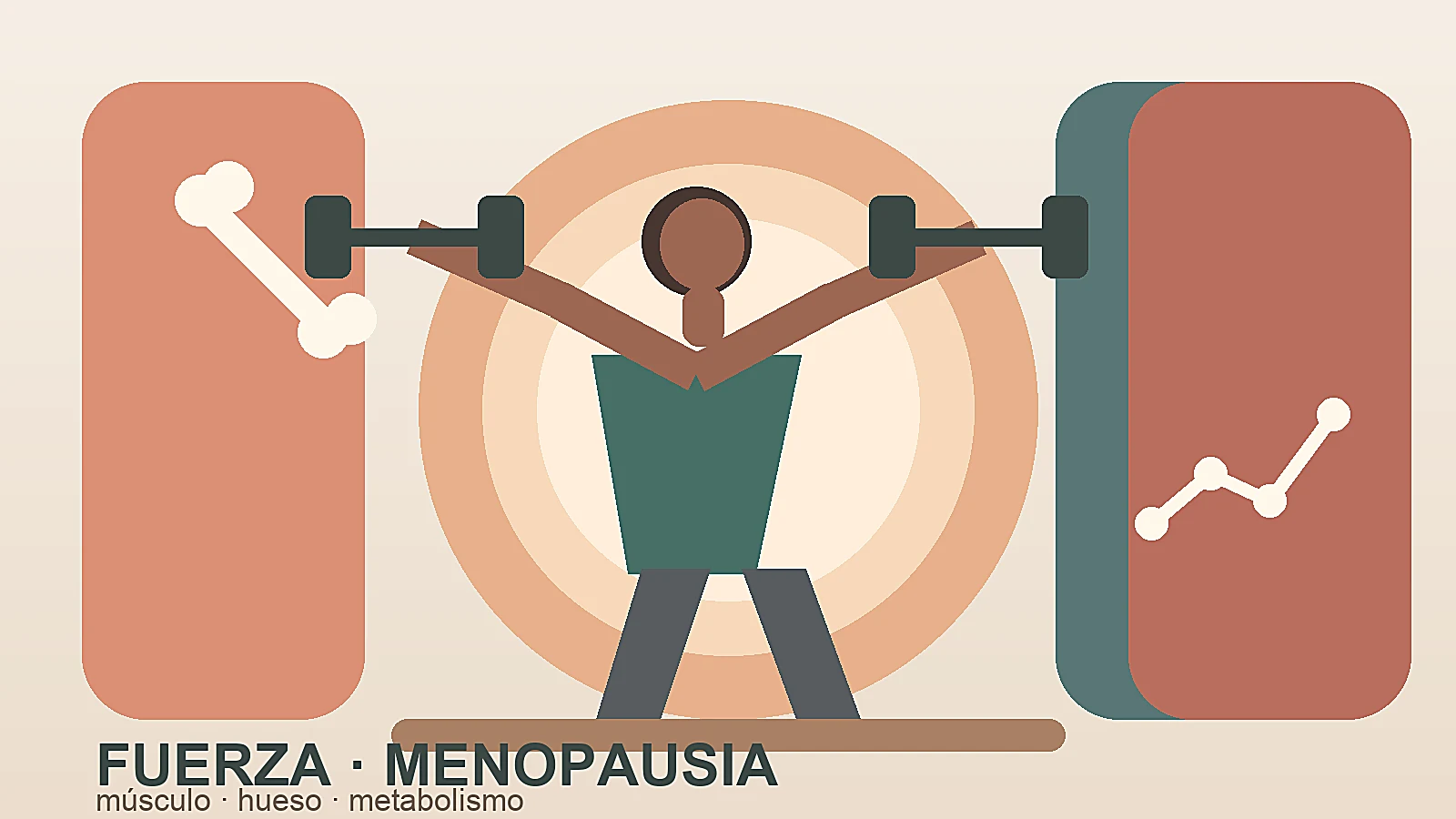
Strength, protein and dosed cardioMuscle loss, visceral fat, sleep, mechanical pain and bone prevention.This is not about “doing more”, but progressing without injury. Start with strength training in menopause.
Sleep, alcohol, caffeine and stress loadNight sweats, anxiety, low HRV, hunger and poor recovery.They do not replace care for severe symptoms, but they change the response to almost everything.

The European Society of Endocrinology guideline adds a useful rule so treatment does not run on autopilot: if hormone therapy is started for symptoms, response should be reviewed after 3 months and dose or formulation reconsidered if response is poor or adverse effects appear. It also stresses that hormone therapy should not be used for primary or secondary cardiovascular prevention, and that route should be individualized in profiles with hypertension, diabetes, migraine or thrombotic risk.

The useful clinical question

Not “which product removes perimenopause?”, but: which symptom is breaking my life, which risk needs measuring and which intervention is most likely to help with the least harm? That question avoids three common errors: normalizing suffering, buying supplements without diagnosis and demonizing hormone therapy when it may be appropriate.

When to seek medical help

Seek care from a team updated in menopause if symptoms affect sleep, mood, work, relationships, training or sexual health. Do not wait if any of these signs appear:

  • Very heavy bleeding (soaking a pad/tampon every 1-2 hours), bleeding between periods or new pelvic pain.
  • Bleeding after menopause: any bleeding after 12 months without a period needs assessment.
  • Symptoms before age 40, prolonged amenorrhea or suspected premature ovarian insufficiency.
  • Chest pain, shortness of breath, fainting, intense palpitations or neurological symptoms.
  • Unexplained weight loss, fever, prolonged joint stiffness or inflammatory pain.
  • Disabling depression, anxiety or insomnia, especially with thoughts of self-harm.

Important: perimenopause being natural does not mean you should endure it without diagnosis. Bone, muscle and sleep loss are also natural when no one intervenes early enough.

How Progevita helps you through this stage

Progevita's Women's Vital Path program is designed for women in perimenopause and menopause.

What's included?

Complete initial evaluation:

  • Analysis of 50+ biomarkers (hormonal, metabolic, inflammatory, cardiovascular)
  • Body composition (bioimpedance)
  • Bone densitometry (if indicated)
  • In-person medical consultation (1 hour)

Personalized 12-month plan:

  • Individualized hormonal protocol (if indicated)
  • Anti-inflammatory nutrition plan
  • Exercise program (strength + adapted cardio)
  • Supplementation based on your biomarkers
  • Supportive interventions only when clinically appropriate, clearly separating standard care from complementary options.

Continuous follow-up:

  • Reviews every 3 months (biomarkers + protocol adjustments)
  • Access to medical team between visits
  • Symptom tracking and adjustments if the plan does not improve sleep, hot flashes, bleeding, strength or quality of life.

Goal: reduce symptoms, measure real risks —bone, muscle, metabolism, sleep, cardiovascular health— and adjust the plan with follow-up. It does not replace gynecologic assessment when bleeding is abnormal or red flags appear.

Conclusion: perimenopause is not the end, it's a transition

Perimenopause can be a challenging stage, but it is also an opportunity to care for your health with more precision. Years of broken sleep, problematic bleeding, pain, low mood or strength loss should not be dismissed as something to endure. Evidence-based interventions can help when they are chosen well.

Three key messages:

  1. You're not alone. Millions of women worldwide are in perimenopause. The symptoms you're experiencing are real and have a biological basis.
  2. You don't have to suffer in silence. Effective tools exist: hormone therapy when appropriate, nonhormonal options, local treatment, nutrition, strength training, sleep work and psychological support when needed.
  3. Prevention starts now. Changes in muscle mass, bone density, sleep and cardiovascular health today can strongly influence health at 60, 70 and 80.

If you're in perimenopause and want a complete evaluation with a personalized plan, Progevita's Women's Vital Path program guides you through this transition.

Request your initial evaluation here: Contact Progevita

References

  1. NICE. Menopause: identification and management NG23. Last updated April 15, 2026. NICE NG23.
  2. British Menopause Society. Menopause Practice Standards. May 2026. BMS PDF.
  3. Women's Health Concern. Contraception for women over the age of 40. December 2025. WHC fact sheet.
  4. Spanish Ministry of Health. Hablemos de la Menopausia. Public-health campaign.
  5. Community of Madrid. Menopause. Health information.
  6. Clinical practice guideline working group on menopause and postmenopause. GuíaSalud / Cochrane Iberoamérica. PDF.
  7. Soares CN. The perimenopause, depressive disorders, and hormonal variability. Sao Paulo Med J. PMC11159580.
  8. Harlow SD et al. Executive summary of STRAW+10. Menopause. 2012. PMID: 22343510.
  9. The 2022 Hormone Therapy Position Statement of The North American Menopause Society. Menopause. 2022. PMID: 35797481.
  10. The 2023 Nonhormone Therapy Position Statement of The North American Menopause Society. Menopause. 2023. PMID: 37252752.
  11. Lumsden MA et al. European Society of Endocrinology clinical practice guideline for evaluation and management of menopause and the perimenopause. European Journal of Endocrinology. 2025;193(4):G49-G81. DOI: 10.1093/ejendo/lvaf206.
  12. Hedges M et al. Global perspectives on perimenopause: a digital survey of knowledge and symptoms using the Flo application. Menopause. 2026. Journal page.
  13. International Menopause Society. Recommendations and Key Messages on Women's Midlife Health and Menopause. 2026 live document. IMS recommendations.
  14. El Khoudary SR et al. Menopause transition and cardiovascular disease risk: implications for timing of early prevention. Circulation. 2020. PMID: 33251828.
  15. Perimenopause symptoms, severity, and healthcare seeking in women in the US. npj Women's Health. 2025. DOI: 10.1038/s44294-025-00061-3.
  16. Apple Women's Health Study. A Transition of Seasons: Sleep Patterns and Changes in Perimenopause. Harvard T.H. Chan School of Public Health, 2026. Study update.
  17. Mayo Clinic. Perimenopause - symptoms, causes, diagnosis and treatment. Mayo Clinic.

This content is educational and does not replace individual medical assessment. If bleeding is abnormal, chest pain, fainting, unexplained weight loss or symptoms before age 40 appear, seek care promptly.

Want to know if the Women's Vital Path program is right for you? Talk to our medical team and design a personalized protocol at Balneario de Cofrentes, Valencia.

women's healthhormonesperimenopausemenopausecortisolWomen's Vital Path
Start Plan