What therapeutic plasma exchange does, what it may remove, what human studies show about biological age, where evidence is weak, who may benefit, risks and typical cost.
Therapeutic plasma exchange (TPE), also known as therapeutic plasmapheresis, is a supervised medical procedure that removes part of a person's plasma and replaces it with albumin or compatible donor plasma while returning the blood cells. It has decades of use in hospitals for immune, neurological and hematological conditions. In longevity medicine, the narrower question is whether reducing inflammatory plasma factors and senescence signals can improve measurable biology in carefully selected people.
In 2025, a clinical trial from the Buck Institute for Research on Aging reported that therapeutic plasma exchange combined with immunoglobulin reduced average biological age by 2.61 years in adults over 50 (Fuentealba et al., Aging Cell 2025). Biweekly TPE without IVIG showed a smaller average reduction of 1.32 years. That is promising, but it is not a guarantee: the trial was small, single-blind, short-term and needs independent replication. TPE should be considered only after blood tests, medical review and a clear risk-benefit discussion.
TL;DR: benefits, risks and cost
- What it does: filters plasma to reduce circulating inflammatory proteins, autoantibodies and some protein-bound plasma components.
- What the evidence suggests: small human studies show improved inflammatory and proteomic markers; a 2025 controlled trial reported biological-age improvements, but larger trials are still needed.
- Who may benefit: people with elevated inflammation, immune dysregulation, autoantibodies or relevant environmental exposure — only after medical screening.
- Main risks: bruising, dizziness, fatigue, electrolyte shifts, allergic reactions and infection risk if not performed under strict clinical protocols.
- Typical cost: often 1,500-4,500 EUR per session in European longevity clinics, depending on protocol and medical supervision.
In this guide, we explain what therapeutic plasma exchange is, how it works step by step, what it can remove from plasma, what the latest science says, what it is used for in conventional medicine and what limits remain when it is considered for longevity.
Before considering a session, place it inside a plan: compare the Optimization Program, review medical treatments and diagnostics, understand what a longevity clinic should measure, read the practical guide to plasmapheresis step by step and, when appropriate, request an initial assessment.
| Question | Short answer | Clinical note |
|---|---|---|
| TPE vs plasmapheresis | Usually the same procedure in therapeutic use. | Different from plasma donation or diagnostic sampling. |
| Longevity benefit | May reduce inflammatory and age-related plasma factors. | Evidence is promising but still developing. |
| Microplastics | Early apheresis studies detected polymer-like particles in extracted plasma. | More quantitative human research is needed. |
| Safety | Generally well tolerated with trained teams and screening. | Not appropriate for everyone; labs and medical history matter. |
What Is Therapeutic Plasma Exchange (TPE)?
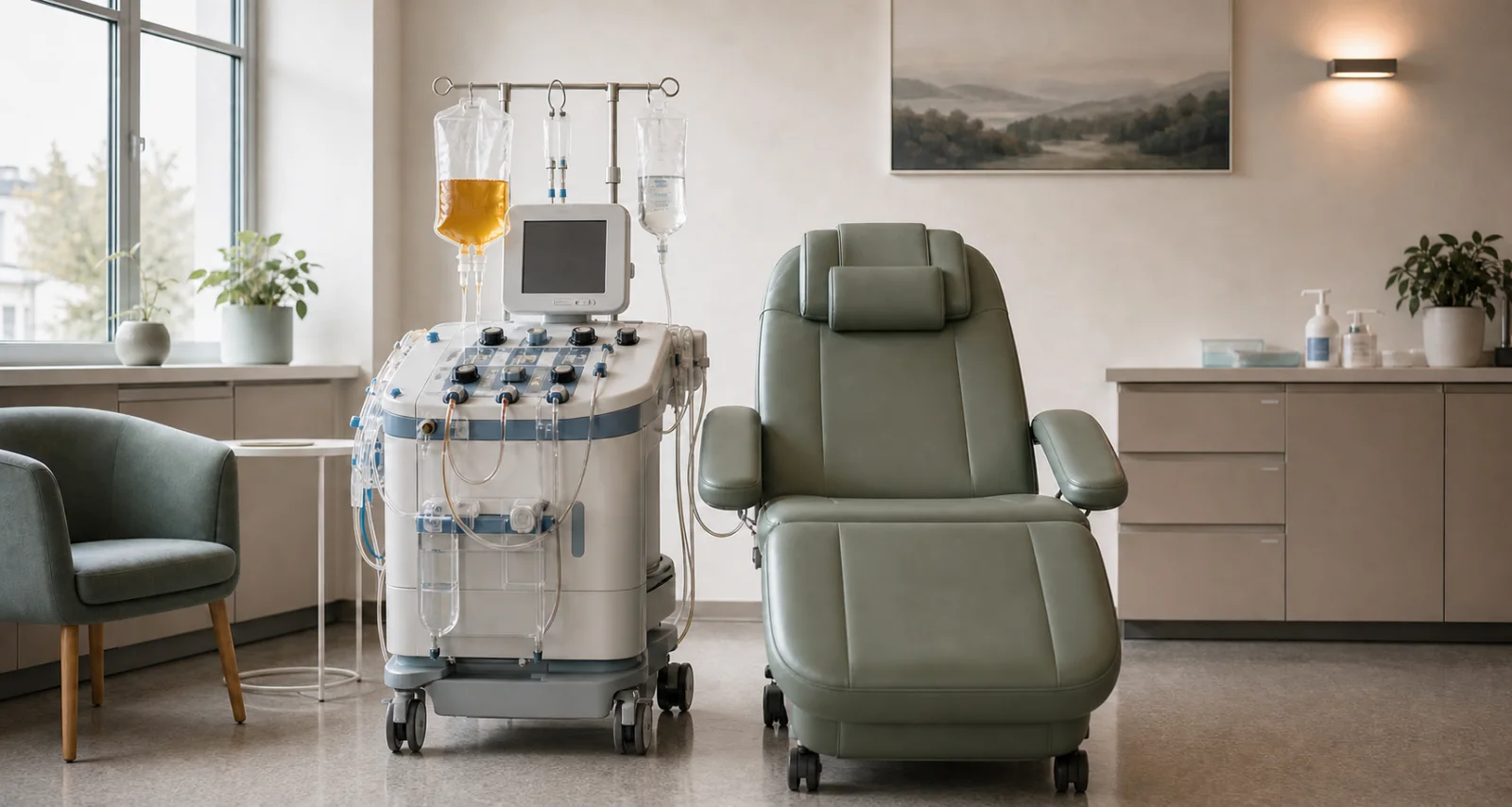
Therapeutic plasma exchange (TPE) is a medical procedure in which blood is removed from the patient, plasma is separated from the cellular components, part of that plasma is removed and replaced with albumin or compatible donor plasma. Red blood cells, white blood cells and platelets are returned to the body.
Terminology: TPE = Plasmapheresis = Plasma Exchange
These terms refer to the same procedure. "Plasmapheresis" is the technical term most used in medicine; "therapeutic plasma exchange (TPE)" is more descriptive. It's also called plasma depuration or simply plasma exchange. It should not be confused with diagnostic plasmapheresis (plasma extraction for analysis) or plasma donation.
How It Works: Step by Step
- Blood extraction: Two intravenous lines are placed (typically one in each arm). One line extracts blood; the other returns it, allowing continuous flow.
- Centrifugation: Blood passes through a machine that centrifuges it, separating it into three components: plasma (the liquid, yellowish part containing proteins, antibodies and soluble mediators), red blood cells (carry oxygen), and platelets and white blood cells (clotting and immunity).
- Plasma removal: Plasma is discarded or filtered depending on the protocol. This compartment contains autoantibodies, fibrinogen, immune complexes, inflammatory proteins and some particles or compounds bound to plasma proteins.
- Replacement with albumin: The removed plasma is replaced with a solution of human albumin (a purified, safe, and well-tolerated protein) or donor plasma. Albumin maintains the body's fluid and protein balance.
- Return of blood components: Red blood cells, platelets and white blood cells are returned to the patient with plasma volume restored.
Typical duration: between 1 hour and 2 hours per session, depending on the patient's weight, height, and hematocrit.
What Does Therapeutic Plasma Exchange Remove?
TPE does not “detox everything” and it does not replace the liver or kidneys. Its advantage is narrower: it acts on the plasma compartment, where autoantibodies, immune complexes, fibrinogen, inflammatory mediators and some protein-bound compounds circulate.
Microplastics and Nanoplastics
A study published in Environment International (2022) detected microplastics in the blood of 77% of people analyzed. These particles come from food packaging, synthetic clothing, tires, cosmetics, and the degradation of plastics in the environment.
A 2025 study in Brain Medicine (PMC12162106) provided the first evidence that therapeutic apheresis may remove microplastic-like particles from extracted plasma. In 21 patients with post-infectious chronic fatigue syndrome, 14 polymer-like signals were detected in the eluate, including polyamide 6 (nylon 6) and polyurethane. The caveat matters: the authors did not quantify total blood microplastic reduction or prove direct clinical benefit. Larger studies should measure plasma before and after apheresis and use quantitative methods such as pyrolysis-GC/MS.
Inflammatory and Senescent Proteins
With age, pro-inflammatory cytokines (IL-6, TNF-alpha), glycated proteins, and factors secreted by senescent cells (the so-called SASP, Senescence-Associated Secretory Phenotype) accumulate. These molecules promote chronic low-grade inflammation (inflammaging), which accelerates aging and increases the risk of chronic diseases.
A human study published in GeroScience (2022, PMID: 35999337) by Kim, Kiprov and colleagues from the Conboy Lab (UC Berkeley) showed that plasma exchange reduced levels of pro-inflammatory proteins and restored a younger proteomic profile.
Environmental compounds bound to plasma
Some persistent organic pollutants, combustion products and lipophilic compounds travel bound to plasma proteins or lipoproteins. TPE may reduce part of that circulating fraction, but it does not replace specific heavy-metal strategies or exposure reduction.
Altered Macromolecules
- Advanced glycation end-products (AGEs): formed when sugar binds to proteins, accelerating vascular and neurological aging.
- Autoantibodies: in autoimmune diseases, the immune system produces antibodies against its own tissues.
What Does the Science Say: Key Studies
Therapeutic plasma exchange is not a passing fad. It has decades of clinical use. The new question is longevity, where evidence has moved quickly but still does not carry the weight of a classic hospital indication.
Key safety point: using TPE for longevity is investigational and outside established ASFA indications. It should not be presented as an approved “anti-aging treatment,” but as a medical intervention that only makes sense with a defined goal, labs, informed consent and stopping rules.
| Question | What we know today | What is still missing |
|---|---|---|
| Does it work for serious diseases? | Yes, for specific therapeutic apheresis indications such as TTP, Guillain-Barré, myasthenia gravis and antibody-mediated rejection. | Indication should follow clinical guidelines and specialist assessment. |
| Can it modulate aging signals? | Human studies show changes in proteomics, inflammation, immunity and some biological clocks. | Larger independent trials with functional follow-up are still needed. |
| Does it remove microplastics? | Microplastic-like particles have been detected in eluate/material removed during double-filtration apheresis. | We still need proof that standard albumin TPE lowers whole-blood microplastics and that this changes symptoms or clinical risk. |
| Is it for everyone? | No. It is a medical procedure involving venous access, anticoagulation and volume replacement. | Candidate profile, goal, biomarkers and stopping rules should be defined first. |
UC Berkeley — Plasma Dilution Rejuvenates Tissues (2020)
Mehdipour et al. (Aging, 2020) demonstrated in mice that simple plasma dilution with saline and albumin (without adding young blood) improved markers in brain, liver and muscle. The finding changed the paradigm: part of the effect may come from reducing age-associated plasma factors, not from adding young blood.
The effect is due to the attenuation of circulating inhibitors that accumulate with age and block the signaling pathways that regulate tissue regeneration (JAK-STAT, TGF-beta, MAPK, NF-κB).
Plasma Dilution Reduces Biological Age in Humans (2022)
Kim et al., GeroScience (2022) — PMID: 35999337
Small longitudinal human study. The treated cohort included 8 middle-aged or older adults, compared with younger and older reference profiles, with repeated samples before and after several rounds of TPE. The results were biomarker-based, not clinical event outcomes:
- Reduction of oxidative DNA damage (8-OHdG marker)
- Decrease in p16 (cellular senescence marker)
- Restoration of lymphocyte/myeloid balance: increase in T cells, B cells, NK cells; decrease in pro-inflammatory macrophages (CD68)
- Proteomic shift: 72 proteins that differentiated younger and older profiles moved toward more youthful levels after TPE
The study observed that TPE promotes a global shift toward a younger proteomic profile, with changes in pro-regenerative, anti-cancer and apoptotic regulators. The proposed mechanism recalibrates JAK-STAT, MAPK, TGF-beta, NF-κB and Toll-like receptor (TLR) signaling pathways, with TLR4 as a nodal point.
Controlled clinical trial — a 2.61-year biological-age signal (2025)
Fuentealba et al., Aging Cell (2025) — DOI: 10.1111/acel.70103
This is the first randomized, placebo-controlled clinical trial focused on human biological age. It included 42 adults over 50 (mean age close to 65) in a single-blind trial with four arms:
- Biweekly TPE
- Biweekly TPE + intravenous immunoglobulin (IVIG)
- Monthly TPE
- Placebo or simulated procedure
The TPE + IVIG group reduced average biological age by 2.61 years according to multi-omic biomarkers; biweekly TPE without IVIG showed a smaller average reduction of 1.32 years. Effects were clearest after the first three sessions and strongest in people with poorer baseline health: higher glucose, bilirubin or liver enzymes.
The honest interpretation is two-sided: this is the strongest human evidence available for TPE and aging biology, but it does not yet prove lower mortality, fewer cardiovascular events or durable functional improvement. The study was also industry-supported, several authors disclosed conflicts, and independent replication is needed.
Apheresis and Microplastics (2025)
Published in Brain Medicine (2025, PMC: 12162106). This is an early signal that double-filtration therapeutic apheresis may remove microplastic-like particles from extracted material. In 21 patients, 14 polymer-like signals were detected in eluate/removed material, including polyamide 6 (67.5% match) and polyurethane (35.3%). It does not yet prove that standard albumin TPE lowers whole-blood microplastics or produces direct clinical benefit.
Other relevant studies, including cautionary data
- Kiprov, Transfusion and Apheresis Science (2021): editorial on TPE, blood products and longevity implications; useful context, but not a clinical trial.
- Healthy donor plasmapheresis trial (PMC12218284, 2025): repeated plasma collections without albumin or young plasma replacement lowered lipids, total proteins and albumin, but did not show epigenetic rejuvenation; some clocks such as DNAmGrimAge, Hannum and Dunedin Pace of Aging worsened. This is not the same protocol as therapeutic TPE, but it shows why protocol design matters.
- Double-filtration studies: show biomarker changes, but they are usually small, heterogeneous and do not prove durable clinical benefit.
What Is Therapeutic Plasma Exchange Used For?
TPE has two worlds of application: conventional medicine, with established indications, and longevity medicine, where it is being studied as a higher-intensity intervention for selected profiles.
In Conventional Medicine (Established Indications)
The 2023 ASFA guidelines review 91 clinical fact sheets and 166 graded therapeutic apheresis indications. In practice, TPE is used, depending on indication and specialist assessment, in situations such as:
- Thrombotic thrombocytopenic purpura (TTP): one of the classic first-line indications.
- Guillain-Barré syndrome and myasthenia gravis: especially in selected severe flares or crises.
- Antibody-mediated disease: for example anti-GBM disease or some severe lupus cases.
- Hyperviscosity syndrome: in Waldenström macroglobulinemia or other gammopathies.
- Post-transplant: antibody-mediated rejection within specialist protocols.
In Longevity Medicine (The New Paradigm)
The longevity application should not be sold as a universal anti-aging treatment or as an established ASFA indication. It makes more sense as an investigational medical intervention to test whether reducing inflammatory burden and plasma factors improves measurable biomarkers in a specific person.
- Reduce inflammaging (chronic low-grade inflammation): lower the circulating burden of pro-inflammatory cytokines, SASP factors and glycated proteins.
- Explore environmental burden: the hypothesis around microplastics and other compounds is interesting, but still needs quantitative measurement.
- Modulate immune function: restore, if biomarkers confirm it, lymphocyte/myeloid balance and immunosenescence signals.
- Optimize the cellular environment: by reducing circulating inhibitors of pathways such as JAK-STAT, MAPK or TGF-beta, TPE may support tissue repair.
- "Phase zero" before other treatments: TPE can be considered before interventions such as NAD+ IV or hyperbaric oxygen, but only with a goal and response metric.
- Evaluate symptoms: some people report mental clarity or energy, but symptoms should be interpreted alongside biomarkers, not as proof on their own.
How to Decide: 7 Clinical Questions
The difference between a serious medical intervention and an expensive trend is the quality of the questions asked before treatment. Before considering TPE for longevity, answer:
- Concrete goal: lower inflammation, prepare another therapy, improve symptoms or move a defined biomarker?
- Baseline biomarkers: hsCRP, suPAR, IL-6, fibrinogen, ApoB, glucose, insulin, HbA1c, liver and kidney function, albumin, coagulation and complete blood count.
- Vascular and venous risk: good venous access, anemia, anticoagulation, recent bleeding or hemodynamic instability?
- Less invasive alternatives: strength training, Mediterranean diet, visceral fat loss, sleep and ApoB control often deliver higher returns if basics are missing.
- Protocol type: TPE with albumin, TPE with IVIG, double filtration and plasma donation are not the same intervention.
- Success metric: define what should improve and by when before repeating sessions.
- Follow-up: repeat labs after 4-12 weeks and do not treat subjective sensations as proof.
What a Therapeutic Plasma Exchange Session Is Like
Before the session: preparation
- Pre-session blood test: complete blood count, kidney function, liver function, electrolytes, total proteins, albumin. This confirms you're a candidate and allows protocol adjustment.
- Medical evaluation: the medical team reviews your history, current medication, objectives (clinical vs. longevity).
- Informed consent: benefits, risks, and procedure are explained.
During the session
- Placement of intravenous lines: typically two lines are used (one in each arm). If not possible, a double-lumen catheter is used.
- Circuit initiation: blood flows continuously. Through one line it exits, passes through the machine, is centrifuged, plasma is separated, replaced with albumin, and returns through the other line.
- Sensations: most patients feel nothing or only a slight feeling of cold (because the returned blood is at a slightly lower temperature than body temperature). You can read, watch a series, work on your laptop, or simply relax.
- Duration: between 1h 10min and 2 hours, depending on your weight and the volume of plasma to be processed.
- Completion: lines are removed, pressure is applied to the puncture points (as in a normal blood draw), and done.
After the session
- Immediate effects (24-48h): some people report more energy or mental clarity, although this should not be the only success criterion.
- Medium-term effects (weeks): symptoms, recovery and stress tolerance should be compared with the baseline state.
- Long-term effects (months): reduction in inflammatory biomarkers (hsCRP, suPAR, fibrinogen) or changes in biological age if measured with epigenetic clocks.
Typical Protocol
- For longevity: cycles of 3-6 sessions spaced 1-4 weeks depending on objective and individual response.
- For autoimmune diseases: more intensive protocols (daily or 2-3 times per week) depending on pathology.
What to measure before and after
| Timing | Useful markers | Why they matter |
|---|---|---|
| Before | Complete blood count, ferritin, albumin, total protein, electrolytes, kidney/liver function, coagulation | Safety, procedure tolerance and exchange-volume planning. |
| Before and 4-12 weeks after | hsCRP, suPAR, IL-6, fibrinogen, glucose, insulin, HbA1c, ApoB, blood pressure, HRV when available | Confirms whether inflammation and cardiometabolic risk actually move. |
| Optional | Epigenetic age, proteomics, metabolomics or contaminant panels | Useful in research or advanced programs, but should not be the only success criterion. |
Possible Side Effects
Most common (mild): bruising at the puncture site, dizziness or temporary fatigue (resolves in hours), feeling of cold during the procedure.
Rare: infection at the puncture site (low risk with proper sterile technique), allergic reaction to replacement fluid, citrate-related hypocalcemia (tingling, cramps or numbness), hypotension, arrhythmias, bleeding, transient reduction in immunoglobulins or clotting factors and complications from central venous access if used.
Absolute or high-risk contraindications: severe hemodynamic instability, known allergy to the replacement fluid, active uncontrolled bleeding, relevant anemia or coagulopathy, significant active infection or inability to obtain safe venous access.
TPE can be safe when performed by trained professionals with proper equipment, but it should not be trivialized as a wellness infusion.
Therapeutic plasma exchange cost: what changes the real price
Search results show very different price ranges because not every offer includes the same thing. A single plasmapheresis session, an albumin-based TPE cycle, double filtration and a medically supervised longevity protocol with labs and follow-up are not equivalent products.
| Cost driver | Why it matters |
|---|---|
| Volume and number of sessions | A one-off session is different from a 3-6 session cycle with follow-up. |
| Replacement strategy | Albumin, donor plasma, IVIG and double filtration have different costs and goals. |
| Medical supervision | Safe TPE should include history, labs, coagulation/electrolyte checks and stopping rules. |
| Program context | The real value depends on whether it is linked to biomarkers, nutrition, exercise and follow-up. |
As a practical benchmark, European longevity clinics often sit around 1,500-4,500 EUR per session. More important than the raw price is what is included: pre-session labs, responsible physician, albumin or plasma replacement, monitoring during the session, follow-up labs and a clear decision rule for repeating or stopping. Be cautious with offers promising “total detox,” guaranteed microplastic removal or rejuvenation without biomarkers.
Therapeutic Plasma Exchange at Progevita
At Progevita, therapeutic plasma exchange is not an isolated treatment. We integrate it within personalized longevity programs based on advanced diagnostics and 12-month follow-up.
Our approach: measure burden, reduce it, sustain the response
- Initial diagnosis: before any treatment, we measure more than 50 biomarkers: inflammation (hsCRP, suPAR, IL-6), metabolism (glucose, insulin, HbA1c), liver and kidney function, hormonal profile, body composition, VO2max, epigenetic age.
- Plasma burden reduction phase: we aim to reduce inflammatory proteins, fibrinogen, immune complexes and, when measured, some compounds or particles associated with plasma.
- Support and recovery phase: when the case supports it, we combine personalized IV support (for example NAD+ or high-dose vitamin C), ozone therapy for immune modulation, hyperbaric oxygen or bioidentical hormone therapy when indicated.
- Follow-up and adjustment: at 3, 6, and 12 months we review biomarkers and adjust the protocol.
Specialized Medical Supervision
Plasma exchange at Progevita is performed by physicians specialized in longevity medicine with training in therapeutic apheresis. The protocol is decided after medical history, blood tests and risk review; it is not prescribed by calendar or as a generic “detox.”
Is Therapeutic Plasma Exchange Right for You?
Profiles worth a medical discussion: people aged 45-75 with repeated signs of chronic inflammation, relevant environmental exposure, autoantibodies or persistent symptoms such as fatigue and slow recovery. Markers like hsCRP > 1.5 mg/L or suPAR > 3 ng/mL can be conversation triggers, not automatic indications.
Not a priority if: low baseline inflammation and optimal metabolic health, age < 40 without risk factors, anemia, altered coagulation, active infection, major fear of venous access, or if exercise, nutrition, sleep, blood pressure, ApoB and body composition are still not addressed.
If you have doubts about whether plasma exchange can benefit you, consult with our medical team. We evaluate your case personally and propose the most appropriate plan.
Frequently Asked Questions
Is therapeutic plasma exchange the same as plasmapheresis?
Yes. Therapeutic plasma exchange, plasmapheresis, and TPE are terms for the same procedure. "Plasmapheresis" is the technical term most used in medicine; "therapeutic plasma exchange" or "TPE" is more descriptive and accessible.
Is plasma exchange painful?
No. It's similar to a blood draw with two intravenous lines. Some people feel a slight pressure when needles are placed, but the procedure itself is painless. Most patients read, work, or rest during the session.
How many sessions are needed to see results?
For longevity and optimization, some protocols use cycles of 3-6 sessions spaced 1-4 weeks apart, but this should be individualized. In Fuentealba et al. (2025), the clearest effects appeared after the first three sessions; that does not mean three sessions are necessary or appropriate for everyone. For autoimmune diseases, protocols are more intensive and depend on the clinical indication.
Does it remove microplastics from the blood?
Recent studies (Brain Medicine 2025, PMC12162106) suggest that double-filtration therapeutic apheresis may remove microplastic-like particles from extracted material. In 21 patients, polymer-like signals such as polyamide 6 and polyurethane were detected in eluate/removed material. The field is emerging: we still need evidence that standard albumin TPE lowers whole-blood microplastics and changes symptoms or clinical risk.
Does plasma exchange have side effects?
Usually mild: bruising at the puncture site, dizziness or temporary fatigue, feeling cold and citrate-related calcium changes. Serious side effects are rare when TPE is performed with sterile technique, pre-screening and medical supervision, but they exist: hypotension, allergic reaction, bleeding, infection or venous-access complications.
How much does therapeutic plasma exchange cost?
The price varies depending on the protocol, number of sessions, and whether it is combined with other treatments. In Spanish longevity clinics, the range often sits around 1,500-4,500 EUR per session. At Progevita, cost is assessed within a complete program with diagnostics, a clinical objective, follow-up and continuation criteria. Consult with our team for a personalized assessment.
How long does the effect of plasma exchange last?
Changes may last weeks or months, but real duration depends on protocol, baseline biomarkers and lifestyle. Habits that reduce the effect: tobacco, excessive alcohol, sedentary lifestyle, pro-inflammatory diet and high pollution exposure. Habits that sustain it: Mediterranean diet, strength + cardio, quality sleep and stress management. Maintenance should not be calendar-based; it should be guided by biomarkers and tolerance.
References
- Connelly-Smith et al. (2023). "Guidelines on the Use of Therapeutic Apheresis in Clinical Practice — ASFA Ninth Special Issue." PMID: 37017433
- Fuentealba et al. (2025). "Multi-Omics Analysis Reveals Biomarkers That Contribute to Biological Age Rejuvenation in Response to Single-Blinded Randomized Placebo-Controlled Therapeutic Plasma Exchange." Aging Cell. DOI: 10.1111/acel.70103
- Kim et al. (2022). "Old plasma dilution reduces human biological age: a clinical study." GeroScience. PMID: 35999337
- Mehdipour et al. (2020). "Rejuvenation of three germ layers tissues by exchanging old blood plasma with saline-albumin." Aging. PMID: 32474458
- "Therapeutic apheresis: A promising method to remove microplastics?" (2025). Brain Medicine. PMC: 12162106
- Kiprov D. (2021). "Therapeutic plasma exchange (TPE) and blood products — Implications for longevity and disease." Transfusion and Apheresis Science. PMID: 34074614
- Healthy donor plasmapheresis trial (2025). "Human clinical trial of plasmapheresis effects on biomarkers of aging." PMC: 12218284
- Leslie et al. (2022). "Discovery and quantification of plastic particle pollution in human blood." Environment International. PMID: 35367073
- Cleveland Clinic. "Plasmapheresis (Plasma Exchange): Therapy, Procedure & What It Is." Cleveland Clinic
- American College of Rheumatology (2025). "Plasma Exchange (Plasmapheresis)." ACR patient guidance
This article is for informational purposes and does not replace individual medical consultation.
Want to know if plasma exchange is right for you? Talk to our medical team and design a personalized protocol at Balneario de Cofrentes, Valencia.