
A neutral guide to comparing longevity clinics in Spain, Valencia and Madrid: authorization, team, tests, follow-up and warning signs.
Choosing a longevity clinic in Spain, whether in Valencia, Madrid or elsewhere, starts with a very practical question: which healthcare decision will this visit improve? An elegant building, a very long biomarker list or a word such as “rejuvenation” cannot answer that alone. You need to know who assesses you, why each test matters, what the risks are and who stays responsible afterward.
This guide does not rank centers or declare a winner. It helps you compare proposals with the same script, whether you want a consultation near home or are considering travel for a residential program. Location changes logistics. Quality is verified in other ways.
The short version before booking
- Start with your task: prevention, a second opinion, symptoms, performance or a supported habit-change stay do not need the same format.
- Verify the healthcare layer: operator, authorization, registered services, responsible professional and incident pathway.
- Ask for decisions, not quantity: every test should lead to maintaining, changing, repeating or ruling out something.
- Compare the complete cost: healthcare, hospitality, extras, cancellation and follow-up should be separated.
- Plan the return home: the value of a stay falls quickly if nobody reviews how the plan works in real life.
“Longevity clinic” is a label, not one standard method
The same label can describe a preventive medicine consultation, a hospital unit, an outpatient center with advanced tests or a stay combining healthcare and accommodation. Do not assume that all of them provide the same service. Ask the provider to separate three layers in writing:
- Healthcare: medical history, examination, indicated tests, diagnosis, prescribing or treatment.
- Support: nutrition, exercise, sleep and help sustaining behavioral change.
- Hospitality and wellness: room, food, spa, activities and setting.
All three can add value, but they are not interchangeable. A pleasant stay does not demonstrate medical effectiveness. A technically sound consultation may also be too limited if you need daily support to turn recommendations into habits.
Gate zero: verify who provides the healthcare
In Spain, Royal Decree 1277/2003 establishes the general framework for authorizing healthcare centers, services and establishments. REGCESS provides a center search, while each autonomous community manages authorization and its registry. The Valencian Community also maintains a searchable regional registry (sources 1 to 3).
Finding the trading name is not enough. The useful check connects the operator, address, center and authorized services with what is being sold. A company may provide hospitality while working with a separate healthcare provider. That arrangement is not necessarily a problem, but it should be clear before payment.
| What to verify | Specific question | What should become clear |
|---|---|---|
| Entity and center | Which legal entity invoices me, and where is each service provided? | Operator, address and responsibilities without ambiguous names. |
| Authorization | What is the registration number and which services does it cover? | The registry, site and purchased activity match. |
| Clinical lead | Who integrates results and signs the plan? | Name, role, credentials and contact route. |
| Consent and records | Which information will I receive, and how can I obtain my records? | Risks, alternatives, consent and access to reports. |
| Incidents | What happens if I develop a reaction or symptom during the stay? | Available staff, referral route and later contact. |
Spain's Law 41/2002 covers rights related to information, autonomy, consent and clinical documentation (source 4). You do not need to memorize the law to compare clinics. You should pause if a center avoids putting risks, alternatives, the responsible professional or access to your report in writing.
Start with the problem, not the catalog
A preventive consultation for someone without symptoms is not designed like an assessment for new fatigue, injury recovery or chronic disease follow-up. Before looking at treatments, write down in one sentence what you want to solve and what care you already receive. If you have new symptoms or active disease, the correct treating specialty may be the priority, not a longevity program.
| Main need | Format that may fit | Question that prevents overbuying |
|---|---|---|
| Preventive review | Outpatient consultation or unit | What does this add to my usual care and recent tests? |
| Second opinion | Consultation with the relevant clinical profile | Does this professional have real experience with my question? |
| Supported habit change | Longitudinal program or structured stay | How does the first week become a three-month plan? |
| Rest and wellbeing | Retreat or wellness accommodation | Am I buying rest or healthcare? |
| Unexplained symptoms | Coordinated diagnostic pathway | Who prioritizes tests and refers me if a relevant signal appears? |
If you are mainly looking for a stay, also read our guide to separating a longevity retreat in Spain from a healthcare program. They are neighboring purchase decisions, but they are not identical.
Useful tests are tests that change a decision
A large panel may uncover incidental findings, and it may also create noise, repeat testing and appointments that do not help. Before accepting a test, ask which hypothesis it evaluates, what its limitations are and what happens after a normal, uncertain or abnormal result. “Measure everything” is not a clinical plan.
The foundation is usually less glamorous and more actionable: history and medication, blood pressure, cardiometabolic risk factors, habits and functional capacity, selected for the individual. Cardiovascular guidelines illustrate the logic of estimating risk and adapting decisions rather than applying an identical battery to everybody (source 8).
Biomarkers of aging are an active research field. Work by Moqri and colleagues proposes criteria for classifying and validating them, but a reproducible measure does not automatically become clinically useful. It must also relate to meaningful outcomes and add something to the decision (sources 6 and 7). This is why an epigenetic clock or “biological age” result should not act as a diagnosis or a direct ticket to treatment.
| Type of measure | Reasonable use | Control question |
|---|---|---|
| History, medication and examination | Define risk, context and priorities | Which fact from my case changes the proposal? |
| Conventional clinical measures | Estimate risk and track specific goals | What is the target, and when will it be repeated? |
| Physical capacity and body composition | Translate health into function and guide training | Is the test valid and safe for me? |
| Omics or biological age | Selected exploration with explicit limitations | What does it add beyond conventional data? |
| Imaging or broad screening | Only with an indication and a plan for findings | Which false positives and next steps are possible? |
The same rule applies to recovery and performance: measuring makes sense when the result changes training load, rest, nutrition or medical evaluation. Our guide to recovery biomarkers for athletes develops that principle with examples.
Personalization does not mean adding more things
You can recognize a personal plan by its priorities and trade-offs. It should say which problem comes first, which intervention is proposed, which result the team expects to observe, when it will be reviewed and what would lead them to stop or change it. It should also integrate your preferences, budget, ability to travel and existing medical care.
The WHO frames healthy ageing around functional ability and being able to do what matters, not a race to obtain the youngest biological number (source 5). That perspective grounds the goals: climbing stairs confidently, maintaining strength, sleeping regularly or reducing a clinical risk may matter more than moving an experimental marker.
Our guide to personalized longevity protocols offers a simple test: every component needs a goal, evidence, risk, measure and exit criterion.
Valencia or Madrid: decide by continuity, not geographic prestige
For an initial consultation, frequent adjustments or coordination with other specialists, proximity often supports continuity. A stay outside the city can make sense if it concentrates several assessments, offers daily support or lets you practice a routine. Travel does not improve a program by itself.
Compare the complete experience: door-to-door time, accessibility, who is available during the stay, how incidents are handled and who reviews the data once you return. If the plan requires repeat visits, add those journeys before deciding. If follow-up is remote, ask about frequency, channel and the responsible professional.
Request a written proposal you can compare
Send the same email to your shortlisted centers. Describe your goal, relevant history, medication, recent tests, availability and home city. Ask for a response separating:
- pre-assessment and admission criteria;
- included consultations, tests and treatments;
- the professional responsible for each decision;
- risks, contraindications and alternatives;
- accommodation, meals, transport and other services;
- possible extras and who authorizes them;
- final deliverable, follow-up and measures;
- cancellation and what happens if something is no longer indicated.
This prevents you from comparing a hotel rate with a medical program or a blood panel with several months of follow-up. It also reveals whether personalization exists before payment or only in the marketing language.
Warning signs that justify a pause
- Promises to reverse age, guarantee extra years or solve very different problems with the same package.
- Tests without an explanation of variability, false positives or later decisions.
- Treatments offered before reviewing history, medication and contraindications.
- No verifiable healthcare operator, registration number or responsible professional.
- A quote that combines medicine, accommodation and extras without a breakdown.
- Pressure to book immediately or prepay optional therapies.
- A final report without follow-up, measures or a route for sharing it with your usual care team.
A good answer does not have to recommend the largest program. Sometimes it will be a short consultation, repeating a measure later, coordinating with your doctor or not doing a test. The ability to say “this is not indicated” is more useful than a spectacular catalog.
Frequently asked questions
What separates a longevity clinic from a wellness center?
The word longevity is not enough. If healthcare is provided, there should be an authorized center or service, identified professionals, a medical record, an indication, consent when required and a follow-up pathway. A wellness service may help with rest or habits, but it should not present itself as medical diagnosis or treatment.
How can I verify a longevity clinic's authorization in Spain?
Ask for the legal entity, address, registration or authorization number and specific authorized services. Then check the center in REGCESS or the autonomous community's healthcare registry. Confirm that the service you plan to buy is included in its authorized scope.
Is it better to choose a clinic in Valencia or Madrid?
The city does not establish clinical quality. Proximity often matters for a consultation or frequent follow-up. For a multi-day stay, coordination, safety and the plan afterward matter more. Compare the complete journey and confirm who will look after you once you return home.
Which tests should a longevity clinic include?
There is no universal panel. Tests should respond to your history, symptoms, age, medication and goals, and every result should connect to a decision. Blood pressure, cardiometabolic risk, body composition and physical capacity often add context; other tests only make sense when there is a specific clinical question.
Can a biological age test guide treatment?
It may provide exploratory information, but it should not act as a diagnosis or an automatic reason to sell a therapy. Ask which method is used, how variable it is, whether it is validated for your population and what decision it adds beyond your medical history and conventional measures.
What should the quote include before I book?
Request a written breakdown of accommodation, meals, consultations, laboratory and functional tests, treatments, supplements, transport, cancellation and follow-up. Ask what is optional, what may change after medical assessment and what happens if an intervention is ultimately not indicated.
What follow-up should a longevity program provide?
Before you begin, it should be clear who will review the results, when the first follow-up happens, which measures will be repeated and how the plan will change. A report without an owner, schedule or criteria to continue or stop leaves personalization unfinished.
When should I not wait for a longevity consultation?
For chest pain, severe breathing difficulty, signs of stroke, fainting, major bleeding or another potentially urgent symptom, seek urgent care. For new symptoms, active disease or medication changes, start with the appropriate treating professional; a longevity assessment does not replace that pathway.
Sources
- Spanish Official State Gazette. Royal Decree 1277/2003 on the authorization of healthcare centers, services and establishments, consolidated text accessed 30 August 2026.
- Spanish Ministry of Health. General Registry of healthcare centers, services and establishments (REGCESS), accessed 30 August 2026.
- Valencian Government. Regional Registry of Healthcare Centers, Services and Establishments, accessed 30 August 2026.
- Spanish Official State Gazette. Law 41/2002 on patient autonomy, information and clinical documentation, consolidated text accessed 30 August 2026.
- World Health Organization. Ageing and health.
- Moqri M. et al. Biomarkers of aging for the identification and evaluation of longevity interventions. Cell, 2023. PMID 37657418.
- Moqri M. et al. Validation of biomarkers of aging. Nature Medicine, 2024. PMID 38355974.
- Visseren F.L.J. et al. 2021 ESC Guidelines on cardiovascular disease prevention in clinical practice. European Heart Journal, 2021. PMID 34458905.
Editorial and source review completed on 30 August 2026. This content is educational and does not replace an individual medical assessment.
Related articles
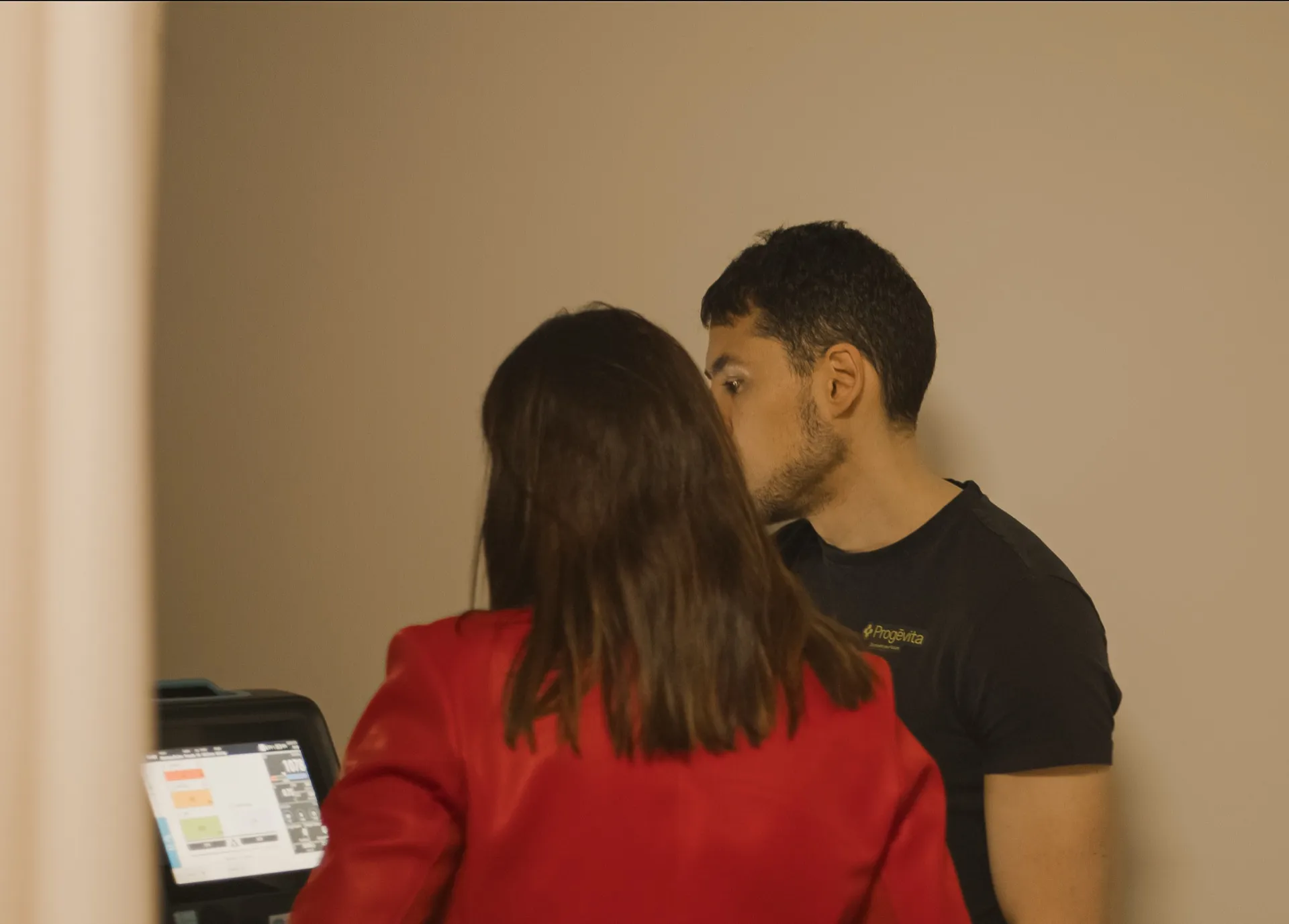
Midjourney's body scanner: what we know and what remains unproven
The prototype promises a full-body ultrasound scan in about 60 seconds. We separate the demo, the science of the field and the evidence still missing.
DunedinPACE and aging speed: how to read a 0.57x result
A 0.57x result does not mean living almost twice as long. Here is what DunedinPACE measures, why it can change and when repeating it may be useful.

Longevity Retreat in Spain: How to Choose Near Madrid Without Buying Hype
Rest, luxury and medical supervision are not the same purchase. A neutral guide to comparing retreats in Spain, checking safety and knowing what you buy.

Telomeres: What a Test Measures and What It Really Means
Telomeres protect chromosomes, but a test cannot predict your lifespan. Learn what it measures, why results vary and when testing has clinical value.