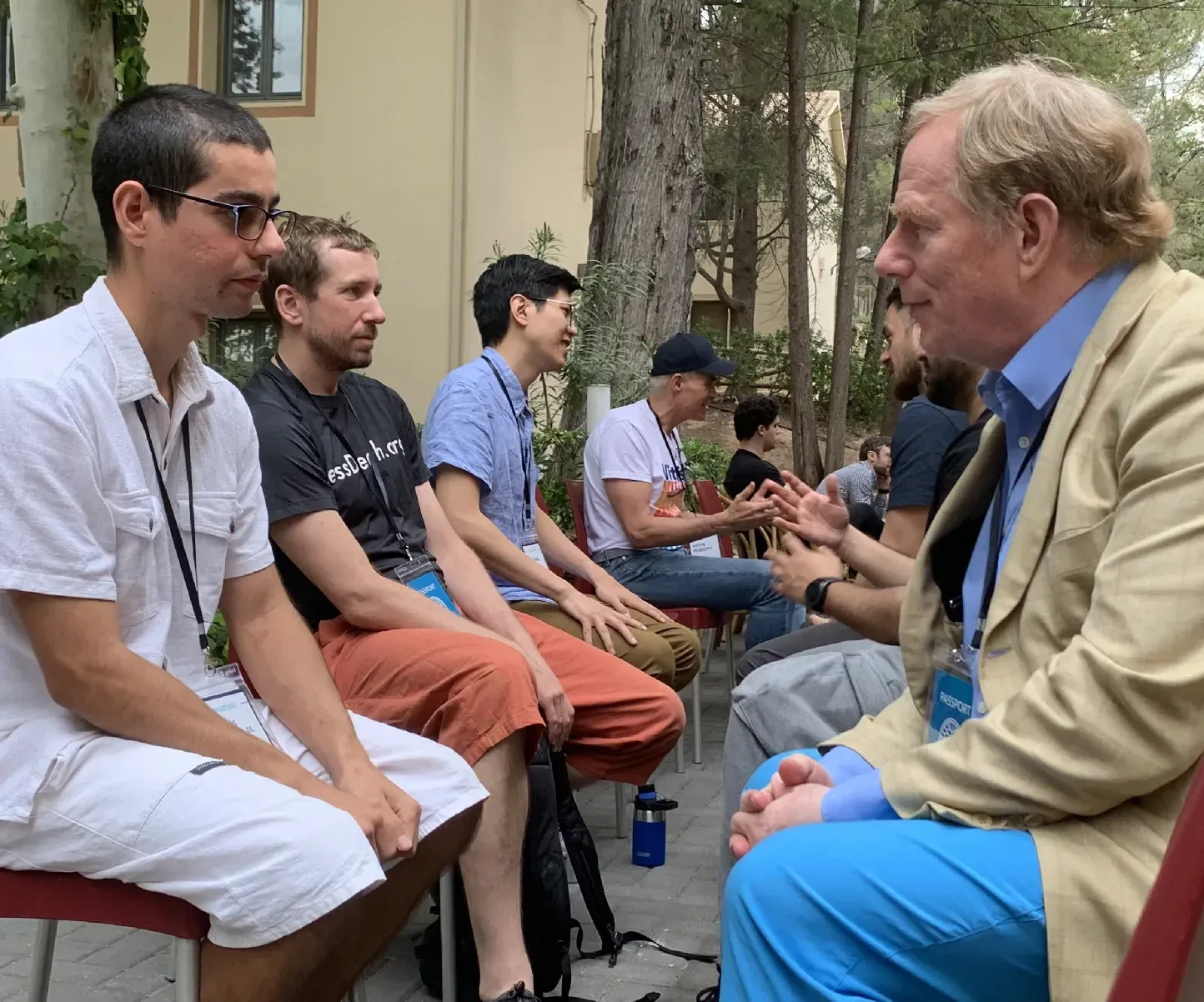
Valencia combines biomedical research, digital health, connectivity and clinical providers, but hub is not accreditation. See which signals are real, what they cannot prove and how to choose.
Is Valencia already a European longevity hub? The short answer is that it has interesting pieces, but there is no accreditation that stamps the title on a map. A hub describes a concentration of research, talent, companies, healthcare, investment and connections. It does not certify a clinic or show that its patients live longer.
Valencia does have signals worth examining: visible health research institutes, digital-health activity, international transport, a history of ageing conferences and private providers using the longevity label. The honest part is explaining what each signal demonstrates and where it stops.
There is also a conflict of interest: Progevita operates in Cofrentes, Valencia province, and publishes this article. Our presence is part of regional supply, but it cannot make Valencia a hub or validate our care on its own. Verify us with the same criteria you would apply to any provider.
Editorial review: 29 August 2026. This analysis distinguishes Valencia city, province and autonomous community, while separating ecosystem, investment promotion and quality of care. It is not a destination ranking or medical or travel advice.
Quick answer
- “Longevity hub” is not an official title: no authority awards it.
- Valencia has real signals: biomedical research, digital health, events and connectivity.
- The signals are not equivalent: an institute, technology company and clinic answer different questions.
- Mediterranean diet is not an automatic clinical advantage: evidence belongs to the studied pattern.
- Cofrentes is not Valencia city: transfers and continuity are part of the decision.
- Providers must be checked individually: authorisation, professionals, evidence, safety, price and follow-up.
What a credible longevity hub would need
The phrase works better as a hypothesis than an award. We can test it across six dimensions:
| Dimension | A useful signal | What is not enough |
|---|---|---|
| Research | Institutes, trials, publications and clinical collaboration. | A talk or a scientist's name. |
| Healthcare | Authorised facilities, licensed professionals and referral pathways. | Counting brands that use longevity online. |
| Innovation | Companies, jobs, data and technology integrated with health rules. | Confusing digital health with geroscience. |
| Talent and community | Sustained activity, training and durable networks. | One event or press release. |
| Access | Transport, international information and continuity at home. | A direct flight as a measure of medical quality. |
| Governance | Outcomes, safety, conflicts and public criteria. | Self-declaring a capital or leader. |
On this measure, Valencia looks like a health and technology ecosystem with an emerging longevity layer. A stronger claim would require comparable public data on providers, professionals, ageing-specific research, outcomes and safety that are not currently assembled in one source.
Signal 1: genuine biomedical infrastructure
INCLIVA manages biomedical research from Hospital Clínico Universitario de València and groups linked to the University of Valencia. La Fe Health Research Institute integrates research and innovation around Hospital La Fe. These institutions demonstrate scientific and clinical capacity in the region.
That does not make them “longevity institutes”. Research in oncology, metabolism, rare disease or healthcare AI may contribute to health across life, but it does not validate biological clocks, anti-ageing infusions or residential programmes. Strong biomedical research and commercial longevity medicine are not synonyms.
A stronger future signal would be identifiable healthy-ageing projects, registered trials, cohorts and collaborations with public outcomes, without turning an institutional affiliation into commercial endorsement.
Signal 2: digital health and investment
On 26 May 2026, Invest in Valencia announced that IQVIA would open a European health innovation hub in the city, connected to the Valencian Community's unified electronic health record project and expected to create more than one hundred specialised jobs.
This is a relevant economic signal. Data, interoperability, software and health talent can strengthen an ecosystem. The caveat lies in the source and scope: Invest in Valencia promotes inward investment, and the announcement concerns healthtech, not a geroscience programme or clinical outcomes from a longevity provider.
The connection may grow over time, but it should not be assumed. A hospital algorithm, preventive startup and anti-ageing stay operate under different evidence, risk and regulation.
Signal 3: a historical conversation about ageing
Valencia hosted two consecutive editions of the Longevity World Forum. The organiser's own page, published in November 2019, called the city a “world scientific capital” of healthy ageing and listed invited researchers. This demonstrates a specialised meeting and early visibility.
It does not show that the title was official, the event continued annually or local clinical providers meet a standard. The wording belongs to the organiser. In a serious assessment, conferences count as community activity, not territorial accreditation.
The same applies to LBF7 in Cofrentes and any gathering organised by Progevita: it may connect people and projects, but existence does not validate treatment or outcomes.
Signal 4: connectivity, with important geography
Valencia Airport publishes routes, airlines and access options that support domestic and international travel. Connectivity helps attract professionals, companies, conferences and patients. It is a practical hub condition, not a health intervention.
“Valencia” may mean the city, metropolitan area, province or autonomous community. Progevita is in Cofrentes, a municipality in the province, not Valencia city. That distinction changes transfers, timing, companions, emergency care and the return journey.
Before booking a stay outside the city, ask:
- how to travel from the airport or station and who organises transfer;
- which facility receives an emergency referral;
- whether you need to arrive a day early or leave later;
- how results and follow-up will reach you at home.
Mediterranean diet: important evidence, limited local argument
PREDIMED enrolled 7,447 Spanish adults at high cardiovascular risk. Two groups assigned to Mediterranean dietary patterns supplemented with extra-virgin olive oil or nuts experienced fewer major cardiovascular events than the control group. The result supports those dietary interventions in that population.
It does not show that eating in Valencia reproduces the trial, that paella is cardioprotective or that a local clinic inherits a 30% benefit. The full pattern, population, support, adherence and comparator matter. Food culture may make healthy choices easier, but it also coexists with alcohol, ultra-processed foods and menus that borrow the Mediterranean label.
Climate and nature require the same honesty. They may improve an experience, support movement or make a stay more pleasant. They do not demonstrate more healthspan, lower biological age or better value for money.
What Valencia cannot claim from these data
- It cannot declare itself better than Switzerland or London: there is no homogeneous comparison of quality, outcomes and cost.
- It cannot promise more medicine per euro: every quote combines different components.
- It cannot use one company as proof of an ecosystem: one private provider is an observation, not a sample.
- It cannot convert healthtech into clinical longevity: shared data or AI does not transfer efficacy to a treatment.
- It cannot recommend travel for broad symptoms: fatigue, pain or hormonal change need appropriate assessment, which may be closer to home.
Acknowledging these limits does not weaken Valencia's case. It makes it measurable. A credible hub should improve through public data, not superlatives.
Clinical supply: the label is not an official category
REGCESS lets users search authorised healthcare centres, services and establishments. “Longevity clinic” is not a specialty or category that automatically counts and compares every provider in Valencia.
We therefore do not claim how many longevity clinics exist or which is the leader. Verify the legal identity, authorised unit and professional making each decision. The CGCOM public register checks doctors registered and entitled to practise in Spain.
Our guide to choosing a longevity clinic covers authorisation, testing, treatment, consent, safety and follow-up. Apply it before the city or scenery wins you over.
City care, residential stay or usual healthcare
| Need | A format that may fit | The deciding question |
|---|---|---|
| One clinical question | Primary care or a nearby specialist. | Will travel improve quality or only change logistics? |
| Planned assessment | Urban clinic or diagnostic unit. | How will findings be confirmed and followed? |
| Grouped services | Residential stay after assessment. | What does grouping add, and what risks does it create? |
| Experimental intervention | Authorised trial or competent centre. | What is the registry, protocol, cover and alternative? |
A stay can reduce repeated trips and create room to learn, rest or train. It does not prove superior efficacy. To compare complete costs, add-ons and insurance, read how much a longevity clinic costs.
If you are travelling from another country
Official Your Europe guidance explains that reimbursement for planned care in another EU country depends on coverage at home and other conditions, with prior authorisation required in some cases. Travel and accommodation are generally the patient's responsibility.
Bring medication, records and contact details. Ask about language, prescriptions, result access, privacy, professional liability and coordination with your usual team. If continuity cannot be delivered from home, include that limitation before travelling.
Progevita's role, without turning it into endorsement
Progevita is a private provider located inside Balneario de Cofrentes and publishes residential programmes. Its presence shows longevity supply in the province. It does not prove European scale, superiority, outcomes or suitability of a service for you.
If Progevita enters your shortlist, request the authorised facility and unit, medical lead, inclusions, evidence, emergency plan, final quote and follow-up. You can request an initial assessment, but compare alternatives and do not treat this article as independent endorsement.
Frequently asked questions
Is Valencia officially a longevity hub?
There is no official longevity-hub accreditation or register granting that title to the city. Valencia has signals consistent with an emerging ecosystem, including biomedical research, digital health, events and clinical providers, but the phrase is an editorial and economic description, not a healthcare quality mark.
What evidence supports Valencia's case?
INCLIVA and IIS La Fe demonstrate biomedical research capacity; in 2026 Invest in Valencia announced an IQVIA health innovation hub; the city hosted two Longevity World Forum editions by 2019; and its airport provides international connectivity. These are ecosystem pieces, not evidence of better clinical outcomes.
Do the Mediterranean diet and climate make a Valencia clinic better?
Not on their own. PREDIMED supported two specific Mediterranean patterns in high-cardiovascular-risk adults in Spain, not an advantage for Valencia or a clinic. Climate, food and nature may affect preferences and adherence, but they do not replace indication, safety and follow-up.
Is Cofrentes in Valencia city?
No. Cofrentes is a municipality in Valencia province, separate from the city and its urban area. Progevita operates there inside Balneario de Cofrentes. If you travel, budget separately for arrival at the airport or station, ground transfer, accommodation and the return plan.
Does Valencia provide more medicine per euro than Switzerland or London?
There are no comparable data supporting that claim across the market. Country, currency, duration, tests, treatments and hospitality vary between programmes. Compare itemised quotes and verifiable quality; a cheaper location does not guarantee better care, and a high price does not guarantee efficacy.
How do I verify a longevity clinic in Valencia?
Check the facility in REGCESS, the doctor in the CGCOM public register and who is clinically accountable. Request exact tests and treatments, regulatory status, consent, emergency plan, final quote and follow-up. Ecosystem membership or an event does not replace those checks.
Is a residential stay better than an urban consultation?
It depends on the task. A stay may group services and simplify logistics, but it does not prove greater efficacy. For one question or chronic follow-up, local continuity may matter more. Decide after defining the goal, alternatives, risks, total cost and coordination at home.
What is Progevita's role in this story?
Progevita is a private provider in Cofrentes and the publisher of this article, creating a clear commercial conflict. Its presence shows supply, not proof that Valencia is a hub or that Progevita is clinically superior. Apply the same registers, questions and comparisons to Progevita as to any centre.
Sources
- INCLIVA Health Research Institute: mission, institutions and research areas.
- La Fe Health Research Institute: research, groups and innovation.
- Invest in Valencia. IQVIA opens a European Health Innovation Hub in Valencia. 26 May 2026.
- Longevity World Forum. Organiser page about its second Valencia edition. Published 13 November 2019.
- Aena. Valencia Airport: flights, destinations and access.
- Estruch R et al. Primary Prevention of Cardiovascular Disease with a Mediterranean Diet. New England Journal of Medicine. 2018. PMID: 29897866.
- Demaria M. Longevity clinics: between promise and peril. Aging. 2025. PMID: 41085401.
- Spanish Ministry of Health. REGCESS register of healthcare centres, services and establishments.
- Spanish General Council of Official Medical Associations. Public register of doctors.
- Your Europe. Planned medical treatment in another EU country.
Method: narrative review of institutions, announcements, event pages, registers and cited studies. An economic or scientific signal is not attributed to clinical outcomes without direct evidence. Sources checked 29 August 2026. Google blocked automated search; Search Console and backlink data were unavailable.
Related articles

From ‘I Cannot Keep Going’ to Returning With a Plan: A Progevita Experience
She arrived exhausted by a life that never seemed to pause. Days later, the same life was waiting, but she returned with more calm, a plan and a team behind her.
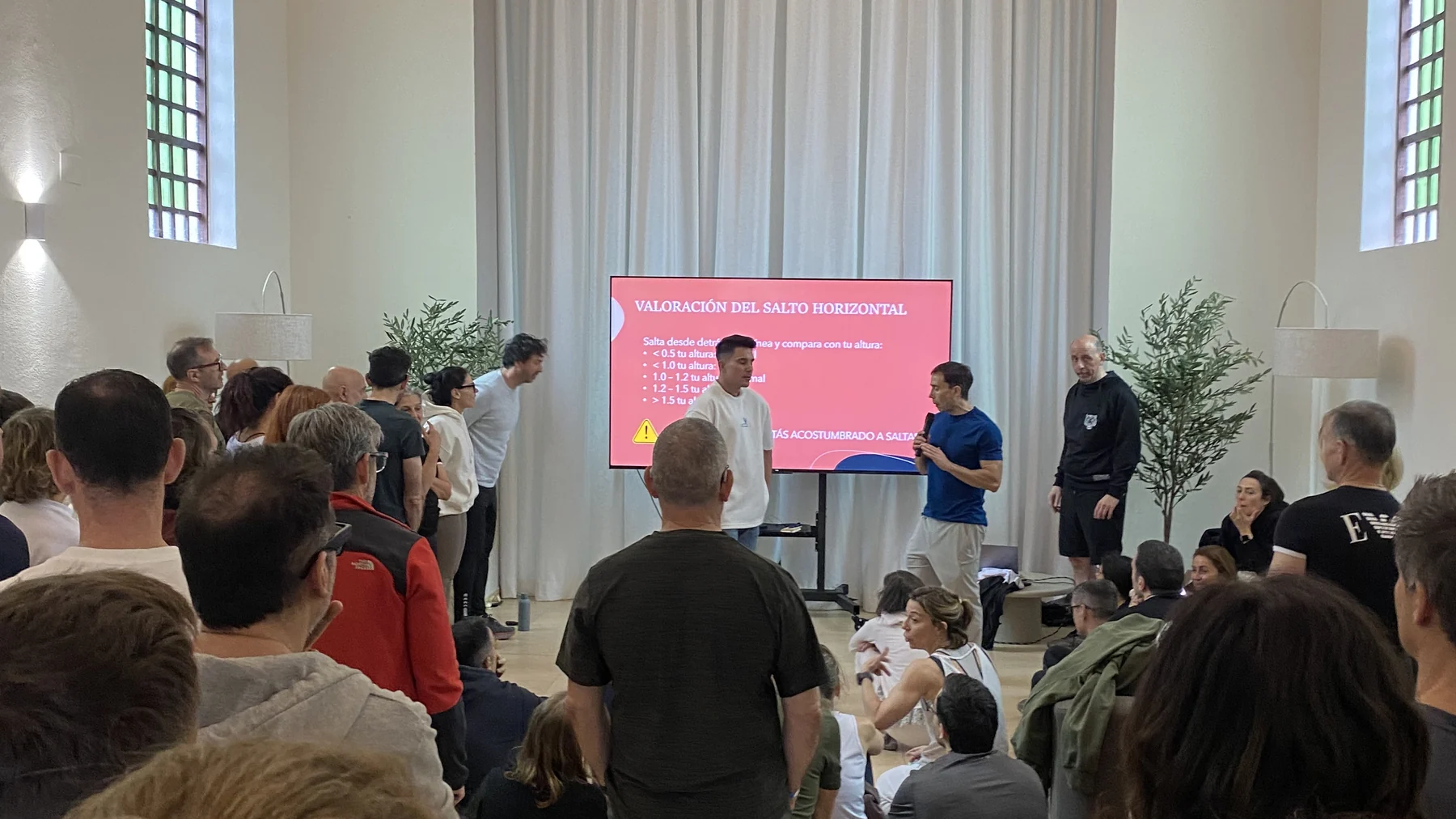
Inside Vive Más 2026 With Marcos Vázquez: An Honest Event Recap
From 5 to 8 March, Cofrentes hosted four days of talks, movement and community. Here is what happened, and what a health retreat cannot prove.

Mineral-Water Balneotherapy: Benefits, Evidence and Limits
A thermal bath may ease symptoms and help you move, but it does not rejuvenate on command. We review pain, stress, sleep, inflammation and multi-day dose.
What Semen Can Tell You About a Man's Health
A semen analysis may open questions about testicular health, hormones, medicines and exposures. It is neither a fertility verdict nor a longevity test.