A practical guide to separating useful habits, purposeful measurement and risky experiments within biohacking, without buying every new promise.
Biohacking is a vivid word for a fairly ordinary idea: change something, observe what happens and decide whether it is worth continuing. The trouble begins when the label puts regular sleep, a smartwatch, cold-water immersion, a supplement stack and substances that should be handled as medicines into the same box.
There is no seal that turns a practice into science because it is called biohacking. The useful approach is to evaluate each intervention separately: goal, human evidence, risk, cost, measurement and stopping rule. This guide provides that filter without asking you to turn your life into a laboratory.
The short version
- The label proves nothing: a practice may be sensible, uncertain or dangerous even when all three are sold as biohacking.
- Start with the boring things: movement, strength, sleep and appropriate healthcare usually matter more than another device.
- Measure only to decide: a metric is useful when it changes a behavior, a consultation or the decision to stop.
- Change one variable at a time: if you change five things together, improvement cannot tell you which one worked.
- Do not self-experiment with drugs: hormones, peptides, SARMs, compounded products and IV infusions require another level of control.
What biohacking can mean
In practice, the term usually covers three different worlds. Separating them prevents an argument about whether “biohacking works” as if it were one treatment.
| World | Examples | Main question |
|---|---|---|
| Tracked habits | Sleep, steps, strength, food, light and recovery | Is this change useful, safe and sustainable for me? |
| Consumer technology | Watches, rings, glucose sensors, scales and apps | Is the estimate reliable enough for the decision I want to make? |
| Biological interventions | Supplements, cold, heat, light, fasting, hormones, drugs or infusions | What evidence, dose, contraindications and supervision does it require? |
A habit does not need a gadget to be valid. A sensor is not a treatment. A substance does not become harmless because it is marketed as optimization. Remembering those three sentences gives you a strong defense against marketing.
The smallest experiment you can interpret
Before starting, write one sentence: “I want to change X because it affects Y.” “I want to optimize myself” is not an assessable goal. “I want to reduce afternoon sleepiness without randomly removing foods” gives you something you can observe.
- Define the outcome. It may be sleep regularity, pain, energy, blood pressure, adherence or performance. Avoid an opaque score as the only outcome.
- Record a baseline. Observe enough days to include your usual routine, not only one perfect Sunday.
- Choose one change. Prioritize the option with the best balance of evidence, risk, cost and effort.
- Set the review. Decide when you will look at the result. Checking every hour encourages noise and anxiety.
- Write the stopping rule. Include symptoms, deterioration, cost, lack of usefulness or a signal that needs clinical review.
This logic resembles the way we interpret recovery biomarkers: the number matters less than the decision it helps you make. If you do not know what you would do with a high or low result, you may not need to measure it yet.
A hierarchy more useful than “natural” versus “technological”
| Level | What belongs here | How to act |
|---|---|---|
| Foundation | Physical activity, strength, sleep, adequate food, preventive care and treatment of real problems | Address barriers and sustain before adding complexity. |
| Contextual tool | Wearables, CGM, cold, sauna, photobiomodulation or supplements for a specific reason | Define the question, limitations, risk and duration. |
| Healthcare intervention | Diagnosis, prescribing, hormones, drugs, IV routes and procedures | Indication, responsible professional, consent and follow-up. |
| Red flag | Broad rejuvenation promise, identical treatment for everyone or an untraceable product | Do not buy until evidence, safety and accountability are resolved. |
Physical activity has well-established benefits, and the WHO publishes recommendations by age and situation (source 1). A large clinical cohort also found an inverse association between cardiorespiratory fitness and mortality, although its observational design cannot show that one intervention causes the entire effect (source 2). The practical conclusion is not to chase an extreme score. It is to avoid leaving a major foundation unattended while buying marginal improvements.
Sleep follows a similar pattern. The American Academy of Sleep Medicine and Sleep Research Society consensus recommends that healthy adults sleep seven or more hours regularly, while recognizing that needs and context vary (source 3). Before optimizing stages estimated by a watch, it is often more useful to review schedule, sleep opportunity, daytime symptoms and possible disorders. Our guide to sleep regularity and stages explains what one long night can and cannot restore.
Wearables: a trend is not a diagnosis
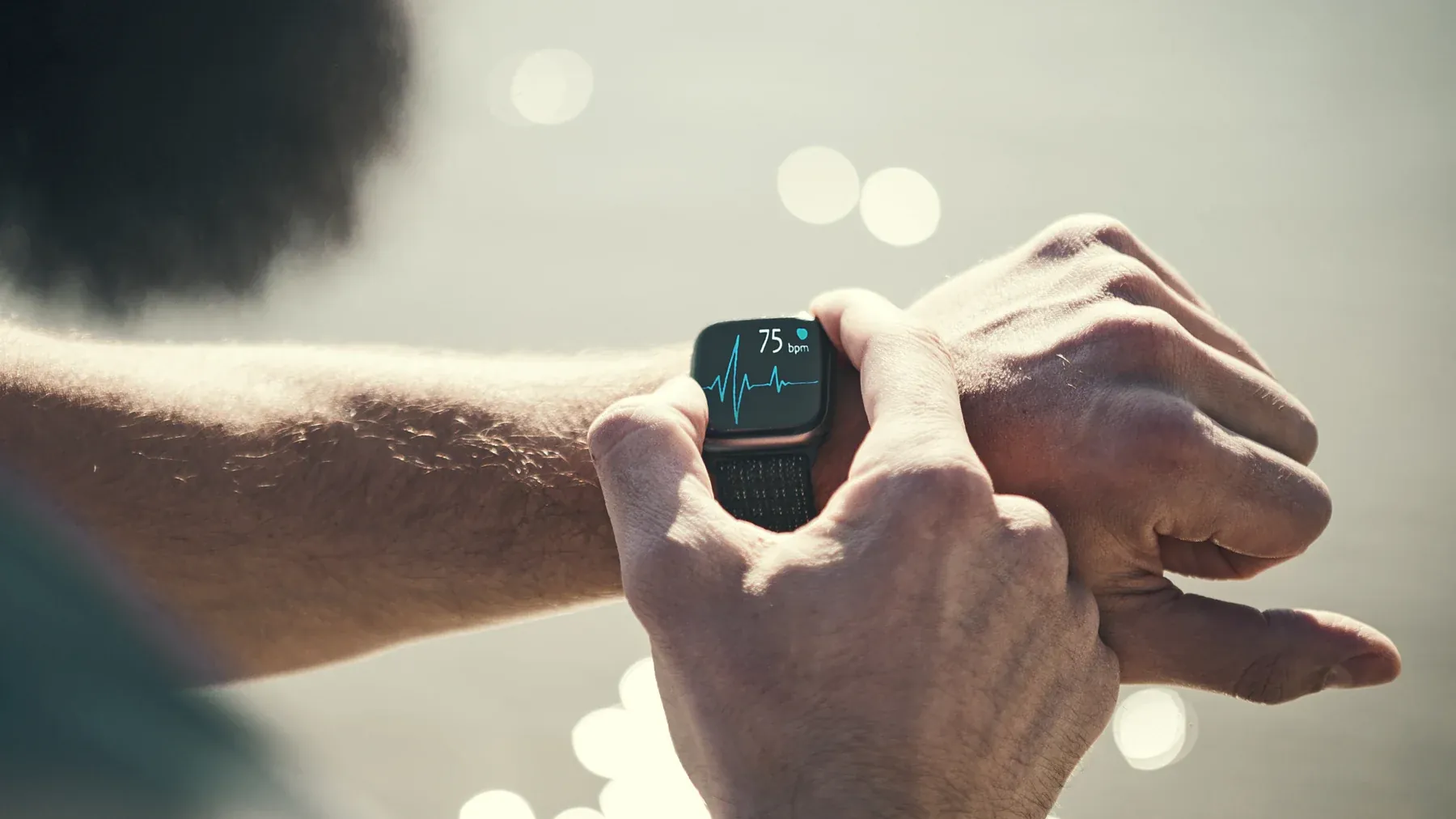
Consumer devices estimate sleep, recovery, stress or energy expenditure through sensors and algorithms that vary between brands. Their best use is often identifying personal patterns: what happens after alcohol, a schedule change or accumulated training. Their worst use is obeying a score without considering how you feel.
Before buying, answer three questions: which data do I need, what will I do differently if it changes and can I get the answer more simply? If an alert suggests an arrhythmia, sleep apnea or another problem, the next step is confirmation through the appropriate clinical pathway. Do not adjust medication from a consumer screen.
CGM without diabetes: biofeedback with limits
A continuous glucose monitor can show responses to food, sleep, stress and activity. That is interesting, but a rise after eating is part of physiology and the sensor has error. A 2026 systematic review and meta-analysis examined its use in populations without diabetes and found results that depended strongly on context, with more value as educational support than as a standalone solution (source 6).
If you try one, start with a defined question and avoid turning every curve into a judgment about “good” or “bad” foods. The device does not diagnose diabetes by itself. Confirm unexpected values or symptoms through clinical testing. If it increases anxiety, restriction or compulsive checking, you already have a clear stopping rule.
Cold, sauna and red light: three interventions, not one package
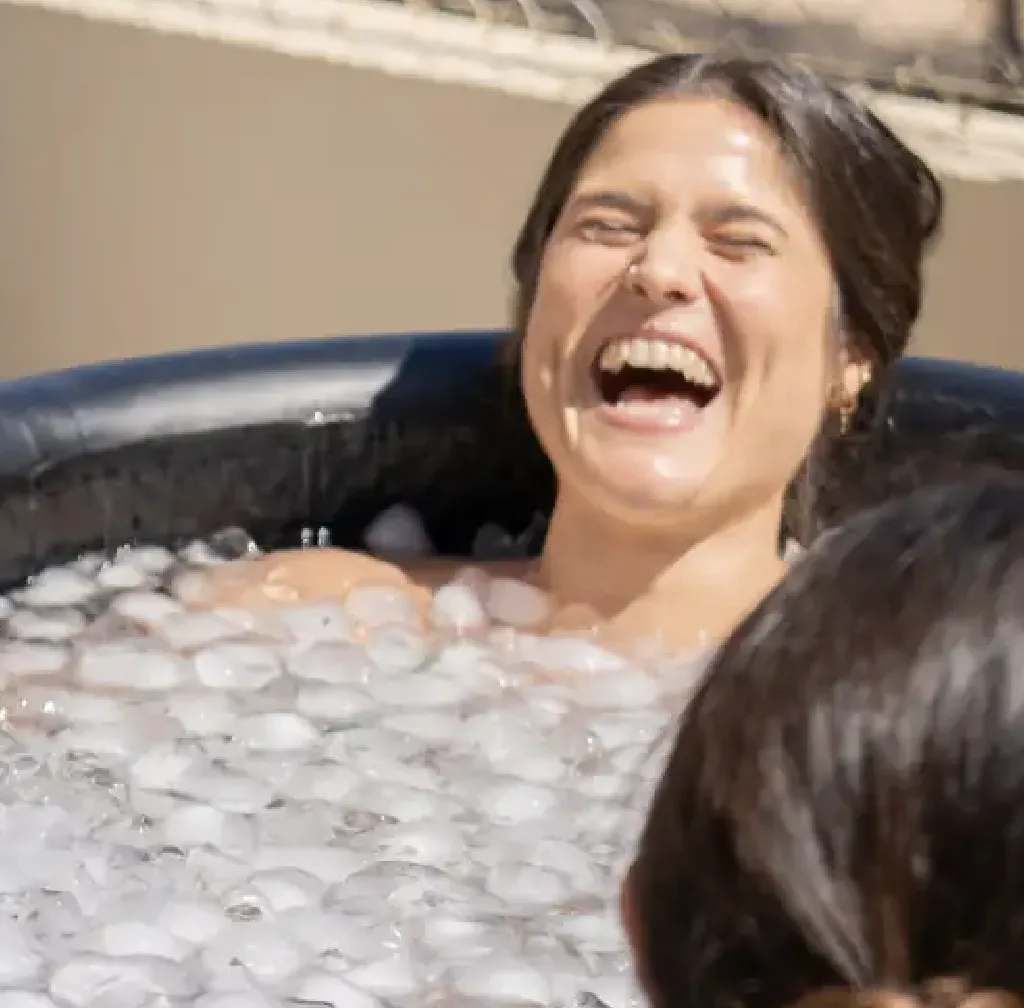
A picture of an ice bath communicates intensity, not effectiveness. The 2025 systematic review of cold-water immersion found small, heterogeneous studies, with effects that varied by measurement timing (source 4). Cold also causes acute cardiovascular responses. Copying another person's temperature and time does not make the practice safe.
Heat has different physiology and contraindications. Photobiomodulation depends on wavelength, power, distance, body area and target. A review of whole-body photobiomodulation found limited evidence for sleep and no demonstrated benefit for exercise performance or recovery (source 5). Calling all three tools “hormesis” does not erase their differences.
There is no universal longevity dose for any of them. Before trying one, review the goal, actual device or environment, expected response, medication, pregnancy, cardiovascular history, heat or cold sensitivity and how you will exit if you feel unwell.
Supplements, SARMs and peptides: the word hack does not reduce risk
A supplement may contain useful nutrients, and it may also duplicate doses, interact with medication or fail to match its label. The FDA notes that these products can have risks and that their regulation is not the same as that of an approved medicine (source 8). A list of twenty ingredients makes it harder to identify what helps and what causes an adverse effect.
Selective androgen receptor modulators, or SARMs, deserve a bright line: the FDA warns that they are not approved and links them to serious risks, including liver injury and cardiovascular problems (source 7). They are not harmless sports supplements. Peptides, hormones, compounded drugs, research substances and intravenous infusions should not become home experiments either.
When an intervention requires prescribing, sterility, laboratory monitoring or adverse-event management, the question is no longer “which hack should I try?” It is who indicates it, which product is used, what the alternatives are and who is accountable if something goes wrong.
A simple start without buying anything
During an initial phase, observe your real week. Note bedtime and wake time, movement, strength sessions, energy and the symptom or goal that matters to you. If tracking weight, food or sleep worsens your relationship with those areas, do not make it compulsory.
Then choose one small lever: a more regular wake time, a walk you can repeat, two strength sessions adapted to your level or a clinical conversation you have postponed. Keep everything else reasonably stable and review whether the change was useful, tolerable and sustainable. You do not need a spectacular transformation. A modest improvement that lasts is often worth more than one extreme week.
If the problem needs several interventions, a personalized protocol should order priorities, evidence, risk, measures and exits. Personalization does not mean accumulating more products.
Marketing signals that justify slowing down
- The same solution is offered for energy, weight, brain health, hormones, inflammation and longevity.
- A cellular mechanism is presented as if it were a demonstrated clinical benefit.
- One person's before and after replaces evidence and its limitations.
- Contraindications, adverse effects and stopping rules are absent.
- The device score is secret, but it is used to sell another product.
- The price or discount expires before you can consult a professional.
- Every result leads to buying another test, supplement or therapy.
A good experiment can also end with “not worth it.” Abandoning an intervention that does not help, simplifying measurement or asking for clinical assessment is not failure. It is using the method.
Frequently asked questions
What is biohacking in simple terms?
Biohacking is a broad label for changes in habits, environment, measurement or interventions through which someone tries to alter how they feel or function. It is not a medical specialty and does not guarantee that a practice works. The sensible version defines a goal, limits risk and checks whether the change adds value.
Is biohacking supported by science?
It depends on the practice, not the label. Physical activity, strength and sufficient sleep have a strong foundation. Wearables and some sensors may help in specific contexts. Other proposals rely on small studies, mechanisms, testimonials or marketing and should not be presented as proven benefits.
Where should a beginner start?
Start with one specific need and a simple baseline: sleep schedule, movement, training, blood pressure when relevant and how you feel. Change one thing you can sustain and decide in advance when you will review it. If you have symptoms or disease, begin with clinical care rather than self-experimentation.
Do I need a wearable to do biohacking?
No. A watch or ring may reveal trends, but its estimates do not replace diagnosis or context. Use it when the data answers a question and changes behavior. If it only creates scores, guilt or anxiety, stopping measurement may be the most useful decision.
Are cold exposure, sauna and red light effective biohacks?
They are different interventions, and the evidence depends on the goal, protocol and person. There is no universal longevity dose. Cold can cause an acute cardiovascular response, heat is not appropriate in every situation and each light device has its own parameters. Review risks before trying them.
Does continuous glucose monitoring make sense without diabetes?
It may provide temporary biofeedback when there is a defined question, but it does not diagnose by itself or make every rise after eating a problem. Its value in healthy people is uncertain and it may increase worry or restriction. Discuss unexpected results with a professional.
Do supplements, peptides or SARMs count as biohacking?
They may be sold under that label, but they do not carry the same risk. Supplements can interact with medicines or duplicate doses. SARMs are not FDA approved and have been associated with serious risks. Peptides, hormones, drugs and intravenous routes should not be treated as home experiments.
When should I stop a biohacking experiment?
Stop if a concerning symptom appears, if sleep, mood, eating or performance worsens, if cost grows without a clear decision or if tracking becomes a source of anxiety. Severe or potentially urgent symptoms need healthcare, not another gadget or a home adjustment.
Sources
- World Health Organization. Physical activity.
- Mandsager K. et al. Association of Cardiorespiratory Fitness With Long-term Mortality Among Adults Undergoing Exercise Treadmill Testing. JAMA Network Open, 2018. PMID 30646252.
- Watson N.F. et al. Joint Consensus Statement on the Recommended Amount of Sleep for a Healthy Adult. Sleep, 2015. PMID 26194576.
- Cain T. et al. Effects of cold-water immersion on health and wellbeing: a systematic review and meta-analysis. PLOS ONE, 2025. PMID 39879231.
- Álvarez-Martínez M., Borden G. A systematic review on whole-body photobiomodulation for exercise performance and recovery. Lasers in Medical Science, 2025. PMID 39883205.
- Liao X. et al. Continuous glucose monitoring in non-diabetic populations. European Journal of Medical Research, 2026. PMID 41588451.
- U.S. Food and Drug Administration. FDA Warns of Use of Selective Androgen Receptor Modulators (SARMs).
- U.S. Food and Drug Administration. FDA 101: Dietary Supplements.
Editorial and source review completed on 30 August 2026. This content is educational and does not replace an individual medical assessment.
Related articles

Telomeres: What a Test Measures and What It Really Means
Telomeres protect chromosomes, but a test cannot predict your lifespan. Learn what it measures, why results vary and when testing has clinical value.
Longevity Biomarkers: What to Track Without Turning Your Body Into a Spreadsheet
A practical guide to choosing measurements that change decisions, understanding their limits and avoiding huge panels that only add noise.
Midjourney's body scanner: what we know and what remains unproven
The prototype promises a full-body ultrasound scan in about 60 seconds. We separate the demo, the science of the field and the evidence still missing.
DunedinPACE and aging speed: how to read a 0.57x result
A 0.57x result does not mean living almost twice as long. Here is what DunedinPACE measures, why it can change and when repeating it may be useful.