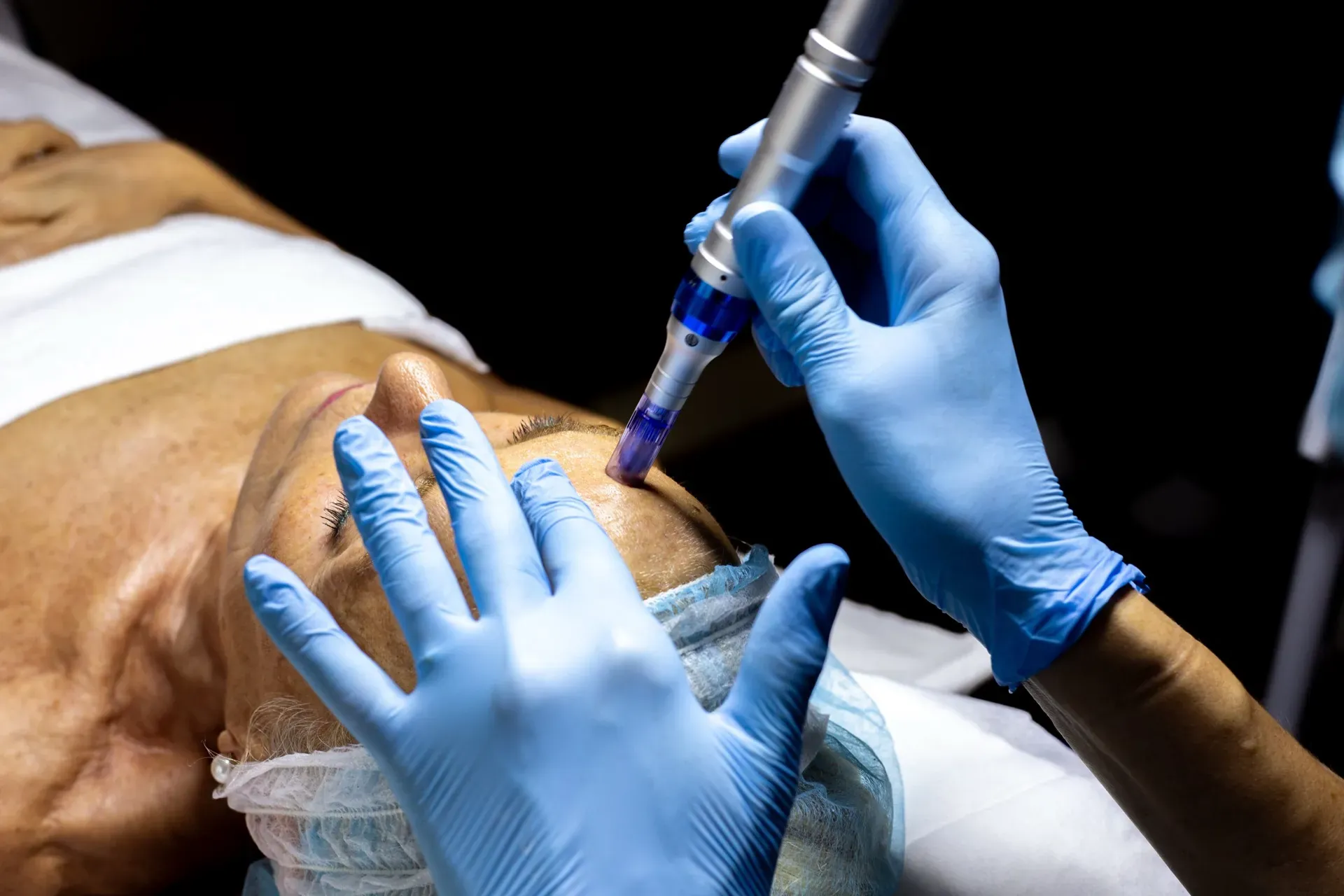
Real cell therapies treat specific diseases. This guide separates an approved product, a legitimate trial and an anti-aging offer without demonstrated benefit.
If one infusion promises to improve your knee, memory, fatigue, skin and longevity, the problem is not that it is too innovative: the claim is too broad. Real cell therapies can change the lives of people with specific diseases. That does not turn every vial labeled “stem cells” or “exosomes” into an anti-aging treatment.
No cell or exosome therapy is approved to rejuvenate a healthy person, slow aging in general or extend lifespan. There is interesting research in frailty and aesthetics. The useful question is not “do stem cells work?” It is which product, for which diagnosis, at what dose and route, under which authorization and against which outcome.
This guide does not rank clinics or link to treatments. It helps you separate an approved therapy, a legitimate trial and a sale that borrows science from another product.
First, do not put everything in the same vial
- Hematopoietic progenitor cells: rebuild blood and the immune system. Transplantation is used for defined blood, immune and genetic diseases. This is high-complexity medicine, not wellness.
- Approved cell and gene therapies: may use a patient's cells, donor cells or genetically modified cells. Each authorization belongs to a specific product, manufacturing process and indication.
- Mesenchymal stromal cells (MSCs): come from bone marrow, fat, cord tissue and other sources. They are investigated for immune and paracrine signaling. Source, expansion, viability, dose and potency change the product.
- Stromal vascular fraction: is a mixed cell preparation from fat. Being autologous does not make it approved or safe for any use.
- Wharton’s Jelly, cord or amnion: describe source tissue, not an indication. The name does not state how many viable cells, vesicles or proteins a vial contains.
- Extracellular vesicles and exosomes: are membrane-bound particles carrying molecular cargo. MISEV2023 recommends “extracellular vesicle” when endosomal origin has not been demonstrated. They are not “risk-free stem cells”.
Two products with the same volume may differ in viable cells, particle number, co-isolated proteins, endotoxin, sterility and biological activity. A commercial name cannot solve that identity problem. It is the same issue seen with uncharacterized longevity peptides: a molecule or product family cannot validate the vial being sold.
Approved, investigational and commercial are not synonyms
| Situation | What it means | What it does not mean |
|---|---|---|
| Approved therapy | A regulator evaluated a specific product, manufacturing process, indication and benefit-risk balance. | That the platform works for aging, arthritis or fatigue. |
| Authorized clinical trial | There is a protocol, sponsor, site, ethics review, monitoring and safety rules. | That the product is already effective or may be sold outside the trial. |
| Hospital exemption or special authorization | In the EU, this may permit an individualized product in a hospital under strict national conditions. | A general commercial route or permission transferable to another clinic. |
| ClinicalTrials.gov, CTIS or another registry | Helps locate the study and its listed sites. | Approval to sell, guaranteed benefit or proof that a provider participates. |
| “Experimental” offer | A seller's description when regulatory documents are absent. | A fourth legal route outside approval, trial or exemption. |
AEMPS and EMA warn that unregulated advanced-therapy medicines may have inconsistent composition, contamination, improper storage and unproven benefits. In the United States, FDA's current list includes many cell and gene therapies authorized for narrow indications, including modified-cell products. None of those authorizations extends to “anti-aging”. FDA also stresses that company or trial registration does not make a product legally marketable.
What the 2026 frailty trials actually showed
Frailty is a clinical syndrome involving lower reserve, poorer function and greater vulnerability. It is not a polished synonym for getting older. Two phase 2 trials provide an interesting signal, but they enrolled people with diagnosed frailty, not healthy adults seeking “optimization”.
Laromestrocel: a nine-month signal, not confirmation
The phase 2b trial enrolled 148 ambulatory adults aged 70 to 85 with mild or moderate frailty. It assigned them to placebo or one infusion containing 25, 50, 100 or 200 million allogeneic bone-marrow MSCs.
In the 200-million group, the difference from placebo in change on the six-minute walk was 41.3 meters at six months, but its confidence interval included no difference (95% CI −2.4 to 84.9; p=0.0635). At nine months, the difference was 63.4 meters (17.1 to 109.6; p=0.0077). This is a signal, alongside five small groups, several time points and a six-month comparison that missed significance.
No serious event was attributed to the product over nine months. That safety observation belongs only to laromestrocel, those doses and that follow-up. Several authors were affiliated with the developer, and public funding supported development. Disclosure does not invalidate a trial; it makes independent replication particularly valuable.
Cord-derived MSCs: better SPPB in an open-label trial
The second study randomized 147 adults aged 60 to 85 to supplements or supplements plus two cord-derived MSC infusions three months apart. Following the correction published in August 2026, the adjusted SPPB difference at nine months was +1.1 points (0.6 to 1.6).
Twelve related events, including headache, dizziness and chest discomfort, were mild, and no serious event was attributed. The trial was single-center, open-label and had no placebo: knowing who received an infusion and the additional contact can affect behavior and performance tests. The report itself calls for a double-blind, multicenter phase 3 trial.
Neither study measured longevity. Nine months of walking or physical-performance results do not demonstrate longer life, fewer hospitalizations, dementia prevention or sustained independence. Frailty care today still begins with diagnosis, strength and multicomponent exercise, adequate nutrition, medication review and reversible causes. Our guide to sarcopenia and muscle function covers that foundation.
Exosomes for skin and hair: an early aesthetic signal
A 2026 systematic review found 19 human skin-rejuvenation studies. Most were not randomized, and protocols were too different for a reliable meta-analysis. Short-term changes were reported in hydration, elasticity, wrinkles, pores and pigmentation, particularly with topical application.
The crucial detail is that many products were applied after microneedling, radiofrequency or laser. Those procedures already provoke a repair response. Without a group receiving the same procedure without the vial, it is hard to know which component produced the change.
Source tissue, isolation, purity, concentration, vehicle, route and schedule also vary. There is no universal exosome dose for skin, hair, joints, brain or longevity. Short-term topical evidence cannot be lent to an injection or infusion.
The harms are real, but they are not identical across products
- Contamination: CDC documented 12 infections after unapproved cord-derived products. All 12 people were hospitalized.
- Local tissue injury: three patients developed severe bilateral vision loss after intravitreal injections of fat-derived cells at a clinic.
- Inflammation, immune and embolic risk: source, viability, aggregates, route and patient health change risk.
- Unwanted growth or tissue: cell manipulation and expansion require identity, stability and tumorigenicity controls.
- Clinical and financial harm: an ineffective treatment may delay useful care and leave complications uncovered, especially with medical travel.
These cases do not show that every cell therapy is unsafe. They show something more precise: safety belongs to the product, manufacturing process, route and protocol. “Natural”, “cord-derived” and “your own cells” are not safety assessments.
Seven checks before accepting an offer
- Define diagnosis and outcome. Pain, frailty, skin appearance and living longer are different questions.
- Identify the product. Cell or vesicle type, donor, source tissue, manipulation, lot, viable dose or concentration and excipients.
- Verify the legal route. FDA or EMA label, an authorized IND or CTA, or documented hospital exemption.
- Verify the site. It should be listed as a real participant, not merely display someone else's trial number.
- Match the evidence. Same population, product, dose, route, comparator and outcome. A mouse, testimonial or “similar” product is not enough.
- Request controls and an independent opinion. GMP, sterility, identity, potency, traceability and a specialist with no financial relationship to the provider.
- Define follow-up and rescue. What will be measured, who treats complications, what is reported, how long follow-up lasts and who pays.
Seek urgent care for fever or chills, breathlessness, chest pain, fainting, confusion, sudden weakness, speech change, vision loss, a very painful red eye, rapidly increasing pain or swelling, drainage or abnormal color. Bring the product name, lot, dose, route, date and clinic details.
Frequently asked questions
Are stem cells approved for rejuvenation or longevity?
No. Cell therapies are approved for tightly defined diseases, but no approval covers normal aging, fatigue or longevity. Phase 2 studies in people with frailty have not yet shown fewer hospitalizations, disability or deaths.
Are exosomes the same as stem cells?
No. They are a subtype of extracellular vesicle released by cells. They carry proteins, lipids and nucleic acids but are not cells and do not self-replicate. A commercial vial still needs evidence of source, identity, purity, concentration, sterility and potency.
Do exosomes rejuvenate skin?
There are short-term aesthetic signals, particularly when products are combined with microneedling or laser. Most studies are small, heterogeneous or not randomized. They do not separate the procedure effect well or demonstrate systemic rejuvenation or longevity.
Does autologous mean the treatment is safe?
No. Using your own tissue may reduce some immune issues, but it does not remove contamination, inappropriate manipulation, delivery into the wrong tissue, inflammation, abnormal growth or the risk of delaying effective care.
Does a ClinicalTrials.gov listing mean it is approved?
No. A registry helps locate a study; it is not marketing approval and does not show that a clinic is legally participating. Check the site, status, sponsor, protocol, IND or CTA and ethics review independently.
What have mesenchymal cells shown in frailty?
Two 2026 phase 2 trials found signals on walking or physical-performance tests over nine months. They used specific products, doses and populations; one missed significance in the main six-month comparison and the other was open-label without placebo. Phase 3 evidence is needed.
What should I ask before paying for cells or exosomes?
Ask for the exact product, source, lot, viable dose or particle concentration, route, indication, authorization, trial record, ethics review, GMP manufacturing, follow-up, complication coverage and evidence using the same product in the same population.
Which symptoms need urgent care after the procedure?
Fever or chills, breathlessness, chest pain, fainting, new neurological symptoms, vision loss, a very painful red eye, rapidly increasing pain or swelling, or drainage from the treated site require urgent assessment.
Regenerative medicine deserves rigor precisely because its potential is real. For general longevity, there is no approved cell infusion today. Our longevity treatments evidence map separates clinical practice, research and promise.
References
- AEMPS. Risks and legal routes for advanced-therapy medicines. 2025.
- EMA/HMA. Unregulated advanced therapy medicinal products pose serious risks. 2025.
- FDA. Approved cellular and gene therapy products. Updated 18 August 2026.
- Ruiz JG, et al. Randomized phase 2b trial of laromestrocel for aging frailty. Cell Stem Cell. 2026. Europe PMC 41747733.
- Nguyen LT, et al. Umbilical cord-derived MSC infusion for frailty, corrected phase 2 report. eBioMedicine. 2026. Europe PMC 42019090.
- Welsh JA, et al. MISEV2023: minimal information for studies of extracellular vesicles. Journal of Extracellular Vesicles. 2024. Europe PMC 38326288.
- Flores Rodríguez JC, et al. Exosome-based therapies for skin rejuvenation: systematic review of human studies. 2026. Europe PMC 41756341.
- FDA. Patient information about regenerative medicine therapies. Content current in 2024.
- FDA. R3 Medical Companies warning letter. 14 August 2026.
- CDC. Infections after contaminated cord-blood-derived products. MMWR. 2018.
- Kuriyan AE, et al. Vision loss after intravitreal injection of autologous “stem cells” for AMD. New England Journal of Medicine. 2017. Europe PMC 28296617.
Related articles

Insulin Resistance: What It Means, How It Is Measured and What Actually Helps
Insulin resistance is not diagnosed from fatigue or one HOMA-IR result. This guide explains which tests change decisions and how to build a measurable plan.
What Semen Can Tell You About a Man's Health
A semen analysis may open questions about testicular health, hormones, medicines and exposures. It is neither a fertility verdict nor a longevity test.
Can a Multivitamin Slow Biological Age? What COSMOS Measured—and What It Did Not
COSMOS found a small shift in two of five epigenetic clocks after two years. Here is the effect size, the limits and when supplementation answers a real nutritional need.

Cardiac Rehabilitation: Much More Than Exercise After a Heart Attack
Cardiac rehabilitation combines prescribed exercise, medication review, nutrition, psychological support and risk-factor control. Learn when to start, how long it lasts and how it changes with age or frailty.