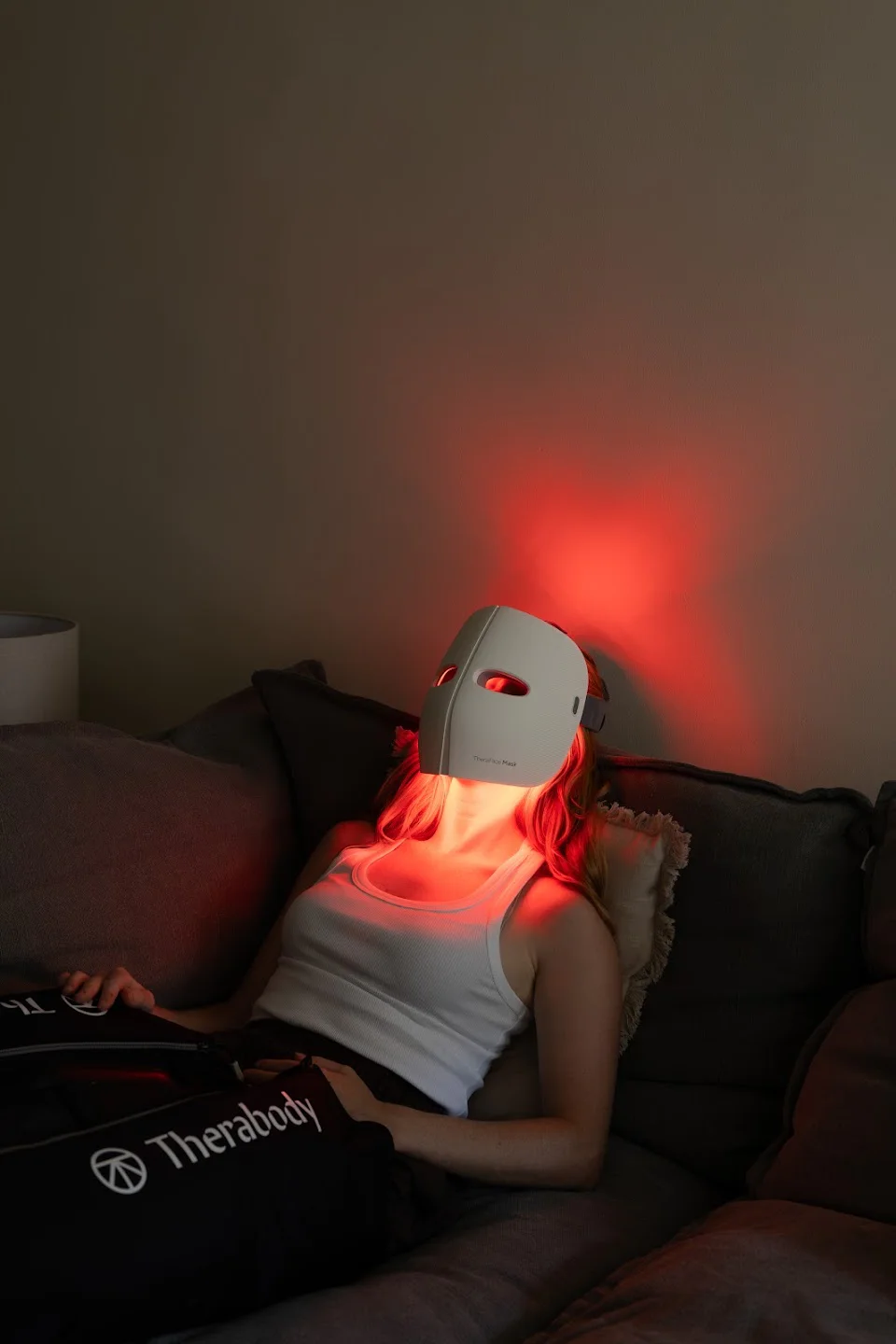
One panel cannot do everything. Updated evidence on skin, hair, pain and sleep, why minutes alone do not define dose, and what to check before buying a device or booking a session.
If you have compared red-light panels, you may have seen the same device advertised for skin, pain, sleep, the brain and longevity. It is an impressive list, but it combines tissues, doses and goals that are not interchangeable.
The short answer is less spectacular and far more useful: photobiomodulation may help with some specific indications, using a specific device and schedule. There is no universal dose, and a result on the scalp does not show that a full-body bed rejuvenates the body.
This guide does not rank brands or link to device shops. Its purpose is to help you tell a clinical protocol from a bright promise and know what to ask before you pay.
September 2026 update: the picture has become clearer, not simpler. A Journal of the American Academy of Dermatology consensus recognizes specific clinical uses, including androgenetic alopecia, ulcers and selected neuropathy or wound settings; a 2026 chronic-pain review finds analgesic potential, but across very heterogeneous protocols; and the new sleep meta-analysis shows a small subjective signal that is not enough to market PBM as an insomnia, recovery or longevity treatment.
What photobiomodulation is, and what it is not
Photobiomodulation (PBM) uses low-intensity red or near-infrared light to trigger a tissue response without aiming to heat that tissue substantially. The broadest umbrella review, published in 2025, included interventions roughly between 600 and 1,100 nanometers.
Cytochrome c oxidase, nitric oxide, reactive oxygen species and inflammatory signaling are proposed pathways. That makes for a plausible biological explanation, not proof of benefit. Moving from mechanism to medicine still requires a placebo comparison, an outcome that matters and a change large enough for the person to notice.
- It is not ultraviolet: PBM is not intended to tan skin or make vitamin D.
- It is not photodynamic therapy: PDT combines light with a photosensitizer to damage target tissue.
- It is not a heat lamp: when heating is the goal, both mechanism and risk change.
- It is not circadian bright-light therapy: some sleep and mood disorders use a different intensity, schedule and ocular exposure.
- LED and laser are not synonyms: they may share a wavelength while differing in beam, area and irradiance.
This is the same caution we use when separating biohacking, science and wellness marketing: a technology should be judged by the problem it solves, not by how futuristic it looks.
Dose is more than minutes
Two panels used for ten minutes can deliver very different exposures. Irradiance is power per surface area, usually mW/cm². Fluence, or energy density, is expressed in J/cm². For a continuous device, the surface calculation is simple: irradiance × seconds ÷ 1,000.
For example, 40 mW/cm² for 300 seconds equals 12 J/cm² at the surface. That figure does not tell you how much energy reaches a joint, follicle or the brain, or establish that 12 J/cm² is right for those tissues.
| Parameter | Why it matters | What the protocol should state |
|---|---|---|
| Wavelength | Changes absorption and relative depth | Nanometers, not only “red + NIR” |
| Irradiance | Shows the rate of energy delivery | mW/cm² at the actual treatment distance |
| Fluence | Summarizes accumulated surface energy | J/cm² per point or field |
| Area and distance | Change uniformity and exposure | Field size, separation and angle |
| Mode | Distinguishes continuous and pulsed delivery | Frequency and duty cycle when pulsed |
| Schedule | Defines total exposure | Sessions, weeks and a stop rule |
Higher power does not automatically mean less time or more benefit. Protocols vary widely, and the response may not be linear. Copying minutes from a study without matching the device, distance, area and target gives a precision that is not really there.
The dose curve matters too: too little exposure may do nothing measurable, while too much can blunt the desired response or increase irritation, heat and eye strain. That is why generic “10-20 minutes for everything” instructions are a commercial warning sign, even when they sound practical.
Which benefits have human evidence?
The 2025 umbrella review included 15 meta-analyses, 204 randomized trials, more than 9,000 participants and 35 outcomes. Twelve results were statistically significant, but none reached high certainty. Five outcomes reached moderate certainty; most others were low or very low because of heterogeneity, small studies or possible publication bias. The 2025 JAAD consensus is especially useful in practice because it separates indications where PBM can belong in a clinical plan from uses that remain exploratory.
| Studied use | What researchers observed | How to interpret it |
|---|---|---|
| Cancer-treatment oral mucositis | MASCC/ISOO recommends complete intraoral protocols in specific settings. A meta-analysis of 14 trials and 869 patients found less severe mucositis at treatment end and a 1.09-point reduction in pain. | This is the most clearly protocolized use. It belongs to oncology and oral-care teams and does not validate a home mask. |
| Androgenetic alopecia | Analyses find higher hair density than placebo, but with large differences across studies and devices. | It may be an adjunct after the cause is confirmed. It does not treat every alopecia or guarantee a visible response. |
| Knee osteoarthritis | Across 10 studies and 542 people, resting pain was 0.7 points lower than placebo, while the Timed Up and Go test did not improve significantly. | Certainty in that analysis was very low. It may complement, but not replace, strength, activity and the approach in our joint-health guide. |
| Fibromyalgia | The umbrella review rated evidence for fatigue reduction as moderate, although protocols and scales varied. | It is a signal for an adjunct, not a cure or a universal home schedule. |
| Chronic pain and neuropathies | A 2026 review included 14 trials in fibromyalgia, peripheral neuropathies, orofacial pain and musculoskeletal pain. Most showed pain reduction and few adverse events. | The signal is plausible but not uniform. Longer follow-up and comparable parameters are still needed before turning it into a recipe for any pain complaint. |
| Ulcers, wounds and radiation dermatitis | The JAAD consensus considers PBM an effective option in ulcers of several etiologies, decubitus ulcers, pain attributed to diabetic foot ulcers and acute radiation dermatitis. | These are clinical indications. They require diagnosis, infection control, pressure relief, vascular assessment, glucose management and standard care; they are not a home experiment. |
| Skin and wrinkles | The American Academy of Dermatology describes subtle-to-noticeable changes in fine lines, texture or redness after repeated sessions. | This is a cosmetic outcome, not systemic rejuvenation. Comparable home dosing and very long-term safety remain uncertain. |
| Transcranial cognition | The umbrella review found a moderate signal on cognitive tests in older or impaired adults. | It remains investigational. This does not demonstrate dementia prevention, preserved independence or long-term benefit. |
| Sleep, whole-body performance and recovery | The 2026 sleep meta-analysis included five trials and 240 participants: PSQI improved by 1.25 points versus sham, with wide intervals and low precision. The whole-body review found no improvement in performance or fatigue biomarkers. | It can be studied as a non-drug adjunct, but it does not support recovery, energy, guaranteed “deep sleep” or longevity claims. |
There is one important idea behind this table: one indication cannot lend its evidence to another. An intraoral laser reducing mucositis does not prove a panel for pain. A cap increasing hair density does not prove that a bed extends life.
Before you buy a panel or book a session
- Define a specific problem. “Confirmed androgenetic alopecia” can be assessed; “more energy” and “anti-aging” are too vague.
- Find the exact model's intended purpose. A hair-growth clearance does not cover brain, knee or longevity claims.
- Ask for complete parameters. Wavelength, irradiance at the treatment distance, fluence, field, mode and schedule. Total panel watts are not enough.
- Compare like with like. The study population, tissue, device, schedule and outcome should resemble your situation.
- Choose a measure before starting. Pain and function, matched photographs or hair counts are more useful than a general sense of wellness.
- Change one thing at a time. Starting light, minoxidil, a supplement and a shampoo in the same week makes attribution impossible.
- Set a review point and stop rule. If there is no useful change after the tested period, or irritation, a burn or deterioration occurs, do not continue by inertia.
If a seller cannot answer these questions, the missing piece is not “advanced biohacking”: it is basic traceability.
| Goal | What to ask for | What not to accept |
|---|---|---|
| Skin or hair | Intended use, studies on the model or technical family, usage schedule and comparable photographs. | Facelift promises, unlimited collagen claims or complete hair restoration. |
| Pain | Diagnosis, treatment area, pain and function scale, parameters per point or field, and a rehabilitation plan. | Using light to mask progressive pain, major swelling, loss of strength or neurological signs. |
| Sleep, energy or longevity | Clear acknowledgement that evidence is preliminary and does not replace sleep basics, activity, metabolic health or insomnia care. | Full-body “anti-aging” packages without a measurable goal or stop rule. |
| Any claim | Clearance, marking or registration tied to the exact device and intended use. | “FDA approved”, “FDA certified” or CE language used as if it validated every benefit on a sales page. |
What FDA clearance, CE marking and EUDAMED mean
An FDA 510(k) record applies to a specific device and intended use, and is based on substantial equivalence to another device. It is not a universal efficacy badge for every brand claim. FDA's PBM-specific guidance remains a non-binding draft and distinguishes medical devices from certain general-wellness products.
In Europe, CE marking does not turn a panel into a treatment for arthritis, dementia and aging. Check the manufacturer, model and intended purpose. Four EUDAMED modules have been mandatory since 28 May 2026: actor registration, UDI/device registration, notified bodies and certificates, and market surveillance. The clinical-investigation and vigilance/post-market-surveillance modules remain in development.
Risks and reasons to stop
Low-intensity PBM has caused few serious events in short trials. Still, “no UV” does not mean “no risk.” Temporary pain, irritation, itching, pigment change, heat or a burn can occur if exposure is excessive or equipment malfunctions.
Eye safety depends on wavelength, power, distance and device design. Follow the manual and use the protection specified for that unit. Do not stare into an intense emitter. If you have a photosensitive condition, take a photosensitizing drug, have an undiagnosed lesion or cancer in the treatment area, are pregnant or have eye disease, review the intended use and precautions with a professional first. These are not identical prohibitions for every device.
People with a tendency to hyperpigmentation, melasma or darker skin tones should be more cautious. Visible light can trigger or maintain dark spots in some people. Start conservatively, do not treat pigmented lesions without a diagnosis and ask for advice if you already have a history of persistent pigmentation.
Stop and seek assessment for blistering, a large burn, increasing pain, a worsening wound, eye pain, blurred vision, flashes or vision loss. A pigmented lesion that changes, bleeds or fails to heal needs a diagnosis, not red light.
Frequently asked questions
What is red light therapy actually useful for?
It may help in tightly defined protocols. Its most clearly protocolized use is prevention of oral mucositis during selected cancer treatments. Androgenetic alopecia, some knee osteoarthritis outcomes, fibromyalgia fatigue and certain dermatology outcomes also have favorable signals, but no indication has high-certainty evidence.
How many minutes of red light therapy should I use?
Minutes do not define dose by themselves. Wavelength, irradiance at the skin, distance, treatment area, continuous or pulsed delivery and weekly schedule also matter. Use only the tested protocol and instructions for the exact device; do not copy the exposure time from another panel.
Does red light therapy work for wrinkles?
Some studies and devices show modest changes in fine lines, texture or redness after repeated sessions. Results are not equivalent to a facelift, devices are hard to compare, and the optimal home dose and very long-term skin safety remain uncertain.
Can red light therapy regrow hair?
It may modestly increase density in some people with androgenetic alopecia after repeated use for months. It does not address every cause of hair loss or restore a full head of hair. Sudden, patchy or scarring hair loss needs a diagnosis before a light cap.
Is near-infrared light the same as red light?
No. Both can be used in photobiomodulation, but their wavelengths and relative penetration differ. Neither is interchangeable with ultraviolet light, photodynamic therapy, a heat lamp or the bright-light treatment used for some circadian conditions.
Do I need eye protection?
Follow the protection specified for the exact wavelength, power and device, and never stare into an intense LED or laser. Eye pain, blurred vision, flashes or vision loss after exposure require urgent assessment.
Who should ask a clinician before using it?
Review the device with a professional if you have a photosensitive condition, take medication that increases light sensitivity, have an undiagnosed lesion or cancer in the treatment area, are pregnant or have eye disease. Precautions depend on the device and its intended purpose.
Can red light therapy improve sleep or extend life?
The 2026 sleep synthesis included only five trials and 240 participants, with a modest subjective improvement and low precision. No trial demonstrates longer life, less dementia or systemic rejuvenation in healthy people.
The conclusion is simple: do not buy “red light” as though it were one intervention. Start with the problem, find the studied protocol for that tissue and decide in advance which change would justify continuing. For anti-aging claims, our longevity treatments evidence map separates clinical care, promise and research.
References
- Son Y, et al. Effects of photobiomodulation on multiple health outcomes: an umbrella review of randomized clinical trials. Systematic Reviews. 2025. Europe PMC 40770824.
- Maghfour J, et al. Evidence-based consensus on the clinical application of photobiomodulation. Journal of the American Academy of Dermatology. 2025. PubMed 40253006.
- MASCC/ISOO. Clinical practice guidelines for mucositis and PBM protocols. Accessed 2026.
- Shen B, et al. PBM for oral mucositis in head and neck cancer: systematic review and meta-analysis of 14 randomized trials. Head & Neck. 2024. Europe PMC 38265122.
- Oliveira S, et al. Effectiveness of photobiomodulation in knee osteoarthritis. Physical Therapy. 2024. Europe PMC 38775202.
- Ferreira LMA, et al. Photobiomodulation in chronic pain: a systematic review of randomized clinical trials. Frontiers in Integrative Neuroscience. 2026. DOI 10.3389/fnint.2026.1717372.
- Perez SM, et al. Low-level laser and LED therapy in alopecia: systematic review and meta-analysis. 2024. Europe PMC 39404126.
- Álvarez-Martínez M, Borden G. Whole-body photobiomodulation for exercise performance and recovery. Lasers in Medical Science. 2025. Europe PMC 39883205.
- Vital de Azevedo WM, et al. Photobiomodulation and sleep quality: systematic review and meta-analysis. Lasers in Medical Science. 2026. PubMed 42322437.
- Spongberg CV, et al. What to look for in red light therapy: a product guide backed by science. Cureus. 2026. PubMed 42005232.
- American Academy of Dermatology. Is red light therapy right for your skin?. Accessed 2026.
- FDA. Photobiomodulation devices: draft 510(k) guidance. 2023.
- European Commission. EUDAMED overview and mandatory modules. Accessed 2026.
Related articles
Insulin Resistance: What It Means, How It Is Measured and What Actually Helps
Insulin resistance is not diagnosed from fatigue or one HOMA-IR result. This guide explains which tests change decisions and how to build a measurable plan.
What Semen Can Tell You About a Man's Health
A semen analysis may open questions about testicular health, hormones, medicines and exposures. It is neither a fertility verdict nor a longevity test.
Can a Multivitamin Slow Biological Age? What COSMOS Measured—and What It Did Not
COSMOS found a small shift in two of five epigenetic clocks after two years. Here is the effect size, the limits and when supplementation answers a real nutritional need.
Cardiac Rehabilitation: Much More Than Exercise After a Heart Attack
Cardiac rehabilitation combines prescribed exercise, medication review, nutrition, psychological support and risk-factor control. Learn when to start, how long it lasts and how it changes with age or frailty.