Autophagy does not switch on when a timer rings. Learn what can be measured in humans, what intermittent fasting may help with and when it is not worth the trade-off.
If you came looking for the exact hour when your body “switches on” autophagy, the least dramatic answer is also the most useful: that clock does not exist. Autophagy is active to different degrees all the time. Fasting may alter it, but a 16-hour window cannot tell us that a deep clean has begun in the brain, liver and muscles.
That does not make intermittent fasting useless. For some people, limiting meal times reduces late-night snacking, simplifies decisions or modestly improves weight and glucose. For others, it worsens hunger, sleep, training or their relationship with food. The practical question is not “how much autophagy can I get?” but “which problem am I trying to solve, and how will I know whether this schedule helps?”
This guide covers daily eating windows and what is known about autophagy in humans. A fast lasting several days is a different intervention with different risks. For that topic, use our guide to prolonged fasting, benefits and refeeding or the explanation of what supervised therapeutic fasting involves.
Editorial review: August 2026. This article is educational and does not replace medical or dietetic advice. Do not change insulin, sulfonylureas, blood-pressure treatment or other medication to fit a fast. Pregnancy, breastfeeding, type 1 diabetes, hypoglycaemia, a current or previous eating disorder, low weight, frailty and acute illness require avoiding self-experimentation or seeking individual assessment.
Quick answer: what is worth keeping
- Autophagy is not a switch: it is a dynamic flux that differs by tissue, time and health state.
- There is no validated human hour: 12, 16 or 24 hours are not clinical thresholds for cellular cleaning.
- Intermittent fasting is not one intervention: 16:8, 5:2, alternate-day and prolonged fasting cannot be treated as equivalent.
- Average benefits are modest: for weight and cardiometabolic risk it usually performs similarly to continuous energy restriction.
- Timing is a tool, not a virtue: if it worsens diet quality, muscle, sleep or life around the clock, it is not helping.
- It has not been shown to prevent Alzheimer's or extend human life: those messages come from mechanisms and animals, not clinical outcomes.
What autophagy actually is
Autophagy literally means “self-eating”. It is a group of processes that cells use to degrade and reuse parts of their contents. Macroautophagy forms vesicles that carry material to the lysosome; microautophagy directly incorporates components; and chaperone-mediated autophagy selects particular proteins.
It is not a cleaning service that appears only when breakfast is skipped. A basal level is necessary to renew proteins and organelles, adapt to stress and maintain cellular balance. Activity may rise or fall with nutrients, exercise, infection, sleep, genetics, age and tissue type. “More” is not always “better” either: insufficient autophagy can be harmful, while some tumours also use it to survive.
Measurement is difficult because flux matters: how much material enters, progresses and is ultimately degraded. A single snapshot of LC3, p62 or a related gene does not establish that the whole process increased. The international guidelines for monitoring autophagy recommend combining methods and warn against interpreting one static marker as complete flux.
Why nobody can give you an exact hour
The popular timeline usually says glycogen at 12 hours, autophagy at 16 and “deep autophagy” at 24. It sounds precise because it blends real phenomena with invented certainty. Glycogen use, ketone production and mTOR or AMPK signalling change gradually and depend on the last meal, reserves, activity, sleep and metabolism. None of those signals alone measures autophagy in every organ.
The often-cited Alirezaei study observed neuronal autophagosomes after short-term fasting in mice. The 2010 preclinical study did not establish that a person activates brain autophagy at 16 hours. Moving that number across species, tissue and study design is not justified.
The most frequently cited human signal is also much more modest than its headline. In 2019, 11 adults with overweight completed a four-day crossover study, eating from 08:00 to 14:00 or from 08:00 to 20:00. The early window altered glucose and LC3A expression in blood cells. The study by Jamshed and colleagues did not measure organ-level autophagic flux, lasting clinical outcomes or an activation hour.
There is no clock, symptom, ketone strip or commercial blood test that currently says “your autophagy is on”. Ketones tell us about fuel use, not how much material every tissue has recycled.
Intermittent fasting: several patterns under one label
| Pattern | What changes | What cannot be assumed |
|---|---|---|
| Time-restricted eating | Meals are concentrated in a daily window, often 8 to 12 hours | That everyone reduces energy or achieves the same effect |
| 5:2 or whole-day restriction | Energy is markedly reduced on one or two days; these are not always total fasts | That it equals 16:8 or is deeper by definition |
| Alternate-day fasting | Days of marked restriction alternate with usual intake | That a small average difference outweighs poorer adherence |
| Prolonged fasting | It lasts one or more days and changes risks and refeeding | That it is a “better” version of daily timing |
A window does not say what you eat. A 16:8 pattern can contain enough varied, enjoyable food, or compress too much hunger and too little quality into eight hours. It does not require skipping breakfast either: early, middle or shift-work-adapted windows are different interventions.
What trials show about weight and metabolism
Overall, it looks more like another tool than a metabolic advantage
The largest network meta-analysis available in 2025 included 99 randomised trials and 6,582 adults. Intermittent fasting and continuous energy restriction reduced weight compared with unrestricted eating. Only alternate-day fasting differed from continuous restriction, by an average 1.29 kg, mainly in short trials. HbA1c did not differ between strategies. The BMJ meta-analysis concluded that benefits are similar and longer studies are needed.
That does not make them identical for you. A schedule might remove the late snack that was disrupting sleep; another may leave you ravenous by dinner. An average effect cannot replace preferences, culture, shift work, training or family life.
16:8 did not win on its own in the TREAT trial
The TREAT trial assigned 116 adults with overweight or obesity to eat between 12:00 and 20:00 or maintain three structured meals for 12 weeks. The between-group weight difference was not significant, and most metabolic markers did not change. In the body-composition subgroup, appendicular lean-mass index fell with the window. The full trial does not show that every 16:8 schedule causes muscle loss, but it prevents claims that autophagy automatically protects functional muscle.
At 12 months, adding a window did not outperform the same calorie restriction
Another trial assigned 139 people with obesity to one year of calorie restriction, with or without an 08:00 to 16:00 eating window. Both groups lost weight. The difference between them was not statistically significant, and there were no clear advantages in fat, lean mass, blood pressure or metabolic risk. Read the New England Journal of Medicine trial.
Small, useful improvements can occur in metabolic risk
A lack of magic is not a lack of effect. In 108 adults with metabolic syndrome, adding a personalised 8-to-10-hour window to nutrition counselling and usual treatment for three months reduced HbA1c by 0.10 percentage points more than control. It was a modest difference without major adverse events in a short, monitored trial.
In 75 adults with type 2 diabetes, six months of an eight-hour window produced weight loss, and both the window and calorie restriction improved HbA1c against control. The trial by Pavlou and colleagues used clinical follow-up and entry criteria. It does not turn an app or generic schedule into a substitute for medication adjustment.
How to decide whether a trial is worthwhile
Begin with an outcome you can observe. “Activate autophagy” is not useful because you cannot check it. Better questions include: do I want to reduce night-time snacking, organise irregular meals, improve monitored glucose, or find a schedule that makes an energy deficit easier without tracking everything?
| Goal | Reasonable trial | What to observe | When to rethink |
|---|---|---|---|
| Less night-time snacking | Leave a regular overnight interval without compressing meals | Hunger, sleep and social ease | End-of-day bingeing or poorer sleep |
| More regular intake | Choose a window that fits work, family and training | Consistency and meal quality | Missing nutrients or living by the clock |
| Weight or glucose | Integrate timing into a complete clinical and nutrition plan | Trend, medication, function and indicated markers | Hypoglycaemia, rapid loss or no sustainable benefit |
For a healthy person who already eats dinner and breakfast calmly, an overnight interval near 12 hours may simply be their normal routine. It does not need extending to reach a supposed threshold. If you want to test a window, change one thing, keep meals sufficient and review how life responds over several weeks. There is no obligation to progress to 16:8.
Timing may matter, but never in isolation. Very late eating interacts differently with circadian biology, and some early trials favour earlier windows. Even so, a “perfect” window that disrupts sleep, family life or adherence may be worse than a slightly later, sustainable schedule.
Protein, strength and fasted exercise
Autophagy does not magically distinguish every damaged protein from all useful muscle. If a window reduces energy, protein or opportunities to eat too far, recovery can suffer. This matters more in older adults, during weight loss, with frailty or sarcopenia risk.
There is no universal protein target to accompany 16:8. Complete meals and resistance training are usually more useful than chasing an internet number. If fasted exercise reduces performance, causes dizziness or makes recovery impossible, eat first or move the session. Fasted training has not been shown to provide an extra clinical benefit through autophagy.
Coffee, supplements and sleep: three non-shortcuts
“Breaking a fast” depends on what you are trying to measure. Water, tea or black coffee provide little or no energy, but they still have effects. Coffee can alter alertness, reflux, anxiety, blood pressure or sleep. Experiments in which coffee, spermidine or resveratrol change autophagy are mostly preclinical and do not turn a drink or capsule into a cellular-cleaning prescription.
Adding MCT oil, cream or butter provides energy. It may fit a diet, but it is no longer a calorie-free period. There is no molecular exemption that makes it better for autophagy.
Good sleep supports brain, metabolic and immune health. The glymphatic system and autophagy are not synonyms, and deep-sleep hours from a wearable cannot become a cellular-recycling marker. Foundations of sleep, movement and sufficient, good-quality food provide more measurable outcomes than a list of boosters.
Who should avoid it or seek review first
Do not begin fasting on your own during pregnancy or breastfeeding, under 18, with a current or previous eating disorder, low weight, malnutrition, frailty, recurrent hypoglycaemia, type 1 diabetes, acute illness or recovery from surgery. In older adults, losing opportunities to eat may matter more than widening a fasting interval.
With type 2 diabetes, kidney or liver disease, night shifts, glucose-lowering medication or medicine that must be taken with food, the decision needs treatment and monitoring adjustments. Metformin and antihypertensives do not share one rule: it depends on the drug, dose, tolerance and indication.
Stop the trial and seek advice for fainting, confusion, hypoglycaemia, persistent palpitations, vomiting, dizziness that does not settle, unintentional weight loss, declining training performance, menstrual change or a restriction-and-binge pattern. Anxiety around the clock is an outcome too, not a lack of discipline.
What fasting does not need as a companion
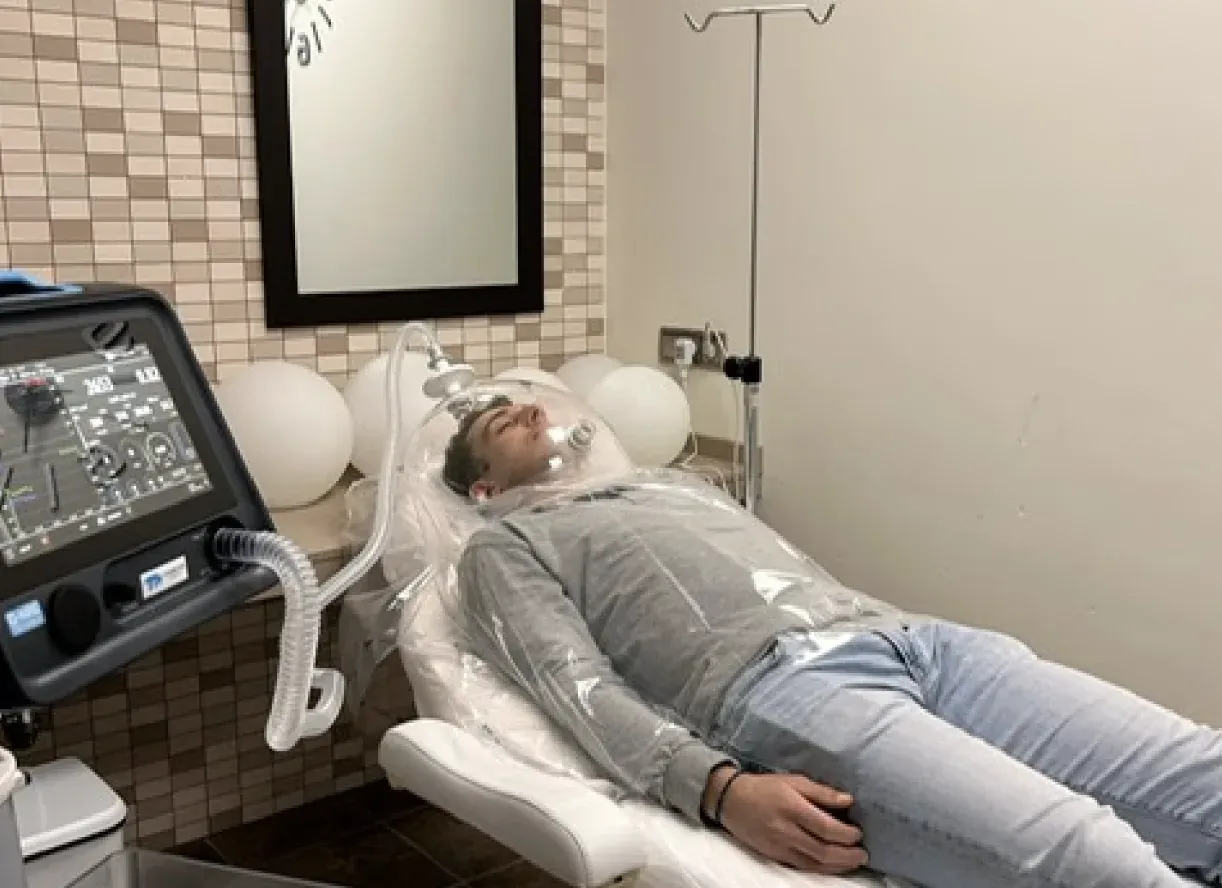
No trial shows that intravenous NAD+, ozone therapy or plasmapheresis amplifies fasting autophagy or turns a daily window into longevity treatment. These are different interventions with their own indications and risks. Grouping them under “hormesis” does not prove synergy.
A window has not been shown to prevent Alzheimer's disease, regenerate immune stem cells or extend human life. If an offer begins with those promises, our guide to longevity clinics and warning signs can help you review evidence, costs and oversight.
An honest assessment can decide whether timing fits glucose, medication, nutrition, exercise and preference. It cannot measure “deep autophagy” in routine practice or promise that skipping a meal rejuvenates tissue. If you need to organise the goal, you can start an assessment with the Progevita team.
Frequently asked questions
How many hours of fasting does it take to start autophagy?
No universal hour has been demonstrated in humans. Autophagy operates at baseline and can change with nutrients, exercise, sleep, disease and tissue. The 12, 16 or 24-hour clocks come mainly from animal models and cannot tell you when it switches on across your whole body.
Does a 16:8 fast activate autophagy?
It may alter signals related to nutrient availability, but 16 hours has not been shown to produce a defined cellular cleanse or a clinical benefit through autophagy. A 16:8 schedule can be a practical way to organise meals for some people, not a universal biological dose.
Does black coffee break a fast?
It depends on the goal. Black coffee provides very little energy and often fits a no-calorie window, but there is no human evidence that it boosts autophagy. It can affect sleep, anxiety, reflux or glucose in some people. Milk, sugar, oil or cream add nutrients and break a calorie-free fast.
Does intermittent fasting cause more weight loss than eating less every day?
On average, it does not show a large, sustained advantage over continuous energy restriction. It may help if it reduces snacking or simplifies timing, but it can fail if it creates intense hunger or compensation. The best strategy is one that meets nutritional needs and can be maintained.
Does intermittent fasting cause muscle loss?
Not necessarily, but a short window can make it harder to eat enough energy and protein. One 16:8 trial found a signal of appendicular lean-mass loss in a subgroup. Strength training, sufficient meals and monitoring function matter more than assuming autophagy removes only damaged protein.
Is fasting different for women or during menopause?
There is no universal rule for women. Sleep, symptoms, cycles, training, medication and eating history change tolerance. If hot flushes, sleep, performance, menstruation or your relationship with food worsen, shorten or stop the window. Pregnancy and breastfeeding are not times to start fasting on your own.
Can I fast if I have diabetes?
A review is needed if you use insulin, sulfonylureas or other treatment that can cause hypoglycaemia, and type 1 diabetes should never be improvised around a fasting plan. Some type 2 diabetes trials show modest improvement with monitoring, but that does not justify changing medication timing or dose without your clinical team.
Does fasting prevent Alzheimer's disease or extend life?
This has not been demonstrated in humans. Autophagy, ketones and stress responses offer interesting mechanisms, and animal studies generate hypotheses. Fasting trials mostly measure weight and metabolic markers, not dementia, longevity or healthy years of life.
Sources
- Klionsky DJ et al. Guidelines for the use and interpretation of assays for monitoring autophagy, 4th edition. 2021. PMID: 33634751.
- Alirezaei M et al. Short-term fasting induces profound neuronal autophagy. Autophagy. 2010. PMID: 20534972.
- Jamshed H et al. Early time-restricted feeding and markers of circadian rhythm, ageing and autophagy in humans. 2019. PMID: 31151228.
- Semnani-Azad Z et al. Intermittent fasting strategies: systematic review and network meta-analysis of 99 randomised trials. BMJ. 2025. PMID: 40533200.
- Lowe DA et al. The TREAT randomised clinical trial of 16:8 time-restricted eating. 2020. PMID: 32986097.
- Liu D et al. Calorie restriction with or without time-restricted eating in weight loss. 2022. PMID: 35443107.
- Manoogian ENC et al. Time-restricted eating in adults with metabolic syndrome. 2024. PMID: 39348690.
- Pavlou V et al. Time-restricted eating in adults with type 2 diabetes. 2023. PMID: 37889487.
- Gautam KA et al. Intermittent fasting: impact, mechanisms and cautions across medical and lifestyle domains. 2026. PMID: 42538401.
Method: narrative review of methodological autophagy guidance, human randomised trials and intermittent-fasting meta-analysis. Mechanisms, cellular markers and clinical outcomes are treated separately. Animal timing thresholds are not extrapolated to people.
Related articles

Therapeutic Fasting: What It Means, Types and How It Works
Intermittent, modified or multi-day fasting? We sort out the terms, explain what changes in the body and separate human evidence from reset promises.
Multi-Day Therapeutic Fasting: Benefits, Risks and Medical Supervision
If you are considering a multi-day fast, the question is not how long you can endure. Here is what has been observed, what remains unproven and when supervision matters.

What Semen Can Tell You About a Man's Health
A semen analysis may open questions about testicular health, hormones, medicines and exposures. It is neither a fertility verdict nor a longevity test.
Can a Multivitamin Slow Biological Age? What COSMOS Measured—and What It Did Not
COSMOS found a small shift in two of five epigenetic clocks after two years. Here is the effect size, the limits and when supplementation answers a real nutritional need.