Meeting Bryan Johnson changed my view of the person behind Don't Die. His experiment has useful lessons, but a public protocol is not a prescription for everyone.
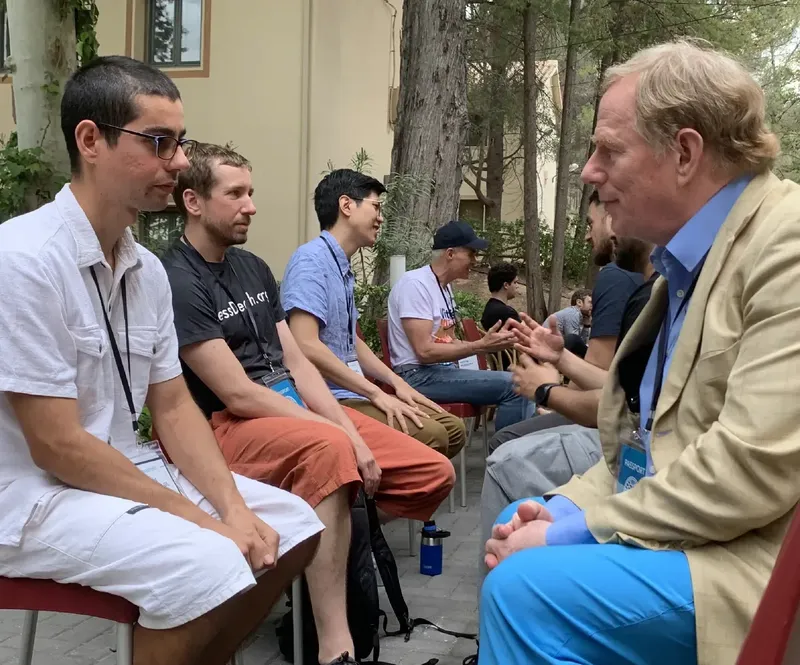
I met Bryan Johnson in 2024 during a fireside chat hosted by Adam Gries of Vitalism at the Longevity State Conference in our clinic. Online, Bryan can feel like a character built to provoke. In person, I found him warm, grounded and genuinely willing to support the longevity community. That contrast stayed with me.
I still do not think the answer is to copy his routine. The interesting part of Don't Die is not a particular supplement, gadget or meal. It is that Bryan has turned preventive health into a public conversation, with all the curiosity, friction and useful questions that come with it.
Why Don't Die matters, even if you would never live like Bryan
The official Blueprint Protocol publishes sections on sleep, exercise, nutrition, measurement and advanced therapies. That level of openness makes the project easy to inspect and debate. It also makes it tempting to treat one person's system as a ready-made answer.
It is not. Bryan's choices reflect his body, preferences, resources, medical team and appetite for experimentation. A result that is interesting in one highly measured person does not automatically become the best next step for somebody with a different age, diagnosis, medication or daily life.
Three ideas I would happily borrow
- Make health concrete. “I want to age well” is a lovely intention, but it becomes useful when you translate it into sleep, strength, cardiovascular capacity, symptoms and decisions you can revisit.
- Choose consistency over novelty. The least glamorous habits are often the ones that survive real life. A plan only works if you can still follow it on a busy Tuesday.
- Share the process, not just the result. Showing what was measured and what changed invites better questions than a before-and-after photo or a promise of rejuvenation.
This is also the healthy side of biohacking: using feedback to make a decision, rather than collecting gadgets because they look futuristic.
What I would not copy without a clear reason
I would not copy a supplement stack, a restrictive schedule or an advanced therapy simply because it appears in someone else's protocol. First ask what problem it is meant to solve, how strong the evidence is, what the downside may be and how you would know whether it helped.
I would also resist turning every biomarker into a scorecard. Measurements can be useful, but they are not all equally validated or actionable. Our guide to longevity biomarkers explains the difference between a number that is interesting and one that should change care.
And I would keep advanced interventions in their proper category. Some are established for specific medical indications; others are promising, investigational or simply unsupported. That hierarchy matters more than how exciting the technology sounds. We use it in our review of longevity treatments and their evidence.
The filter we use at Progevita
When a new protocol attracts attention, we come back to three questions:
- What decision are we trying to improve? A diagnosis, symptom, risk or functional goal is more useful than the vague promise of “optimization”.
- Does the evidence match this person? Population, dose, duration and outcome matter. A mechanism is not the same as a clinical benefit.
- What is the stop rule? Cost, burden, adverse effects and lack of meaningful change all count.
Bryan has helped make longevity less abstract, and I am grateful for that. But the best lesson from Don't Die may be surprisingly ordinary: pay attention, ask better questions and build a plan that belongs to your life, not to somebody else's feed.
Clara
Source
- Bryan Johnson, Blueprint Protocol, accessed 29 August 2026. Primary source for the structure and claims of his public protocol; it does not independently validate its health effects.
Related articles
Midjourney's body scanner: what we know and what remains unproven
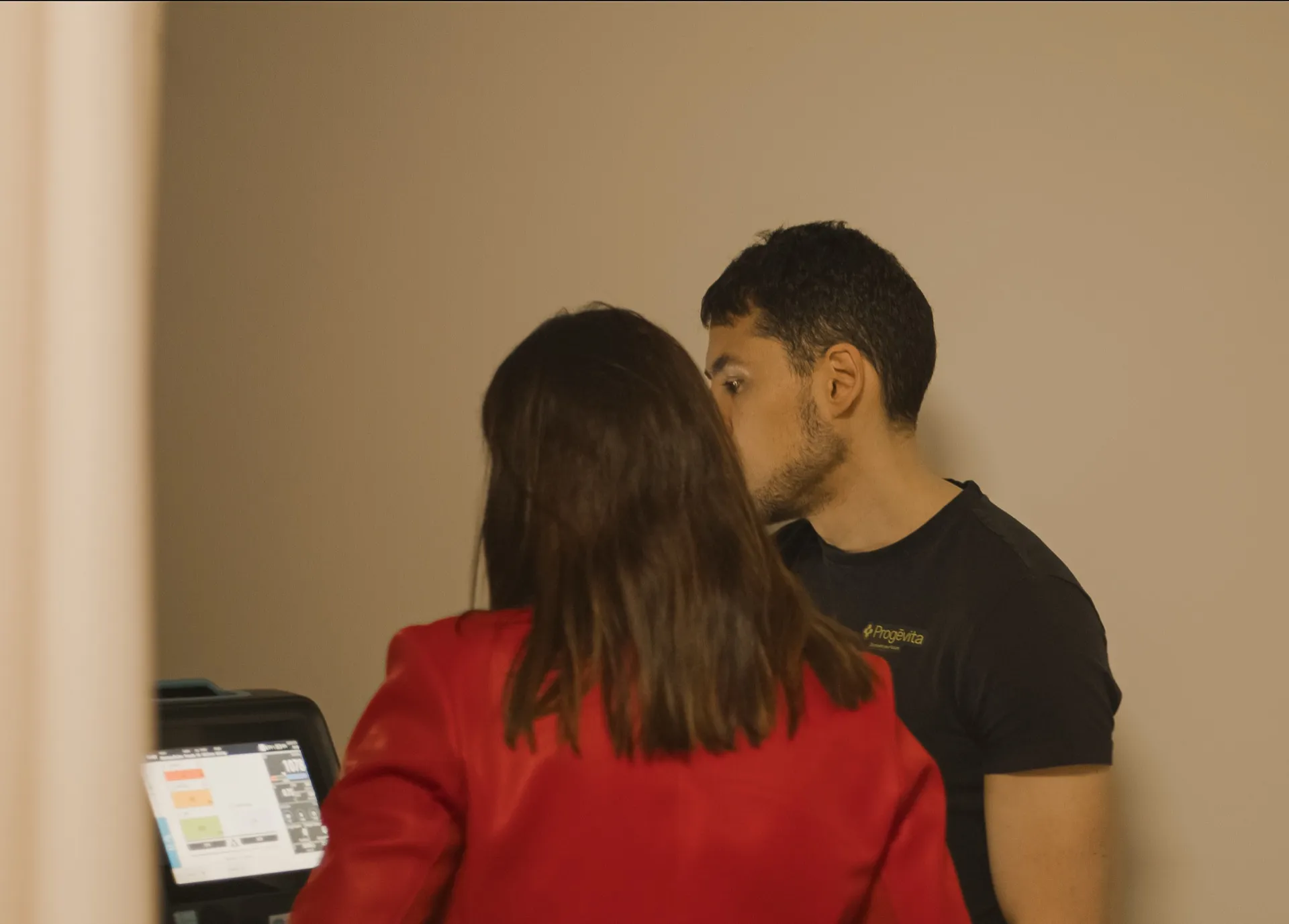
The prototype promises a full-body ultrasound scan in about 60 seconds. We separate the demo, the science of the field and the evidence still missing.
What Is Biohacking? What Is Worth Trying and When to Stop
A practical guide to separating useful habits, purposeful measurement and risky experiments within biohacking, without buying every new promise.

Grip Strength Test: What a Hand Dynamometer Measures and How to Read Your Result
Grip strength is a quick measure of muscular function, not a longevity clock. Here is how to test it, interpret clinical cut-offs and decide when a result needs attention.

Insulin Resistance: What It Means, How It Is Measured and What Actually Helps
Insulin resistance is not diagnosed from fatigue or one HOMA-IR result. This guide explains which tests change decisions and how to build a measurable plan.