Valencia combines Mediterranean nutrition, international access, natural surroundings and serious medical infrastructure. That is how a real longevity hub is built.
When people talk about longevity in Europe, the same names usually dominate the conversation: Switzerland, London, maybe a few ultra-luxury coastal enclaves. But over the past two years Valencia has started to move into a different category. Not because it has shinier hotels, but because it combines something harder to copy: real Mediterranean nutrition, a climate that makes movement easier through much of the year, international access, a lower cost base than other premium markets, and medical infrastructure that goes far beyond generic wellness.
That matters because a longevity hub is not built with a menu of trendy IV drips. It appears when evidence-based medicine, day-to-day adherence, international community, and operational scale come together in the same place. Valencia is starting to stack all four. And projects such as Progevita in Cofrentes, just over an hour from Valencia city, help explain why.
A longevity hub needs more than luxury
The common mistake is to imagine a longevity clinic as a spa with blood tests. That misses the point. If we take aging biology seriously, we are talking about chronic inflammation, mitochondrial dysfunction, metabolic decline, cellular senescence, and loss of physiological resilience. In Cell, López-Otín and colleagues (2023) described aging through twelve interconnected hallmarks. That means real longevity work requires more than one isolated intervention: it needs diagnostics, clinical judgment, context, follow-up, and execution.
In practice, a region becomes a longevity hub when it lets patients do several things well at the same time:
- measure biomarkers and risk with real medical oversight,
- intervene through nutrition, exercise, sleep, and medical treatments,
- support adherence after the stay ends,
- attract clinicians, founders, researchers, and events.
If you are comparing clinics one by one, our guide on how to choose a longevity clinic breaks down what to look for. But before you compare operators, it helps to understand why location itself matters.
Spain starts with a structural advantage: the Mediterranean pattern
You cannot explain Valencia's rise in longevity without talking about the Mediterranean diet. In the PREDIMED trial, published in The New England Journal of Medicine, 7,447 high-risk participants in Spain were assigned to Mediterranean-style diets supplemented with extra-virgin olive oil or nuts, versus a control diet. The result: roughly a 30% reduction in major cardiovascular events in the Mediterranean groups (Estruch et al., 2018; PMID: 29897866).
This is more than food branding. A well-executed Mediterranean pattern pushes several health levers in the right direction at once: glycemic control, satiety, lipid profile, inflammation, and long-term adherence. For a longevity clinic, operating in a place where that food culture already exists is not cosmetic. It is infrastructure.
Spain and the Mediterranean lifestyle also align with one of the strongest survival markers we have: cardiorespiratory fitness. In a cohort of more than 122,000 adults, Mandsager et al. (2018; PMID: 30646252) found that higher fitness was associated with lower long-term mortality. Climate alone does not extend lifespan, but an environment that makes walking, training, and daylight exposure easier raises the odds that people will sustain habits that do matter.
Valencia adds something practical that many premium destinations lack
The word “hub” has a logistical side. It has to be a place people can reach without turning the trip into an expedition. Valencia has an international airport, strong urban density, and rail access through the wider region. At the same time, Progevita operates in Cofrentes, about 100 km from Valencia city: close enough to be practical, far enough to deliver real immersion.
That mix of connected city + nature-based medical retreat is unusually effective. In some premium destinations, much of the invoice goes to central real estate, hospitality positioning, or lifestyle theatre. In inland Valencia, it is easier to allocate more of the budget to what actually moves biomarkers: physician time, diagnostics, exercise, sleep, recovery, and follow-up.
That is one of Valencia's underrated strengths. Not “cheapness,” but the chance to deliver more medicine per euro. That will not happen automatically in every clinic. But Valencia offers the operating conditions for it to happen. If you want to translate that into actual numbers, here is our 2026 longevity clinic cost guide.
Natural surroundings are not magic, but they do help execution
One weak habit in the longevity space is to oversell nature as if trees alone could reverse biological age. They cannot. But the environment is still relevant. The literature suggests that exposure to natural settings can improve attention and reduce mental fatigue. Ohly et al. (2016; PMID: 27668460) found support for Attention Restoration Theory in a systematic review, with positive effects across several objective attention measures. Bratman et al. (2019) also described how natural ecosystems may benefit mental health.
In clinical terms, this matters because a calmer setting can make it easier to sleep, downshift, walk more, train more consistently, and stick to the plan. In longevity medicine, adherence is not a side issue. It is the game.
Cofrentes adds a thermal-health tradition dating back more than a century. That should not be exaggerated into a miracle claim. Mineral waters do not replace evidence-based medicine. But they do fit well inside a recovery environment designed around lower stress, better routines, and immersive care.
Progevita and Balneario de Cofrentes are the anchor asset
For a longevity hub to be more than a narrative, it needs an anchor asset: real infrastructure with operating scale. In the Valencia case, that anchor is Progevita inside Balneario de Cofrentes.
According to the company's public information, the site combines 200 hectares, 52 rooms, more than 300 professionals, 12 physicians, and more than 50 healthcare staff, plus in-house lab capacity and immersive stays that range from 3 to 14 nights. This is not a biohacking showroom. It is a functioning medical-and-hospitality operation built on a thermal-health campus declared of public utility in 1902.
That scale matters because it allows one patient journey to combine treatments, biomarker work, nutrition, training, physiotherapy, recovery, education, and follow-up. Many smaller clinics simply cannot integrate that many layers. Valencia's case becomes more convincing because it is backed by installed capacity, not just branding.
If you want the broader company background, you can read more about Progevita's scale, team, and long-term vision.
A real hub also attracts community, not just patients
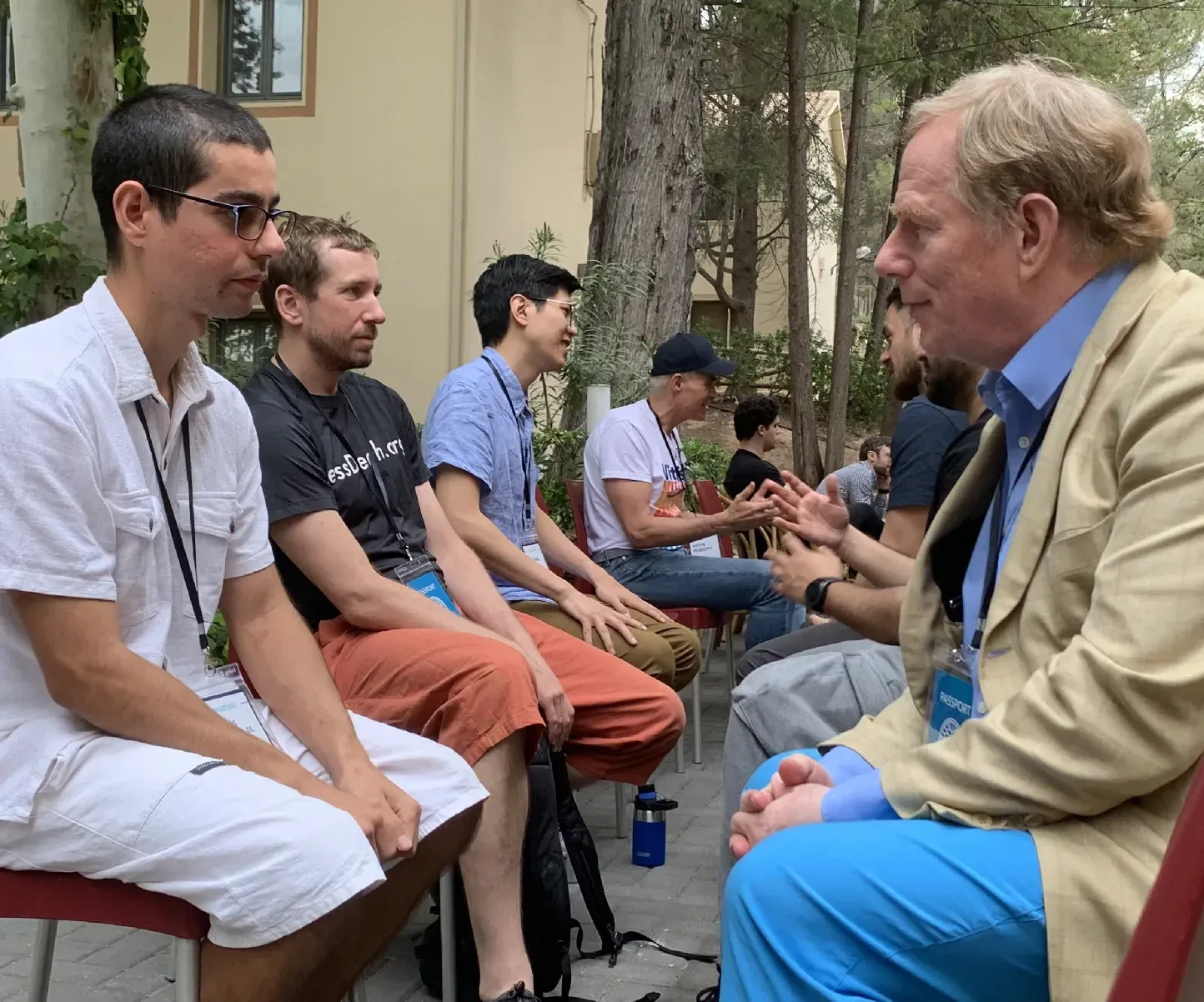
Longevity hubs are not built by patients alone. They are also built by scientists, founders, investors, operators, and events that turn a place into a meeting point. Valencia has started to show that signal as well. One example is LBF7 Spain, the Longevity Biotech Fellowship gathering that brought researchers, founders, and venture-minded operators to Cofrentes.
This matters more than it sounds. When a region attracts high-level conversation, it also attracts partnerships, diagnostic companies, clinical talent, and international visibility. That accelerates ecosystem maturity. A longevity hub is not just where you get tested. It is where medicine, research, talent, and execution start to cross-pollinate.
Valencia competes on context-to-outcome ratio
Reducing Valencia's advantage to price alone would miss the point. The real edge is its context-to-outcome ratio. It offers a setting where immersive stays can combine:
- easy access for Spanish and international patients,
- natural surroundings that support adherence,
- a food culture already aligned with the evidence,
- enough medical infrastructure to practice preventive and longevity medicine seriously.
That fits the “medical retreat + annual roadmap” model increasingly well. The stay itself is not the whole value. It is the moment where diagnostics are done, priorities are set, treatments begin, and the long-term plan is built. The real payoff happens afterward, when biomarkers are repeated and the plan is adjusted over time. Valencia looks increasingly well positioned to become one of Europe's strongest bases for that model.
Who is Valencia a good fit for?
Not every patient profile needs the same destination. But Valencia makes strong sense for several groups:
- Executives and founders who want serious preventive medicine without the ultra-luxury circuit.
- International patients looking for Spain's climate, connectivity, and lower total stay cost.
- People with fatigue, inflammation, or metabolic risk who need an intensive reset with follow-up.
- Women in perimenopause who want a clinical approach rather than generic advice.
- Biohacking-literate patients who want to move from gadgets to medical strategy.
Put simply: Valencia may not be the only longevity pole in Europe, but it has a real shot at becoming one of the strongest on quality, evidence, access, and operational depth.
FAQ: Valencia as a longevity hub
Why Valencia instead of Switzerland or London?
Because Valencia combines Mediterranean nutrition, international access, natural surroundings, and a cost structure that can leave more room for real medicine. Switzerland and London remain important references, but Valencia can offer a very competitive clinical context for the money spent.
Does Valencia's climate extend lifespan on its own?
No. Climate does not replace diagnostics, training, nutrition, or medical follow-up. What it can do is make daylight exposure, outdoor movement, and long-term adherence easier. It is a facilitator, not a treatment by itself.
Is Progevita a resort or a longevity clinic?
Progevita operates as a longevity clinic with physicians, lab capacity, diagnostics, and treatments integrated inside the Balneario de Cofrentes site. The resort environment improves the experience, but the core model is clinical.
Is a 4- to 7-day stay in Valencia actually worth it?
Yes, if the stay is used as the starting point for measurement, intervention, and a year-long plan. The value is not only in those days on site, but in the roadmap that comes out of them: biomarkers, priorities, treatments, and follow-up.
References
- Estruch R, et al. Primary Prevention of Cardiovascular Disease with a Mediterranean Diet. N Engl J Med. 2018;378(25):e34 (PMID: 29897866).
- Mandsager K, et al. Association of Cardiorespiratory Fitness With Long-term Mortality Among Adults Undergoing Exercise Treadmill Testing. JAMA Netw Open. 2018;1(6):e183605 (PMID: 30646252).
- Ohly HP, et al. Attention Restoration Theory: A systematic review of the attention restoration potential of exposure to natural environments. J Toxicol Environ Health B. 2016;19(7):305-343 (PMID: 27668460).
- Bratman GN, et al. Nature and mental health: An ecosystem service perspective. Science Advances. 2019;5(7):eaax0903.
- López-Otín C, et al. Hallmarks of aging: An expanding universe. Cell. 2023;186(2):243-278 (PMID: 36599349).
- Maier AB, et al. Longevity clinics: between promise and peril. Aging. 2025;17(1) (DOI: 10.18632/aging.206330).
- Moskalev A, et al. A Framework for an Effective Healthy Longevity Clinic. Aging and Disease. 2025;16(4):1971 (DOI: 10.14336/AD.2024.0328-1).
This article is for informational purposes and does not replace individual medical advice. To build a plan adapted to your profile, consult a qualified healthcare professional.
Want to see whether a Valencia-based longevity stay fits your profile? Start your personalized plan at Progevita — Balneario de Cofrentes, Valencia, Spain.